Loading...
This comparison has not been analyzed yet.
One-time AI generation (~1 minute). Scores and timeline are already available below.
Al-Mughira ibn Shuba vs Qu Yuan
Qu Yuan leads by 10.0 pts · 2 figures compared
…

Al-Mughira ibn Shuba
Politician · Ancient
51.6Total
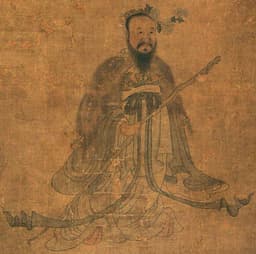
Qu Yuan
Politician · Ancient
61.6Total
Basic Information
Born
-600
-340
Died
—
-278
Era
Ancient
Ancient
Nationality
Umayyad Caliphate
China
Occupation
Politician
Politician
Civilization
Middle Eastern
Eastern
Score Comparison
Military (10%)
50.0
42.1
Political (20%)
53.8
26.4
Influence (20%)
54.1
75.0
Legacy (20%)
45.0
90.0
Leadership (15%)
66.0
41.5
Strategy (15%)
38.3
60.0
TOTAL
51.6
61.6
Al-Mughira ibn Shuba — Complete Timeline
661 BC
Governor of Kufa under Muawiyah IPolitical Action◆ Major
Al-Mughira ibn Shuba was appointed governor of Kufa by Caliph Muawiyah I. He governed for nearly a decade, maintaining stability in a volatile province through a combination of patronage and repression.
Umayyad CaliphateGovernorKufa
Impact: regionalconstructive
640 BC
Accused of adultery and acquittedPolitical Action
Al-Mughira was accused of adultery by several witnesses. The case was brought before Caliph Umar, but one witness's testimony was deemed unreliable, leading to acquittal. The incident highlighted legal procedures in early Islam.
Legal CaseAdulteryUmar
637 BC
Negotiated the surrender of JerusalemPolitical Action◆ Major
Al-Mughira was part of the Muslim delegation that negotiated the surrender of Jerusalem to Caliph Umar. He helped draft the terms of the treaty, which guaranteed safety for the city's Christian inhabitants.
Muslim ConquestsJerusalemTreaty
Impact: globalconstructive
Qu Yuan — Complete Timeline
299 BC
Exiled from Chu courtPolitical Action◆ Major
Qu Yuan was banished from the Chu court by King Huai of Chu due to slander from rival officials. This exile removed him from political influence and led to his wandering in the southern regions of Chu.
ExileChuPolitical Fall
Impact: nationaltragic
295 BC
Composed the Li SaoCultural◆ Major
During his exile, Qu Yuan wrote the Li Sao, a long autobiographical poem expressing his sorrow and loyalty to Chu. This work became a foundational text of Chinese literature and the Chu Ci anthology.
PoetryChinese LiteratureChu Ci
Impact: globalconstructive
278 BC
Drowned himself in the Miluo RiverOther◆ Major
Upon hearing that the Qin army had captured the Chu capital Ying, Qu Yuan drowned himself in the Miluo River. This act of protest against political corruption is commemorated annually by the Dragon Boat Festival.
SuicideDragon Boat FestivalProtest
Impact: nationaltragic
This comparison has not been analyzed yet.
One-time AI generation (~1 minute). Scores and timeline are already available below.
Rankings
🥇
Qu YuanLeader
Mil: 42.1Pol: 26.4Inf: 75.0
61.6
🥈
Al-Mughira ibn Shuba
Mil: 50.0Pol: 53.8Inf: 54.1
51.6
+10.0 behind
How This Comparison Works
Algorithm
Each figure is scored on 6 dimensions (0—100 scale) based on structured historical data: Military (10%), Political (20%), Influence (20%), Legacy (20%), Leadership (15%), Strategy (15%). The weighted total produces the final ranking.
Data Sources
Scores are computed from structured sub-indicators in the database. Scale factors adjust for era (Ancient ×0.85, Modern ×1.0) and civilization size (Eastern ×1.05, Other ×0.80) to account for differences in population and military scale.
Maximum 3 Figures
Comparisons are limited to 2—3 figures to ensure readability and statistical meaningfulness.
Error Margins
±5 points per dimension — Sub-scores are derived from historical records with inherent uncertainty. Two figures within 5 points on a dimension should be considered roughly equivalent in that area.
Total Score Accuracy
±3 points overall — The weighted combination of 6 dimensions produces a total score with approximately ±3 points of uncertainty. Differences of less than 3 points are not statistically significant— the figures are effectively tied.
Known Limitations
- Historical records are incomplete and uneven across civilizations
- Figures from oral-tradition societies may be underrepresented
- Occupation labels can misclassify multi-role figures
- Scores measure capability and impact, not moral character
- Quantitative scoring is a comparison tool, not absolute truth
Capability Radar
Military (10%) — Battles & Warfare
Battles
25
40
Win Rate
30
45
Expansion
25
44
Political (20%) — Governance & Reform
Reform
50
15
Diplomacy
70
10
Economy
55
10
Influence (20%) — Cultural & Global Reach
Cultural
30
85
Global
25
75
Legacy (20%) — Historical Impact
Historical
40
80
Longevity
30
90
Leadership (15%) — Power & Stability
Tenure
60
20
Stability
55
10
Strategy (15%) — Tactics & Innovation
Strategy
35
48
Tactics
40
55
Reform
20
57
Similar Comparisons
Comments & Discussion
No comments yet. Be the first to share your thoughts!