Loading...
Lord Mengchang of Qi vs Qu Yuan
Qu Yuan leads by 13.2 pts · 2 figures compared
…

Lord Mengchang of Qi
Politician · Ancient
48.4Total
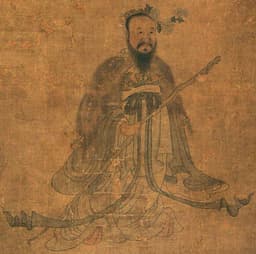
Qu Yuan
Politician · Ancient
61.6Total
Basic Information
Born
-320
-340
Died
-279
-278
Era
Ancient
Ancient
Nationality
Qi
China
Occupation
Politician
Politician
Civilization
Eastern
Eastern
Score Comparison
Military (10%)
10.2
42.1
Political (20%)
54.7
26.4
Influence (20%)
58.0
75.0
Legacy (20%)
49.2
90.0
Leadership (15%)
65.7
41.5
Strategy (15%)
25.0
60.0
TOTAL
48.4
61.6
Lord Mengchang of Qi — Complete Timeline
300 BC
Patronage of three thousand retainersCultural
Lord Mengchang (Tian Wen) maintained a household of three thousand retainers from all social classes, including fugitives and criminals. This diverse group provided him with intelligence, military advice, and political support, making him a powerful figure in Qi.
QiRetainersPatronage
Impact: regionalconstructive
294 BC
Exile and return to QiPolitical Action◆ Major
Lord Mengchang was forced into exile after being accused of plotting rebellion by King Min of Qi. He fled to Wei, where he served as prime minister and organized coalitions against Qi. He later returned to Qi after King Min's death.
QiExilePower Struggle
Impact: regional
Qu Yuan — Complete Timeline
299 BC
Exiled from Chu courtPolitical Action◆ Major
Qu Yuan was banished from the Chu court by King Huai of Chu due to slander from rival officials. This exile removed him from political influence and led to his wandering in the southern regions of Chu.
ExileChuPolitical Fall
Impact: nationaltragic
295 BC
Composed the Li SaoCultural◆ Major
During his exile, Qu Yuan wrote the Li Sao, a long autobiographical poem expressing his sorrow and loyalty to Chu. This work became a foundational text of Chinese literature and the Chu Ci anthology.
PoetryChinese LiteratureChu Ci
Impact: globalconstructive
278 BC
Drowned himself in the Miluo RiverOther◆ Major
Upon hearing that the Qin army had captured the Chu capital Ying, Qu Yuan drowned himself in the Miluo River. This act of protest against political corruption is commemorated annually by the Dragon Boat Festival.
SuicideDragon Boat FestivalProtest
Impact: nationaltragic
Expert Analysis
Origins
Lord Mengchang, born Tian Wen in the state of Qi around 300 BCE, was a grandson of King Wei of Qi. His father, Tian Ying, was a prominent minister. From a young age, Tian Wen demonstrated shrewdness and ambition, persuading his father to retain guests of all backgrounds. He inherited the fief of Xue and became known as Lord Mengchang. His early life was marked by privilege but also by the need to navigate the treacherous politics of the Warring States period.
Qu Yuan was born around 340 BCE in the state of Chu, a member of the royal house (surname Mi, clan Qu). He served as a minister under King Huai of Chu. Educated in classical texts and statecraft, Qu Yuan was known for his integrity and poetic talent. His early career was promising, but his outspokenness and reformist ideas made him enemies among the court nobility.
Rise to Power
Lord Mengchang rose to prominence through his vast network of retainers. He succeeded his father as lord of Xue and became a key minister in Qi. His influence grew as he attracted talented individuals from across China, including soldiers, strategists, and scholars. He served as prime minister of Qi and later of Wei, leveraging his retainers for intelligence and military support. A turning point came when he was accused of plotting rebellion by King Min of Qi, forcing him into exile. He fled to Wei, where he became prime minister and orchestrated a coalition that invaded Qi, leading to King Min's death.
Qu Yuan's rise was based on his literary and political skills. He was initially favored by King Huai, who appointed him as a minister. Qu Yuan advocated for alliances against Qin, the rising power. However, his rivals, including the corrupt official Zi Lan, slandered him, leading to his dismissal. Despite this, his influence persisted through his writings, which circulated among the elite. His exile removed him from direct power, but his reputation as a loyal minister grew.
Leadership & Governance
Lord Mengchang's leadership was characterized by patronage and pragmatism. He maintained a household of three thousand retainers, including fugitives and criminals, which was a deliberate strategy to gather talent and build loyalty. He treated his retainers with generosity, famously sharing meals with them. In governance, he focused on strengthening his base in Xue and forming alliances. However, his loyalty was fluid: he served Qi, then Wei, and even considered betraying his home state for personal gain. His political score of 54.7 reflects his effectiveness but also his self-serving nature.
Qu Yuan's leadership was idealistic and reform-minded. He advocated for honest government, anti-corruption measures, and a strong defense against Qin. His political score of 26.4 is low because his reforms failed and he was exiled. However, his leadership style was rooted in principle rather than pragmatism. He refused to compromise with corrupt officials, leading to his political downfall. His military score of 42.1 reflects his advocacy for military preparedness, but he never commanded armies.
Triumph & Tragedy
Lord Mengchang's greatest triumph was his successful return to power after exile. By forming a coalition of states, he forced Qi to restore his position. He also expanded his personal wealth and influence, securing his legacy as a patron. His tragedy was his inability to maintain lasting loyalty: his retainers often acted in their own interest, and his shifting allegiances left him with a tarnished reputation. He died in Wei, having lost his base in Qi.
Qu Yuan's triumph is his literary legacy. The Li Sao, a poem of over 370 lines, established him as China's first great poet. His tragedy was his suicide after hearing of the fall of Chu's capital. His death was a protest against political corruption and the collapse of his state. While he failed politically, his sacrifice immortalized him as a symbol of loyalty.
Character & Destiny
Lord Mengchang was pragmatic, generous, and opportunistic. He used his wealth to buy loyalty and influence. His character allowed him to survive multiple political upheavals, but his lack of principle meant he was never truly trusted. His destiny was to be remembered as a patron, not a statesman. His leadership score of 65.7 indicates his ability to manage people, but his strategy score of 25.0 shows his short-term thinking.
Qu Yuan was principled, passionate, and stubborn. His refusal to compromise led to his political isolation. His character made him a tragic hero: he could not adapt to the corruption around him. His destiny was to die for his beliefs, ensuring his legacy as a martyr. His influence score of 75.0 and legacy score of 90.0 reflect his enduring cultural impact.
Legacy
Lord Mengchang's legacy is tied to his patronage. He is remembered as a symbol of the wandering scholar-official tradition. His practices influenced later Chinese patronage systems. However, his political achievements were ephemeral. He scores 49.2 in legacy, reflecting limited long-term impact beyond his era.
Qu Yuan's legacy is immense. He is credited with founding the Chinese poetic tradition. The Dragon Boat Festival, commemorating his death, is celebrated annually. His poems are studied worldwide. His legacy score of 90.0 is among the highest for ancient Chinese figures. He influenced countless poets and revolutionaries.
Conclusion
While Lord Mengchang was a skilled political operator with a total score of 48.4, Qu Yuan's total of 61.6 reflects his greater impact. Qu Yuan's influence on Chinese culture, literature, and national identity far surpasses Lord Mengchang's political maneuvering. Lord Mengchang's patronage system was innovative but ultimately self-serving. Qu Yuan's sacrifice and art have inspired for over two millennia. In the balance of history, Qu Yuan's legacy is more profound and enduring.
Rankings
🥇
Qu YuanLeader
Mil: 42.1Pol: 26.4Inf: 75.0
61.6
🥈
Lord Mengchang of Qi
Mil: 10.2Pol: 54.7Inf: 58.0
48.4
+13.2 behind
How This Comparison Works
Algorithm
Each figure is scored on 6 dimensions (0—100 scale) based on structured historical data: Military (10%), Political (20%), Influence (20%), Legacy (20%), Leadership (15%), Strategy (15%). The weighted total produces the final ranking.
Data Sources
Scores are computed from structured sub-indicators in the database. Scale factors adjust for era (Ancient ×0.85, Modern ×1.0) and civilization size (Eastern ×1.05, Other ×0.80) to account for differences in population and military scale.
Maximum 3 Figures
Comparisons are limited to 2—3 figures to ensure readability and statistical meaningfulness.
Error Margins
±5 points per dimension — Sub-scores are derived from historical records with inherent uncertainty. Two figures within 5 points on a dimension should be considered roughly equivalent in that area.
Total Score Accuracy
±3 points overall — The weighted combination of 6 dimensions produces a total score with approximately ±3 points of uncertainty. Differences of less than 3 points are not statistically significant— the figures are effectively tied.
Known Limitations
- Historical records are incomplete and uneven across civilizations
- Figures from oral-tradition societies may be underrepresented
- Occupation labels can misclassify multi-role figures
- Scores measure capability and impact, not moral character
- Quantitative scoring is a comparison tool, not absolute truth
Capability Radar
Military (10%) — Battles & Warfare
Battles
20
40
Win Rate
20
45
Expansion
15
44
Political (20%) — Governance & Reform
Reform
30
15
Diplomacy
60
10
Economy
35
10
Influence (20%) — Cultural & Global Reach
Cultural
50
85
Global
30
75
Legacy (20%) — Historical Impact
Historical
55
80
Longevity
40
90
Leadership (15%) — Power & Stability
Tenure
40
20
Stability
25
10
Strategy (15%) — Tactics & Innovation
Strategy
25
48
Tactics
30
55
Reform
10
57
Similar Comparisons
Comments & Discussion
No comments yet. Be the first to share your thoughts!