Loading...
Al-Muhtadi vs Borommaracha III
Borommaracha III leads by 7.6 pts · 2 figures compared
…
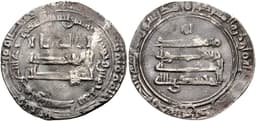
Al-Muhtadi
Emperor · Medieval
40.0Total

Borommaracha III
Emperor · Medieval
47.6Total
Basic Information
Born
825
1463
Died
870
1491
Era
Medieval
Medieval
Nationality
Abbasid Caliphate
Thailand
Occupation
Emperor
Emperor
Civilization
Middle Eastern
Eastern
Score Comparison
Military (10%)
10.2
50.0
Political (20%)
36.5
40.8
Influence (20%)
51.0
48.6
Legacy (20%)
41.7
40.0
Leadership (15%)
44.5
62.2
Strategy (15%)
36.8
50.0
TOTAL
40.0
47.6
Al-Muhtadi — Complete Timeline
869 AD
Reformist PoliciesReform◆ Major
Al-Muhtadi attempted to implement reforms to curb the power of the Turkish guard and restore caliphal authority. He sought to reduce corruption and enforce Islamic law, but his efforts faced strong opposition.
ReformPower Struggle
Impact: nationalprogressive
870 AD
Conflict with Turkish GuardPolitical Action◆ Major
Al-Muhtadi's attempts to limit Turkish power led to a direct confrontation with the guard. He was captured and killed after a brief reign of less than a year, demonstrating the futility of his reforms.
Power StruggleTurkish Guard
Impact: nationaltragic
Borommaracha III — Complete Timeline
1485 AD
Continued Implementation of Sakdina ReformsReform
Borommaracha III continued the administrative and social reforms initiated by his father Trailokanat, particularly the sakdina system. He extended the system's application to newly conquered territories and refined the ranking of officials, further entrenching the hierarchy in Ayutthayan society.
Administrative ReformSakdinaContinuation
Impact: nationalconstructive
1487 AD
Campaign to Suppress Northern RebellionsWar
Borommaracha III led military forces to suppress rebellions in the northern provinces of the kingdom, which had been annexed during Trailokanat's reign. The campaigns restored royal authority and prevented the fragmentation of the expanded territory, though they required significant military expenditure.
Military CampaignRebellionNorthern Provinces
Impact: regional
1488 AD
Diplomatic Relations with the Ming DynastyPolitical Action
Borommaracha III sent a tributary mission to the Ming court in China, reaffirming Ayutthaya's subordinate relationship under the Chinese tributary system. This diplomatic engagement secured trade privileges and maintained peaceful relations with the powerful Ming Empire, benefiting Ayutthaya's economy.
DiplomacyMing DynastyTributary Relations
Impact: regionalconstructive
Expert Analysis
Origins
Al-Muhtadi (born 833 CE) was an Abbasid caliph, ascending to the throne in 869 CE following the assassination of his cousin al-Muhtadi. He was the son of Caliph al-Mutawakkil, who had been murdered by Turkish guards. Al-Muhtadi's early life was shaped by the declining authority of the caliphate, as Turkish military commanders had become kingmakers. He received a traditional Islamic education, but his reign was marked by constant struggle against the Turkish guard.
Borommaracha III (born 1420 CE) was a king of Ayutthaya, reigning from 1448 to 1488. He was the son of King Trailokanat, under whom Ayutthaya underwent major administrative reforms. Borommaracha III grew up in a court that emphasized Buddhist kingship and administrative centralization. His education included military training and governance, preparing him for a stable succession.
Rise to Power
Al-Muhtadi became caliph after a period of instability. The Turkish guard had murdered his predecessor, and al-Muhtadi was elevated by the same guard, who expected him to be pliable. However, he soon attempted to assert independence by reducing their influence. His rise was not based on military conquest but on palace intrigue. Within a year, his conflict with the Turkish commander Salih ibn Wasif led to his capture and execution in 870 CE.
Borommaracha III ascended the throne peacefully after his father Trailokanat abdicated to become a monk. He had already been involved in administration as a prince. His rise was smooth, benefiting from Trailokanat's reforms that strengthened the monarchy. He faced no serious rivals for the throne.
Leadership & Governance
Al-Muhtadi attempted to reform the Abbasid state by curbing the power of the Turkish military elite. He implemented policies to reduce corruption and restore caliphal authority, but he lacked military backing. His governance was confrontational: he alienated the Turkish guard without building a loyal army. His total score of 40.0 reflects his inability to execute political change, with a political score of 36.5 and leadership of 44.5.
Borommaracha III continued the sakdina system, a social hierarchy that assigned ranks and land holdings to officials and commoners. This system centralized control and stabilized the kingdom. He also sent tributary missions to Ming China, securing external recognition. His leadership score of 62.2 indicates effective administration. He focused on consolidation rather than expansion.
Triumph & Tragedy
Al-Muhtadi's greatest triumph was his attempt to reform the caliphate, a goal that had eluded his predecessors. However, his tragedy was his swift downfall: he was killed after less than a year, and his reforms died with him. His military score of 10.2 underscores his lack of armed support.
Borommaracha III's triumph was successfully suppressing northern rebellions, maintaining the unity of Ayutthaya. He also expanded the sakdina system, which endured for centuries. His tragedy was that his reign was overshadowed by his father's legacy; he is often considered a caretaker. His military score of 50.0 reflects competent but unremarkable campaigns.
Character & Destiny
Al-Muhtadi was determined and principled, but also rigid and politically naive. He underestimated the power of the Turkish guard and overestimated his own authority. His character led directly to his death. Historians view him as a martyr for caliphal authority but a failed ruler.
Borommaracha III was pragmatic and cautious. He avoided risky policies, focusing on continuity. His character suited the needs of a stable kingdom. He is remembered as a capable administrator, not a visionary.
Legacy
Al-Muhtadi's legacy is symbolic: he represents the last attempt by an Abbasid caliph to reclaim real power before the caliphate became a figurehead. His failure accelerated the decline of the Abbasid state. His influence score of 51.0 reflects his symbolic importance.
Borommaracha III's legacy is more concrete: the sakdina system he continued shaped Thai society until the 19th century. His tributary missions maintained Ayutthaya's diplomatic stability. His legacy score of 40.0 is lower than his father's, but his reforms had lasting impact.
Conclusion
Borommaracha III had greater practical impact than Al-Muhtadi. His total score of 47.6 vs 40.0 reflects his more effective governance. While Al-Muhtadi's story is dramatic, his reign was too short to effect change. Borommaracha III's continuation of the sakdina system influenced Thai society for centuries. Therefore, Borommaracha III is the more significant historical figure.
Rankings
🥇
Borommaracha IIILeader
Mil: 50.0Pol: 40.8Inf: 48.6
47.6
🥈
Al-Muhtadi
Mil: 10.2Pol: 36.5Inf: 51.0
40.0
+7.6 behind
How This Comparison Works
Algorithm
Each figure is scored on 6 dimensions (0—100 scale) based on structured historical data: Military (10%), Political (20%), Influence (20%), Legacy (20%), Leadership (15%), Strategy (15%). The weighted total produces the final ranking.
Data Sources
Scores are computed from structured sub-indicators in the database. Scale factors adjust for era (Ancient ×0.85, Modern ×1.0) and civilization size (Eastern ×1.05, Other ×0.80) to account for differences in population and military scale.
Maximum 3 Figures
Comparisons are limited to 2—3 figures to ensure readability and statistical meaningfulness.
Error Margins
±5 points per dimension — Sub-scores are derived from historical records with inherent uncertainty. Two figures within 5 points on a dimension should be considered roughly equivalent in that area.
Total Score Accuracy
±3 points overall — The weighted combination of 6 dimensions produces a total score with approximately ±3 points of uncertainty. Differences of less than 3 points are not statistically significant— the figures are effectively tied.
Known Limitations
- Historical records are incomplete and uneven across civilizations
- Figures from oral-tradition societies may be underrepresented
- Occupation labels can misclassify multi-role figures
- Scores measure capability and impact, not moral character
- Quantitative scoring is a comparison tool, not absolute truth
Capability Radar
Military (10%) — Battles & Warfare
Battles
10
20
Win Rate
10
20
Expansion
5
15
Political (20%) — Governance & Reform
Reform
60
50
Diplomacy
20
30
Economy
15
30
Influence (20%) — Cultural & Global Reach
Cultural
20
20
Global
15
10
Legacy (20%) — Historical Impact
Historical
30
20
Longevity
20
20
Leadership (15%) — Power & Stability
Tenure
15
40
Stability
5
40
Strategy (15%) — Tactics & Innovation
Strategy
10
20
Tactics
10
20
Reform
10
30
Similar Comparisons
Comments & Discussion
No comments yet. Be the first to share your thoughts!