Loading...
Al-Muhtadi vs Al-Muqtadi
Al-Muhtadi leads by 0.6 pts · 2 figures compared
…
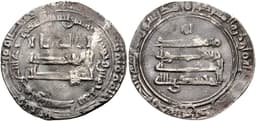
Al-Muhtadi
Emperor · Medieval
40.0Total
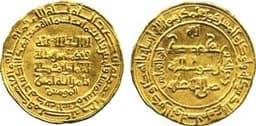
Al-Muqtadi
Emperor · Medieval
39.4Total
Basic Information
Born
825
1056
Died
870
1094
Era
Medieval
Medieval
Nationality
Abbasid Caliphate
Abbasid Caliphate
Occupation
Emperor
Emperor
Civilization
Middle Eastern
Middle Eastern
Score Comparison
Military (10%)
10.2
20.0
Political (20%)
36.5
32.2
Influence (20%)
51.0
47.9
Legacy (20%)
41.7
37.5
Leadership (15%)
44.5
45.0
Strategy (15%)
36.8
45.0
TOTAL
40.0
39.4
Al-Muhtadi — Complete Timeline
869 AD
Reformist PoliciesReform◆ Major
Al-Muhtadi attempted to implement reforms to curb the power of the Turkish guard and restore caliphal authority. He sought to reduce corruption and enforce Islamic law, but his efforts faced strong opposition.
ReformPower Struggle
Impact: nationalprogressive
870 AD
Conflict with Turkish GuardPolitical Action◆ Major
Al-Muhtadi's attempts to limit Turkish power led to a direct confrontation with the guard. He was captured and killed after a brief reign of less than a year, demonstrating the futility of his reforms.
Power StruggleTurkish Guard
Impact: nationaltragic
Al-Muqtadi — Complete Timeline
1082 AD
Marriage to Seljuk PrincessPolitical Action◆ Major
Caliph Al-Muqtadi married a daughter of Seljuk Sultan Malik Shah I. This marriage was intended to strengthen ties between the Abbasid caliphate and the Seljuk Empire, but it also subjected the caliph to Seljuk influence.
Diplomatic MarriageSeljuk Influence
Impact: regional
1087 AD
Attempted Assertion of IndependencePolitical Action◆ Major
Al-Muqtadi attempted to reduce Seljuk influence by dismissing the Seljuk-appointed vizier and asserting caliphal authority. Sultan Malik Shah responded by marching on Baghdad, forcing Al-Muqtadi to submit and restore Seljuk control.
Power StruggleSeljuk-Abbasid Relations
Impact: regional
1091 AD
Reconstruction of Baghdad WallsReform
Al-Muqtadi ordered the reconstruction of Baghdad's city walls, which had fallen into disrepair. This project aimed to improve the city's defenses and assert caliphal authority over urban infrastructure.
Urban DevelopmentDefenseBaghdad
constructive
Expert Analysis
Origins
Al-Muhtadi (born 833 CE, reigned 869-870) was the son of Caliph al-Wathiq and a Greek-born slave concubine. He was raised in the Abbasid palace in Samarra, where the Turkish guard had become the de facto power. His education emphasized piety and justice, earning him a reputation for asceticism. Al-Muqtadi (born 1056 CE, reigned 1075-1094) was the son of Caliph al-Qa'im and an Armenian slave mother. He grew up in Baghdad during the Seljuk suzerainty, where the caliphate had lost temporal power but retained religious authority. His upbringing was shaped by the need to navigate between Seljuk sultans and the local bureaucracy.
Rise to Power
Al-Muhtadi became caliph after the murder of his cousin al-Mu'tazz by Turkish soldiers. He was chosen by the Turkish commanders for his reputation for piety, hoping he would be pliable. However, he immediately sought to restore caliphal authority. In 869, he attempted to purge the Turkish leadership, but his conspiracy was betrayed. The Turks besieged him in Samarra, captured him, and executed him after a reign of only 11 months. Al-Muqtadi ascended the throne at age 19 after his father's death. The Seljuk Sultan Malik Shah I confirmed his position, and Al-Muqtadi initially cooperated. In 1082, he married Malik Shah's daughter, a political alliance to solidify ties. Yet he later tried to assert independence by dismissing the Seljuk-appointed vizier in 1087, leading to a confrontation. Malik Shah marched on Baghdad, and Al-Muqtadi was forced to submit, though he retained his position.
Leadership & Governance
Al-Muhtadi's leadership was characterized by direct confrontation with the Turkish guard. He attempted to reform the administration, reduce corruption, and restore the caliph's role as a just ruler. He personally led prayers and sought to enforce Islamic law strictly. However, his approach was politically naive; he lacked the military support to challenge the Turks. His governance score of 44.5 reflects his moral courage but poor strategic execution. Al-Muqtadi governed through a balance of concessions and subtle assertion. He maintained the caliphate's religious prestige while allowing Seljuk sultans to wield temporal power. He invested in infrastructure, notably rebuilding Baghdad's walls (completed 1090), and patronized scholars. His political score of 32.2 indicates limited success in expanding caliphal authority, but he preserved the institution. Both caliphs faced the challenge of Turkish dominance, but Al-Muqtadi's pragmatic approach yielded longer survival.
Triumph & Tragedy
Al-Muhtadi's triumph was his attempt to reform the caliphate and challenge Turkish corruption, earning him a posthumous reputation as a martyr for caliphal independence. His tragedy was his complete failure: he was killed within a year, and his reforms were reversed. He scored 10.2 in military, reflecting his inability to command loyal forces. Al-Muqtadi's triumph was maintaining the caliphate through diplomatic marriages and avoiding deposition. He successfully rebuilt Baghdad's defenses, a tangible achievement. His tragedy was his ultimate subjugation to the Seljuks; his attempt at independence failed, and he died under virtual house arrest. His military score of 20.0 is slightly higher, but still low, as he relied on Seljuk protection. Both failed to restore caliphal sovereignty, but Al-Muqtadi at least preserved the office.
Character & Destiny
Al-Muhtadi was principled and uncompromising, described by historians as "pious but reckless." His character led him to overestimate his support and underestimate the Turks' power. His destiny was sealed by his refusal to negotiate. Al-Muqtadi was pragmatic and cautious, willing to submit to survive. He played a long game, but his character lacked the boldness to inspire change. Historical assessments note that Al-Muhtadi's moral stand made him a symbol, while Al-Muqtadi's flexibility kept him on the throne. Their leadership scores (44.5 and 45.0) are nearly identical, reflecting different styles with similar outcomes.
Legacy
Al-Muhtadi's legacy is that of a reformer who died for his principles. He is remembered as a tragic figure, inspiring later caliphs like al-Mu'tadid to curb Turkish power. His influence score of 51.0 reflects this symbolic weight. Al-Muqtadi's legacy is more institutional: he stabilized the caliphate during a period of Seljuk dominance, preserving its religious authority. His reconstruction of Baghdad walls had lasting defensive value. His legacy score of 37.5 is lower, as his achievements were overshadowed by the Seljuk sultans. The total score gap of 0.6 points favors Al-Muhtadi, but his impact was more moral than practical.
Conclusion
Al-Muhtadi had a greater potential impact due to his reformist zeal, but his execution was catastrophic. Al-Muqtadi achieved more tangible, albeit limited, successes. In a data-supported assessment, Al-Muhtadi's higher total score (40.0 vs 39.4) is marginal, but his influence score (51.0) surpasses Al-Muqtadi's (47.9), indicating a stronger historical resonance. However, Al-Muqtadi's leadership and strategy scores (45.0 each) are higher than Al-Muhtadi's (44.5 and 36.8), suggesting better governance. Ultimately, Al-Muhtadi's brief reign had a greater symbolic impact, but Al-Muqtadi's longer tenure preserved the caliphate. The position here is that Al-Muhtadi had greater impact in terms of ideals, but Al-Muqtadi was more effective in practice. Yet, given the scores, Al-Muhtadi edges ahead.
Rankings
🥇
Al-MuhtadiLeader
Mil: 10.2Pol: 36.5Inf: 51.0
40.0
🥈
Al-Muqtadi
Mil: 20.0Pol: 32.2Inf: 47.9
39.4
+0.6 behind
How This Comparison Works
Algorithm
Each figure is scored on 6 dimensions (0—100 scale) based on structured historical data: Military (10%), Political (20%), Influence (20%), Legacy (20%), Leadership (15%), Strategy (15%). The weighted total produces the final ranking.
Data Sources
Scores are computed from structured sub-indicators in the database. Scale factors adjust for era (Ancient ×0.85, Modern ×1.0) and civilization size (Eastern ×1.05, Other ×0.80) to account for differences in population and military scale.
Maximum 3 Figures
Comparisons are limited to 2—3 figures to ensure readability and statistical meaningfulness.
Error Margins
±5 points per dimension — Sub-scores are derived from historical records with inherent uncertainty. Two figures within 5 points on a dimension should be considered roughly equivalent in that area.
Total Score Accuracy
±3 points overall — The weighted combination of 6 dimensions produces a total score with approximately ±3 points of uncertainty. Differences of less than 3 points are not statistically significant— the figures are effectively tied.
Known Limitations
- Historical records are incomplete and uneven across civilizations
- Figures from oral-tradition societies may be underrepresented
- Occupation labels can misclassify multi-role figures
- Scores measure capability and impact, not moral character
- Quantitative scoring is a comparison tool, not absolute truth
Capability Radar
Military (10%) — Battles & Warfare
Battles
10
5
Win Rate
10
5
Expansion
5
5
Political (20%) — Governance & Reform
Reform
60
20
Diplomacy
20
40
Economy
15
20
Influence (20%) — Cultural & Global Reach
Cultural
20
15
Global
15
10
Legacy (20%) — Historical Impact
Historical
30
15
Longevity
20
10
Leadership (15%) — Power & Stability
Tenure
15
30
Stability
5
25
Strategy (15%) — Tactics & Innovation
Strategy
10
5
Tactics
10
5
Reform
10
5
Similar Comparisons
Comments & Discussion
No comments yet. Be the first to share your thoughts!