Loading...
Al-Muntasir vs John I Albert
John I Albert leads by 3.8 pts · 2 figures compared
…

Al-Muntasir
Emperor · Medieval
39.6Total
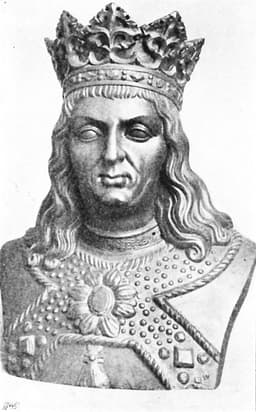
John I Albert
Emperor · Medieval
43.4Total
Basic Information
Born
837
1459
Died
862
1501
Era
Medieval
Medieval
Nationality
Abbasid Caliphate
Poland
Occupation
Emperor
Emperor
Civilization
Middle Eastern
Western
Score Comparison
Military (10%)
20.0
50.0
Political (20%)
35.0
35.1
Influence (20%)
45.5
47.9
Legacy (20%)
35.8
38.3
Leadership (15%)
49.9
48.4
Strategy (15%)
45.0
43.7
TOTAL
39.6
43.4
Al-Muntasir — Complete Timeline
861 AD
Assassination of Al-MutawakkilPolitical Action◆ Major
Al-Muntasir participated in the assassination of his father, Caliph al-Mutawakkil, by the Turkish guard. He then ascended to the caliphate, becoming the first Abbasid caliph to be installed by Turkish military power.
AssassinationSuccession
Impact: regionaldestructive
862 AD
Brief Reign and DeathPolitical Action◆ Major
Al-Muntasir's reign lasted only about six months. He died in 862, possibly poisoned by the Turkish guard, after failing to assert his authority. His death deepened the instability of the caliphate.
DeathInstability
Impact: nationaltragic
John I Albert — Complete Timeline
1496 AD
Attempt to Strengthen Royal PowerReform
John I Albert issued the Piotrk
NobilitySocial PolicyPeasants
Impact: nationaldestructive
1497 AD
Moldavian CampaignWar◆ Major
John I Albert led a military expedition into Moldavia to place his brother Sigismund on the Moldavian throne. The campaign ended in disaster at the Battle of the Cosmin Forest, where the Polish army was ambushed and defeated by Moldavian and Ottoman forces.
MoldaviaMilitary DefeatOttoman Empire
Impact: regionaldestructive
1501 AD
Conflict with the Teutonic OrderWar
John I Albert prepared for war against the Teutonic Order but died suddenly before any major engagement. His death left the conflict unresolved and weakened the Polish position in Prussia.
Teutonic OrderUnfinished CampaignDeath
Impact: regional
Expert Analysis
Origins
Al-Muntasir (born c. 837) was the son of Caliph al-Mutawakkil, who had moved the Abbasid court to Samarra and relied heavily on Turkish slave soldiers (ghilman). He grew up in a palace rife with intrigue, where the Turkish guard wielded increasing power. His education was typical for an Abbasid prince, but his path to power was shaped by his father's erratic policies and the growing tension between the caliph and his Turkish commanders. John I Albert (1459–1501) was born into the Jagiellonian dynasty, the third son of King Casimir IV of Poland and Elizabeth of Austria. He received a thorough education, including military training, and was groomed for leadership. His early life was marked by the expansive Jagiellonian realm, which included Poland, Lithuania, and claims to Bohemia and Hungary.
Rise to Power
Al-Muntasir rose to power through patricide. In 861, he conspired with Turkish guards to assassinate his father, al-Mutawakkil, who had alienated the Turks by favoring other factions. The murder occurred on December 11, 861, and Al-Muntasir was immediately proclaimed caliph. His reign, however, was a puppet regime; the Turkish commanders held real authority. John I Albert ascended to the Polish throne in 1492 after the death of his father, Casimir IV. He was elected by the Polish nobility at Piotrków, but his brother Alexander succeeded in Lithuania, dividing the Jagiellonian union. John's early reign focused on asserting royal authority against the magnates, who had grown powerful under his father.
Leadership & Governance
Al-Muntasir's leadership was weak and short-lived. He attempted to placate the Turkish guard by removing officials loyal to his father and even ordered the destruction of a shrine to Fatima that his father had built, to appease the Turks. He lacked the political capital to implement any reforms or assert independence. His governance score of 35.0 reflects his inability to rule effectively. In contrast, John I Albert sought to strengthen royal power by issuing the Piotrków Privilege in 1496, which restricted the rights of peasants and townspeople while granting further privileges to the nobility. This move was a strategic error: it alienated potential allies and strengthened the magnates, leading to a decline in royal authority. His political score is 35.1, nearly identical to Al-Muntasir's, but his military score of 50.0 is higher due to his active campaigns.
Triumph & Tragedy
Al-Muntasir achieved the throne through assassination, but his triumph was hollow. His only significant act was the destruction of the Fatimid shrine, which was seen as a concession to the Turks. His tragedy was his own death after six months, possibly poisoned by the same guards who had elevated him. He died in June 862, leaving no lasting reforms. John I Albert's greatest success was his attempt to modernize the Polish army and prepare for war against the Teutonic Order, though he died before any major engagement. His Moldavian campaign of 1497 was a disaster: he invaded Moldavia to place his brother Sigismund on the throne, but faced a decisive defeat at the Battle of the Cosmin Forest (1497) due to poor logistics and a betrayal by his allies. The campaign weakened Poland's position in the region.
Character & Destiny
Al-Muntasir's character was marked by ambition and ruthlessness, but also by a lack of foresight. He trusted the Turkish guard who had killed his father, and they turned on him. Historians view him as a pawn in the power struggles of the Samarra period. John I Albert was known for his chivalric ideals and military ambition, but he was politically naive. His reliance on the nobility and his failure to balance their power led to the erosion of royal authority. His sudden death at age 42 in 1501 left his goals unfulfilled. The score gap of 3.8 points in John's favor reflects his slightly higher military and influence scores, but both leaders are considered failures in their respective contexts.
Legacy
Al-Muntasir's legacy is minimal; he is remembered primarily as the first Abbasid caliph to be assassinated by the Turkish guard, marking a period of decline. His reign accelerated the fragmentation of Abbasid power. John I Albert's legacy is more substantial: the Piotrków Privilege became a cornerstone of noble privileges in Poland, contributing to the rise of the 'Noble Democracy' that later paralyzed the state. He also strengthened the Polish-Lithuanian union's ties, though his military failures tarnished his reputation. In terms of influence scores, John I Albert scored 47.9 vs Al-Muntasir's 45.5, indicating a slightly greater long-term impact.
Conclusion
While both rulers were relatively ineffective, John I Albert had a greater impact on Polish history. His policies, though misguided, shaped the political structure of Poland for centuries, whereas Al-Muntasir's brief reign was merely a symptom of Abbasid decline. John's total score of 43.4 versus Al-Muntasir's 39.6 reflects this. However, neither left a positive legacy. The clear position is that John I Albert, despite his failures, had a more significant and lasting influence on the course of history than the ephemeral Al-Muntasir.
Rankings
🥇
John I AlbertLeader
Mil: 50.0Pol: 35.1Inf: 47.9
43.4
🥈
Al-Muntasir
Mil: 20.0Pol: 35.0Inf: 45.5
39.6
+3.8 behind
How This Comparison Works
Algorithm
Each figure is scored on 6 dimensions (0—100 scale) based on structured historical data: Military (10%), Political (20%), Influence (20%), Legacy (20%), Leadership (15%), Strategy (15%). The weighted total produces the final ranking.
Data Sources
Scores are computed from structured sub-indicators in the database. Scale factors adjust for era (Ancient ×0.85, Modern ×1.0) and civilization size (Eastern ×1.05, Other ×0.80) to account for differences in population and military scale.
Maximum 3 Figures
Comparisons are limited to 2—3 figures to ensure readability and statistical meaningfulness.
Error Margins
±5 points per dimension — Sub-scores are derived from historical records with inherent uncertainty. Two figures within 5 points on a dimension should be considered roughly equivalent in that area.
Total Score Accuracy
±3 points overall — The weighted combination of 6 dimensions produces a total score with approximately ±3 points of uncertainty. Differences of less than 3 points are not statistically significant— the figures are effectively tied.
Known Limitations
- Historical records are incomplete and uneven across civilizations
- Figures from oral-tradition societies may be underrepresented
- Occupation labels can misclassify multi-role figures
- Scores measure capability and impact, not moral character
- Quantitative scoring is a comparison tool, not absolute truth
Capability Radar
Military (10%) — Battles & Warfare
Battles
5
20
Win Rate
5
25
Expansion
5
20
Political (20%) — Governance & Reform
Reform
5
35
Diplomacy
5
30
Economy
5
25
Influence (20%) — Cultural & Global Reach
Cultural
5
15
Global
5
10
Legacy (20%) — Historical Impact
Historical
10
20
Longevity
5
10
Leadership (15%) — Power & Stability
Tenure
10
40
Stability
5
20
Strategy (15%) — Tactics & Innovation
Strategy
5
20
Tactics
5
20
Reform
5
15
Similar Comparisons
Comments & Discussion
No comments yet. Be the first to share your thoughts!