Loading...
John I Albert vs Napoleon Bonaparte
Napoleon Bonaparte leads by 27.5 pts · 2 figures compared
…
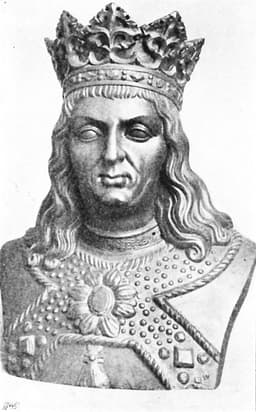
John I Albert
Emperor · Medieval
43.4Total

Napoleon Bonaparte
General · Modern
70.9Total
Basic Information
Born
1459
1769
Died
1501
1821
Era
Medieval
Modern
Nationality
Poland
France
Occupation
Emperor
General
Civilization
Western
Western
Score Comparison
Military (10%)
50.0
94.0
Political (20%)
35.1
72.0
Influence (20%)
47.9
40.0
Legacy (20%)
38.3
80.0
Leadership (15%)
48.4
78.0
Strategy (15%)
43.7
90.0
TOTAL
43.4
70.9
John I Albert — Complete Timeline
1496 AD
Attempt to Strengthen Royal PowerReform
John I Albert issued the Piotrk
NobilitySocial PolicyPeasants
Impact: nationaldestructive
1497 AD
Moldavian CampaignWar◆ Major
John I Albert led a military expedition into Moldavia to place his brother Sigismund on the Moldavian throne. The campaign ended in disaster at the Battle of the Cosmin Forest, where the Polish army was ambushed and defeated by Moldavian and Ottoman forces.
MoldaviaMilitary DefeatOttoman Empire
Impact: regionaldestructive
1501 AD
Conflict with the Teutonic OrderWar
John I Albert prepared for war against the Teutonic Order but died suddenly before any major engagement. His death left the conflict unresolved and weakened the Polish position in Prussia.
Teutonic OrderUnfinished CampaignDeath
Impact: regional
Napoleon Bonaparte — Complete Timeline
1799 AD
Coup of 18 BrumaireOther◆ Major
Napoleon Bonaparte, with support from his brother Lucien and key political figures, overthrew the Directory in a bloodless coup. He established the Consulate with himself as First Consul, effectively becoming the ruler of France. This event ended the French Revolution's most unstable period.
French RevolutionCoupRise to Power
Impact: regional
1804 AD
Promulgation of the Napoleonic CodeOther◆ Major
Napoleon enacted the Civil Code of the French, known as the Napoleonic Code, a comprehensive set of laws that replaced the fragmented feudal legal systems. The code established legal equality, protected property rights, and secularized law. It became the basis for legal systems in many European and world countries.
Legal ReformNapoleonic CodeCivil Law
Impact: globalconstructive
1805 AD
Battle of AusterlitzWar◆ Major
Napoleon's Grande Arm
Napoleonic WarsBattleDecisive Victory
Impact: global
1812 AD
Invasion of RussiaWar◆ Major
Napoleon led the Grande Arm
Napoleonic WarsInvasionDisaster
Impact: globaldestructive
1815 AD
Battle of WaterlooWar◆ Major
Napoleon's French army was defeated by the combined forces of the Duke of Wellington's Anglo-Allied army and Gebhard Leberecht von Bl
Napoleonic WarsBattleFinal Defeat
Impact: globaldestructive
Expert Analysis
john-i-albert-vs-napoleon-bonaparte
# The Emperor and the King: Two Paths to Power in the Age of Kings
On a June morning in 1815, Napoleon Bonaparte watched the rain-soaked fields of Waterloo and prepared to stake his empire on a single battle. Three centuries earlier, in the autumn of 1497, King John I Albert of Poland led his army into the forests of Moldavia, hoping to secure a throne for his brother. Both men sought glory. One reshaped the map of Europe; the other saw his ambitions dissolve in the mud of a forgotten campaign. What separated them was not merely talent, but the currents of history itself.
Origins
Napoleon was born in 1769 on the island of Corsica, a place recently annexed by France. His family was minor nobility, but his education at French military academies marked him as a child of the Enlightenment, an era that rewarded ambition over birthright. He absorbed the ideas of Rousseau and Voltaire even as he learned to command artillery. John I Albert, by contrast, was born in 1459 into the Jagiellonian dynasty, one of the most powerful royal houses in Central Europe. He was raised in the courts of Kraków, where medieval tradition demanded that a king rule through consensus with powerful nobles. His world was one of fixed hierarchies and ancient privileges.
The difference in their upbringings was profound. Napoleon came of age in a world being torn apart and remade by revolution. John Albert inherited a kingdom where the past held iron authority.
Rise to Power
Napoleon’s ascent was meteoric and improbable. In 1795, he was an obscure artillery officer. By 1799, at age thirty, he had seized control of France through a coup d’état. His rise depended on talent, timing, and the collapse of the old order. The French Revolution had cleared away the aristocracy, leaving a vacuum that a gifted general could fill. He exploited this ruthlessly, turning victories in Italy and Egypt into political capital.
John Albert’s path was more conventional. He became King of Poland in 1492 upon the death of his father, Casimir IV. His power was not earned on battlefields but inherited through blood. Yet inheritance came with shackles. The Polish nobility, the *szlachta*, had grown powerful during the fifteenth century, and they expected a king who would respect their liberties. John Albert’s rise was a coronation, not a conquest.
Leadership & Governance
Napoleon governed with a mixture of genius and tyranny. He centralized the French state, created the Napoleonic Code—a legal framework that influenced civil law across Europe—and appointed officials based on merit rather than birth. His military campaigns were masterpieces of speed and deception. At Austerlitz in 1805, he crushed the combined armies of Russia and Austria, a victory that cemented his reputation as a strategist. His political score of 75.0 reflects a ruler who reformed institutions but never trusted democracy.
John Albert attempted something similar but with far fewer resources. In 1496, he issued the Piotrków Privilege, a reform intended to strengthen royal authority. Instead, it backfired. The privilege restricted the rights of peasants and townspeople while granting further concessions to the nobility. Rather than centralizing power, he weakened the crown. His military score of 41.5 and leadership score of 38.9 tell the story of a king who could not command his own army. The Moldavian Campaign of 1497 ended in disaster when his forces were ambushed in the forests of Bukovina. He returned to Poland humiliated.
Triumph & Tragedy
Napoleon’s greatest triumph was the Empire he built from the Pyrenees to the Vistula. His worst tragedy was the invasion of Russia in 1812, where the winter and the vastness destroyed his Grand Army. He was exiled to Elba, returned for a hundred days, and finally defeated at Waterloo. His death in 1821 on Saint Helena was lonely but mythic.
John Albert’s tragedy was quieter. His attempt to place his brother Sigismund on the Moldavian throne failed. His conflict with the Teutonic Order in 1501 never reached battle; he died suddenly that same year, possibly from syphilis, leaving his reforms unfinished and his kingdom weaker. He was forty-two years old.
Character & Destiny
Napoleon was restless, driven, and utterly convinced of his own destiny. “Impossible is a word to be found only in the dictionary of fools,” he once said. His personality carved history like a sculptor’s chisel. John Albert was more cautious, more constrained by the world he inherited. He lacked Napoleon’s ruthlessness and his strategic brilliance. Where Napoleon saw every obstacle as something to be crushed, John Albert saw every noble as someone to be appeased.
Their fates were shaped by character, but also by context. Napoleon’s France was a powder keg of revolutionary energy; John Albert’s Poland was a feudal kingdom where the king was merely first among equals. One man could remake his world; the other could only try to manage it.
Legacy
Napoleon’s legacy endures. His legal code, his military tactics, and his very name have become synonymous with ambition and conquest. His legacy score of 78.0 and influence score of 82.0 reflect a figure who still commands attention in classrooms and museums. John Albert is largely forgotten outside of Poland. His legacy score of 50.5 places him among the minor kings of history—a ruler who tried but failed.
Yet their stories together teach something essential. Napoleon’s brilliance was inseparable from the revolution that made him possible. John Albert’s mediocrity was inseparable from the medieval world that confined him. The difference between them was not merely talent. It was the age they lived in, and the doors that age opened or closed.
Conclusion
Standing at Waterloo, Napoleon could see his entire life’s work teetering on a ridge. John Albert, lost in the Moldavian forests, could only see trees. Both men wanted the same thing: power, glory, a name that would outlast them. One achieved it, the other did not. But in the end, what separates a conqueror from a footnote is not always greatness. Sometimes it is fortune. Sometimes it is the accident of being born into a world that is ready to be changed.
Rankings
🥇
Napoleon BonaparteLeader
Mil: 94.0Pol: 72.0Inf: 40.0
70.9
🥈
John I Albert
Mil: 50.0Pol: 35.1Inf: 47.9
43.4
+27.5 behind
How This Comparison Works
Algorithm
Each figure is scored on 6 dimensions (0—100 scale) based on structured historical data: Military (10%), Political (20%), Influence (20%), Legacy (20%), Leadership (15%), Strategy (15%). The weighted total produces the final ranking.
Data Sources
Scores are computed from structured sub-indicators in the database. Scale factors adjust for era (Ancient ×0.85, Modern ×1.0) and civilization size (Eastern ×1.05, Other ×0.80) to account for differences in population and military scale.
Maximum 3 Figures
Comparisons are limited to 2—3 figures to ensure readability and statistical meaningfulness.
Error Margins
±5 points per dimension — Sub-scores are derived from historical records with inherent uncertainty. Two figures within 5 points on a dimension should be considered roughly equivalent in that area.
Total Score Accuracy
±3 points overall — The weighted combination of 6 dimensions produces a total score with approximately ±3 points of uncertainty. Differences of less than 3 points are not statistically significant— the figures are effectively tied.
Known Limitations
- Historical records are incomplete and uneven across civilizations
- Figures from oral-tradition societies may be underrepresented
- Occupation labels can misclassify multi-role figures
- Scores measure capability and impact, not moral character
- Quantitative scoring is a comparison tool, not absolute truth
Capability Radar
Military (10%) — Battles & Warfare
Battles
20
95
Win Rate
25
90
Expansion
20
95
Political (20%) — Governance & Reform
Reform
35
95
Diplomacy
30
80
Economy
25
85
Influence (20%) — Cultural & Global Reach
Cultural
15
85
Global
10
90
Legacy (20%) — Historical Impact
Historical
20
95
Longevity
10
90
Leadership (15%) — Power & Stability
Tenure
40
85
Stability
20
70
Strategy (15%) — Tactics & Innovation
Strategy
20
95
Tactics
20
98
Reform
15
92
Similar Comparisons
Comments & Discussion
No comments yet. Be the first to share your thoughts!