Loading...
Al-Mustadi vs Samsenethai
Samsenethai leads by 13.4 pts · 2 figures compared
…
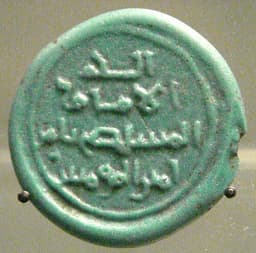
Al-Mustadi
Emperor · Medieval
41.9Total

Samsenethai
Emperor · Medieval
55.3Total
Basic Information
Born
1142
1356
Died
1180
1417
Era
Medieval
Medieval
Nationality
Abbasid Caliphate
Laos
Occupation
Emperor
Emperor
Civilization
Middle Eastern
Eastern
Score Comparison
Military (10%)
21.2
55.0
Political (20%)
35.1
68.0
Influence (20%)
50.2
51.8
Legacy (20%)
40.0
44.2
Leadership (15%)
55.3
74.0
Strategy (15%)
36.8
45.0
TOTAL
41.9
55.3
Al-Mustadi — Complete Timeline
1170 AD
Continued Assertion of Caliphal AuthorityPolitical Action◆ Major
Al-Mustadi continued his predecessor's policy of asserting caliphal authority over Baghdad and Iraq. He maintained the caliphal army and resisted Seljuk interference, preserving the gains made by Al-Muqtafi.
Caliphal PowerSeljuk RelationsContinuity
Impact: regionalconstructive
1175 AD
Diplomatic Relations with SaladinPolitical Action◆ Major
Al-Mustadi established diplomatic relations with Saladin, who had become sultan of Egypt. The caliph recognized Saladin's authority and received gifts, strengthening the caliphate's influence in the region.
DiplomacySaladinEgypt
Impact: regionalconstructive
1178 AD
Patronage of Sunni ScholarshipCultural
Al-Mustadi patronized Sunni scholars and built madrasas in Baghdad. This support strengthened Sunni orthodoxy and enhanced the caliphate's religious prestige.
PatronageSunni ScholarshipMadrasas
constructive
Samsenethai — Complete Timeline
1373 AD
Consolidated Lan Xang after Fa Ngum's exilePolitical Action◆ Major
Samsenethai succeeded his father Fa Ngum after the latter's exile. He stabilized the kingdom by reconciling with the nobility and maintaining the territorial gains, ensuring Lan Xang's continuity as a unified state.
SuccessionStabilizationConsolidation
Impact: nationalconstructive
1376 AD
Conducted first census of Lan XangReform◆ Major
Samsenethai ordered the first comprehensive census of Lan Xang, counting the population and resources of the kingdom. The census helped him implement tax reforms and military conscription, strengthening the state's administrative capacity.
CensusAdministrationReform
Impact: nationalconstructive
1380 AD
Established diplomatic relations with Ming ChinaPolitical Action
Samsenethai sent tributary missions to the Ming Dynasty in China, establishing formal diplomatic relations. This secured Lan Xang's recognition as a sovereign state and opened trade routes, enhancing the kingdom's prosperity.
DiplomacyMing ChinaTrade
Impact: regionalconstructive
Expert Analysis
Origins
Al-Mustadi was born in 1142 in Baghdad, the son of Caliph Al-Mustanjid. He grew up in the Abbasid court, receiving a traditional Islamic education focused on jurisprudence and governance. His family had ruled the caliphate for centuries, but by his time, the Abbasids were largely figureheads under Seljuk tutelage. Al-Mustadi's father had begun reasserting caliphal power, a policy Al-Mustadi would continue.
Samsenethai was born around 1357 in Lan Xang (modern Laos), the son of King Fa Ngum, the founder of the kingdom. He was raised in the royal court of Muang Sua and later educated in Buddhist monasteries. His father's conquests had unified the Lao principalities, but the kingdom was unstable due to noble factions and external threats.
Rise to Power
Al-Mustadi became caliph in 1170 after his father's death. His rise was smooth, as he was the designated heir. However, his authority was initially limited by the powerful Seljuk sultan, who controlled much of the caliphate's military. Al-Mustadi gradually built his own army and used diplomatic skill to reduce Seljuk influence. Key turning point: in 1174, he refused to recognize a new Seljuk sultan, asserting his independence.
Samsenethai's path to power was more turbulent. His father Fa Ngum was exiled in 1368 after alienating the nobility. Samsenethai, then about 11, was placed on the throne by the nobles who had deposed his father. He spent his early reign consolidating power, reconciling with factions, and proving his leadership. By 1376, he had stabilized the kingdom and conducted a census to better manage resources.
Leadership & Governance
Al-Mustadi's governance focused on restoring caliphal prestige. He maintained a standing army and resisted Seljuk encroachment. He also patronized Sunni scholars, building madrasas and supporting orthodox theology. His leadership score of 55.3 reflects his moderate effectiveness, but his political score of 35.1 indicates limited success in expanding caliphal power beyond Iraq.
Samsenethai's governance was pragmatic and administrative. He implemented the first census of Lan Xang in 1376, counting population and resources to improve tax collection and military conscription. He also established diplomatic relations with Ming China in 1371, securing recognition and trade. His leadership score of 74.0 is high, and his political score of 68.0 shows his skill in stabilizing the kingdom.
Triumph & Tragedy
Al-Mustadi's greatest success was asserting caliphal authority in Baghdad and establishing diplomatic relations with Saladin, who became sultan of Egypt. In 1175, Saladin sent gifts and recognized the caliph's suzerainty, boosting Al-Mustadi's prestige. However, his failure was his inability to expand influence beyond Iraq, and his military score of 21.2 reflects his weak army. He died in 1180, with the caliphate still overshadowed by regional powers.
Samsenethai's triumph was consolidating Lan Xang after his father's exile. He maintained territorial integrity and improved governance through the census. His tragedy was the loss of his father and the constant threat from neighboring kingdoms. He died in 1417, leaving a stable but still vulnerable kingdom. His military score of 55.0 is modest, but his influence score of 51.8 shows his diplomatic success.
Character & Destiny
Al-Mustadi was cautious and diplomatic, preferring negotiation over war. His character shaped his destiny: he maintained caliphal authority but could not expand it. Historical assessments note his piety and support for Sunni orthodoxy, but criticize his lack of military ambition. Total score: 41.9.
Samsenethai was pragmatic and administrative, focused on building institutions. His census and diplomatic missions show a methodical approach. He is remembered as a consolidator rather than a conqueror. Total score: 55.3.
Legacy
Al-Mustadi's legacy is mixed. His patronage of Sunni scholarship strengthened orthodoxy, but his political achievements were limited. The Abbasid caliphate continued to decline after his death. He is a minor figure in Islamic history, primarily remembered as the father of Caliph Al-Nasir, who later revived caliphal power.
Samsenethai's legacy is more tangible. The census of 1376 is a landmark in Lao history, providing a foundation for administration. His diplomatic ties with China set a precedent for centuries. He is revered as a wise king who stabilized Lan Xang. His influence score of 51.8 is similar to Al-Mustadi's 50.2, but his political and leadership scores are higher.
Conclusion
Samsenethai had greater impact than Al-Mustadi. While both ruled during periods of instability, Samsenethai's administrative reforms and diplomatic achievements had lasting effects on Lan Xang's development. Al-Mustadi's efforts were too limited to reverse the Abbasid decline. Samsenethai's total score of 55.3 versus Al-Mustadi's 41.9 reflects his superior governance and consolidation. The census king left a more enduring legacy than the caliph who could not escape his era's constraints.
Rankings
🥇
SamsenethaiLeader
Mil: 55.0Pol: 68.0Inf: 51.8
55.3
🥈
Al-Mustadi
Mil: 21.2Pol: 35.1Inf: 50.2
41.9
+13.4 behind
How This Comparison Works
Algorithm
Each figure is scored on 6 dimensions (0—100 scale) based on structured historical data: Military (10%), Political (20%), Influence (20%), Legacy (20%), Leadership (15%), Strategy (15%). The weighted total produces the final ranking.
Data Sources
Scores are computed from structured sub-indicators in the database. Scale factors adjust for era (Ancient ×0.85, Modern ×1.0) and civilization size (Eastern ×1.05, Other ×0.80) to account for differences in population and military scale.
Maximum 3 Figures
Comparisons are limited to 2—3 figures to ensure readability and statistical meaningfulness.
Error Margins
±5 points per dimension — Sub-scores are derived from historical records with inherent uncertainty. Two figures within 5 points on a dimension should be considered roughly equivalent in that area.
Total Score Accuracy
±3 points overall — The weighted combination of 6 dimensions produces a total score with approximately ±3 points of uncertainty. Differences of less than 3 points are not statistically significant— the figures are effectively tied.
Known Limitations
- Historical records are incomplete and uneven across civilizations
- Figures from oral-tradition societies may be underrepresented
- Occupation labels can misclassify multi-role figures
- Scores measure capability and impact, not moral character
- Quantitative scoring is a comparison tool, not absolute truth
Capability Radar
Military (10%) — Battles & Warfare
Battles
10
30
Win Rate
10
35
Expansion
10
40
Political (20%) — Governance & Reform
Reform
30
55
Diplomacy
30
50
Economy
30
55
Influence (20%) — Cultural & Global Reach
Cultural
20
30
Global
10
20
Legacy (20%) — Historical Impact
Historical
20
35
Longevity
20
30
Leadership (15%) — Power & Stability
Tenure
40
60
Stability
30
50
Strategy (15%) — Tactics & Innovation
Strategy
10
35
Tactics
10
30
Reform
10
25
Similar Comparisons
Comments & Discussion
No comments yet. Be the first to share your thoughts!