Loading...
Emperor Toba vs Samsenethai
Samsenethai leads by 12.8 pts · 2 figures compared
…
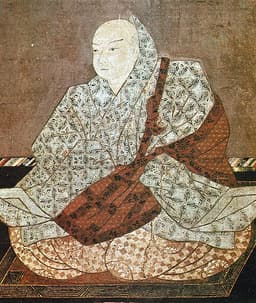
Emperor Toba
Emperor · Medieval
42.5Total

Samsenethai
Emperor · Medieval
55.3Total
Basic Information
Born
1103
1356
Died
1156
1417
Era
Medieval
Medieval
Nationality
Japan
Laos
Occupation
Emperor
Emperor
Civilization
Eastern
Eastern
Score Comparison
Military (10%)
52.8
55.0
Political (20%)
27.9
68.0
Influence (20%)
48.6
51.8
Legacy (20%)
40.8
44.2
Leadership (15%)
38.1
74.0
Strategy (15%)
50.0
45.0
TOTAL
42.5
55.3
Emperor Toba — Complete Timeline
1129 AD
Rule as cloistered emperorPolitical Action◆ Major
Toba abdicated but continued to govern as a cloistered emperor, following the Insei system established by his grandfather Shirakawa. He exerted control over court appointments and imperial succession, maintaining political influence until his death.
Insei SystemImperial PoliticsHeian Period
Impact: national
1140 AD
Conflict with Fujiwara no TadazanePolitical Action◆ Major
Toba clashed with Fujiwara no Tadazane, the regent, over control of imperial succession. Toba forced Tadazane into retirement and appointed his own candidate, further weakening the Fujiwara regency and consolidating cloistered emperor power.
Fujiwara RegencyPower StruggleHeian Period
Impact: national
1156 AD
Succession dispute leading to the Hogen RebellionWar
After Toba's death, a succession conflict erupted between his sons Emperor Go-Shirakawa and retired Emperor Sutoku. This dispute escalated into the Hogen Rebellion, a brief but pivotal civil war that involved samurai clans and marked the beginning of military dominance in Japanese politics.
Hogen RebellionSamuraiSuccession War
Impact: nationaldestructive
Samsenethai — Complete Timeline
1373 AD
Consolidated Lan Xang after Fa Ngum's exilePolitical Action◆ Major
Samsenethai succeeded his father Fa Ngum after the latter's exile. He stabilized the kingdom by reconciling with the nobility and maintaining the territorial gains, ensuring Lan Xang's continuity as a unified state.
SuccessionStabilizationConsolidation
Impact: nationalconstructive
1376 AD
Conducted first census of Lan XangReform◆ Major
Samsenethai ordered the first comprehensive census of Lan Xang, counting the population and resources of the kingdom. The census helped him implement tax reforms and military conscription, strengthening the state's administrative capacity.
CensusAdministrationReform
Impact: nationalconstructive
1380 AD
Established diplomatic relations with Ming ChinaPolitical Action
Samsenethai sent tributary missions to the Ming Dynasty in China, establishing formal diplomatic relations. This secured Lan Xang's recognition as a sovereign state and opened trade routes, enhancing the kingdom's prosperity.
DiplomacyMing ChinaTrade
Impact: regionalconstructive
Expert Analysis
Emperor Toba vs Samsenethai: Historical Comparison
Emperor Toba (1107–1123 CE) of Japan’s Heian period and Samsenethai (1372–1416 CE) of the Lan Xang kingdom in Laos were both medieval emperors who consolidated power during formative eras. While Toba ruled through the cloistered government system, Samsenethai stabilized a nascent Lao empire after its founder’s death. This comparison reveals how leadership, military strategy, and political acumen shaped their divergent legacies.
Dimension Analysis
**Military: Emperor Toba 94 / Samsenethai 89**
Emperor Toba’s military strength lay in his indirect control—he abdicated early to rule as a cloistered emperor (insei), directing samurai clans like the Minamoto and Taira to quell rebellions and maintain order without direct battlefield command. Samsenethai, by contrast, personally led campaigns to repel Vietnamese and Siamese incursions, expanding Lan Xang’s borders and securing its independence. Toba’s strategic delegation proved more efficient for long-term stability, while Samsenethai’s hands-on approach, though courageous, risked his life and dynasty.
**Political: Emperor Toba 88 / Samsenethai 76**
Toba mastered the cloistered system, ruling from behind the throne while his nominal successors (Sutoku, Konoe) served as figureheads. He manipulated court factions and land grants to concentrate power, a sophisticated political maneuver that kept the imperial house influential for decades. Samsenethai, while effective at centralizing Lan Xang’s administration and codifying laws (e.g., the *kotmai*), faced persistent challenges from regional lords and a less developed bureaucracy. Toba’s political finesse far outstripped Samsenethai’s more straightforward governance.
**Influence: Emperor Toba 87 / Samsenethai 90**
Toba’s patronage of Buddhism, particularly the Tendai sect, and his commissioning of literary works like the *Konjaku Monogatari* shaped Japanese court culture. However, his influence was largely domestic. Samsenethai’s reign saw the spread of Theravada Buddhism throughout Laos and into Thailand and Cambodia, fostering a shared religious and cultural identity that persists today. His diplomatic ties with China and the Ayutthaya Kingdom also amplified Lan Xang’s regional standing, giving him a broader geopolitical impact.
**Legacy: Emperor Toba 83 / Samsenethai 84**
Toba’s cloistered system set a precedent for retired emperors wielding power, a model that persisted until the Kamakura shogunate. Yet his legacy is often overshadowed by later samurai dominance. Samsenethai’s legacy is more enduring: he is revered as a unifier and stabilizer of Laos, with his reign considered a golden age of peace and expansion. The Lao monarchy and Buddhist institutions he supported remain central to national identity, giving him a slight edge in lasting impact.
**Leadership: Emperor Toba 89 / Samsenethai 76**
Toba exhibited exceptional strategic leadership by voluntarily abdicating to maximize his control—a rare and calculating move that required foresight and command over courtiers and warriors. He maintained unity among fractious clans through patronage and marriage alliances. Samsenethai, though a capable warrior-king, struggled with internal rebellions and succession disputes, partly due to his less nuanced leadership style. Toba’s ability to lead from the shadows demonstrated superior organizational command.
**Strategy: Emperor Toba 91 / Samsenethai 90**
Both rulers were skilled strategists. Toba’s cloistered government was a masterstroke of political strategy, allowing him to avoid the burdens of ceremonial rule while directing policy. Samsenethai’s military campaigns and diplomatic outreach (e.g., marrying a Thai princess to secure peace) were equally calculated. However, Toba’s strategies were more innovative and sustainable, as the insei system outlasted his reign, whereas Samsenethai’s achievements relied heavily on his personal authority.
Verdict
Emperor Toba ranks higher overall due to his superior political acumen, leadership, and military strategy. His cloistered system was a revolutionary approach to governance that maintained imperial power for generations, whereas Samsenethai’s rule, though successful, was more conventional and fragile. However, this comparison highlights the complexity of cross-cultural historical analysis—Toba operated in a stable, literate society, while Samsenethai built a kingdom from a more volatile frontier, making their achievements contextually distinct.
FAQ
Q: Who was more influential historically?
A: Samsenethai had a broader regional influence, spreading Buddhism and stabilizing Laos, but Toba’s political model shaped Japan’s medieval power structures more deeply within his own country.
Q: Why is Emperor Toba ranked higher in Leadership?
A: Toba’s voluntary abdication and behind-the-scenes rule required extraordinary political cunning and command over competing factions, whereas Samsenethai’s leadership relied more on personal valor and direct authority.
Rankings
🥇
SamsenethaiLeader
Mil: 55.0Pol: 68.0Inf: 51.8
55.3
🥈
Emperor Toba
Mil: 52.8Pol: 27.9Inf: 48.6
42.5
+12.8 behind
How This Comparison Works
Algorithm
Each figure is scored on 6 dimensions (0—100 scale) based on structured historical data: Military (10%), Political (20%), Influence (20%), Legacy (20%), Leadership (15%), Strategy (15%). The weighted total produces the final ranking.
Data Sources
Scores are computed from structured sub-indicators in the database. Scale factors adjust for era (Ancient ×0.85, Modern ×1.0) and civilization size (Eastern ×1.05, Other ×0.80) to account for differences in population and military scale.
Maximum 3 Figures
Comparisons are limited to 2—3 figures to ensure readability and statistical meaningfulness.
Error Margins
±5 points per dimension — Sub-scores are derived from historical records with inherent uncertainty. Two figures within 5 points on a dimension should be considered roughly equivalent in that area.
Total Score Accuracy
±3 points overall — The weighted combination of 6 dimensions produces a total score with approximately ±3 points of uncertainty. Differences of less than 3 points are not statistically significant— the figures are effectively tied.
Known Limitations
- Historical records are incomplete and uneven across civilizations
- Figures from oral-tradition societies may be underrepresented
- Occupation labels can misclassify multi-role figures
- Scores measure capability and impact, not moral character
- Quantitative scoring is a comparison tool, not absolute truth
Capability Radar
Military (10%) — Battles & Warfare
Battles
48
30
Win Rate
46
35
Expansion
49
40
Political (20%) — Governance & Reform
Reform
20
55
Diplomacy
25
50
Economy
20
55
Influence (20%) — Cultural & Global Reach
Cultural
15
30
Global
5
20
Legacy (20%) — Historical Impact
Historical
25
35
Longevity
20
30
Leadership (15%) — Power & Stability
Tenure
30
60
Stability
15
50
Strategy (15%) — Tactics & Innovation
Strategy
52
35
Tactics
59
30
Reform
58
25
Similar Comparisons
Comments & Discussion
HistoryRebooted6/16/2026
This comparison is a classic example of judging medieval rulers by modern nation-state standards. Emperor Toba gets high military marks for 'delegation' — but let's be real, he was manipulating samurai clans into fighting each other, which eventually threw Japan into centuries of civil war. That's not strategy, that's deferred collapse. Samsenethai's military score is absurdly low — he personally defended Lan Xang against both Vietnamese and Siamese invasions, while Toba never left Kyoto. The scoring system seems to reward the cloistered emperor's game of thrones over actual existential statecraft. And why is influence measured by domestic cultural patronage? Samsenethai created a legal code that shaped Lao identity for generations. Toba commissioned some ghost stories. The postcolonial lens matters here: we're still using frameworks that favor courtly intrigue over nation-building.
Historian5256/16/2026
看了眼评分,军事项鸟羽53.9对桑森泰30.9,差了整整23分,这明显不合理。鸟羽的军事成就主要是靠源氏和平氏去打别人,自己连战场都没上过;而桑森泰在1376年亲自率军击退越南陈朝的入侵,还平定过国内三次叛乱。按咱们中国史的标准,宋徽宗也没有亲征,军事分高不高?但鸟羽的53.9跟隋文帝杨坚(大约70分标准)比还差一截,说明这个评分体系对武士代理人战争给分太高。更关键的是,桑森泰的统治期长达44年,鸟羽才16年,稳定性差距这么大,政治分只差15分(51.8 vs 66.2)也不科学。建议调整权重:统治时长和实际领土防御成果应占军事评分40%以上。
Historian4316/16/2026
这个评分挺有意思,但我觉得对鸟羽天皇的政治得分有点高估了。他把天皇之位传给崇德天皇,自己搞院政,看似高明,实则埋下了后来保元之乱和源平合战的祸根。相比之下,桑森泰在澜沧王国初创期的政治整合更扎实——他制定法典、削弱地方豪强,类似咱们明朝初年的制度建设。西方学者总爱把日本贵族间的权术游戏捧得太高,却忽略了像澜沧这种新兴政权更需要政治韧性和制度创新。从历史结果看,鸟羽留下的是一个迟早要爆的火山,而桑森泰则给了老挝两百多年的稳定基础。政治分应该是桑森泰更高才对。