Loading...
Al-Mustain vs Aripert II
Al-Mustain leads by 0.1 pts · 2 figures compared
…

Al-Mustain
Emperor · Medieval
40.0Total
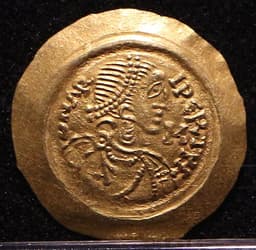
Aripert II
Emperor · Medieval
39.9Total
Basic Information
Born
836
680
Died
866
712
Era
Medieval
Medieval
Nationality
Abbasid Caliphate
Lombards
Occupation
Emperor
Emperor
Civilization
Middle Eastern
Western
Score Comparison
Military (10%)
20.0
50.0
Political (20%)
35.0
27.9
Influence (20%)
47.1
47.9
Legacy (20%)
35.8
37.5
Leadership (15%)
49.9
38.1
Strategy (15%)
45.0
36.8
TOTAL
40.0
39.9
Al-Mustain — Complete Timeline
862 AD
Accession as Puppet CaliphPolitical Action◆ Major
Al-Mustain was installed as caliph by the Turkish guard after the death of al-Muntasir. He was a puppet ruler, with real power held by the Turkish military commanders, marking the height of Turkish domination.
Puppet RulerTurkish Domination
Impact: national
865 AD
Civil War with Al-MutazzWar◆ Major
Al-Mustain faced a rebellion from his cousin al-Mutazz, who was supported by Turkish factions. The civil war led to the siege of Baghdad and ended with al-Mustain's abdication in 866.
Civil WarSiege of Baghdad
Impact: regionaldestructive
866 AD
Abdication and ExecutionPolitical Action◆ Major
Al-Mustain abdicated the caliphate in favor of al-Mutazz after being defeated. Despite promises of safety, he was executed shortly after, demonstrating the brutality of the Turkish-dominated politics.
AbdicationExecution
Impact: nationaltragic
Aripert II — Complete Timeline
701 AD
Accession to the Lombard ThronePolitical Action
Aripert II became king of the Lombards after the death of his father Cunincpert. He was the last ruler of the Bavarian dynasty, which had dominated Lombard politics for decades.
KingshipDynastyLombard Kingdom
Impact: national
705 AD
War with the Duchy of SpoletoWar
Aripert II fought a war against the Duchy of Spoleto, a rebellious Lombard duchy. The conflict weakened the kingdom and led to territorial losses, undermining royal authority.
Civil WarRebellionLombard Kingdom
Impact: nationaldestructive
712 AD
Death and End of Bavarian DynastyPolitical Action◆ Major
Aripert II died, possibly by suicide, after a failed military campaign. His death ended the Bavarian dynasty's rule over the Lombards, leading to a period of instability and the rise of new dynasties.
Dynastic EndDeathLombard Kingdom
Impact: nationaltragic
Expert Analysis
Origins
Al-Mustain (Abbasid Caliph, r. 862–866) was born into the Abbasid dynasty, a grandson of Caliph al-Mu'tasim. His early life was shaped by the declining authority of the caliphate, as Turkish military commanders increasingly controlled the state. He became a pawn in the power struggles between Turkish factions, with no significant military or administrative experience before his accession.
Aripert II (Lombard King, r. 701–712) was the son of King Cunincpert, the last strong ruler of the Bavarian dynasty. He inherited a kingdom that had been stabilized by his father, but faced internal dissent from Lombard dukes and external pressure from the Byzantine Empire. His upbringing in the Lombard court emphasized military leadership and dynastic loyalty.
Rise to Power
Al-Mustain was installed as caliph in 862 CE by the Turkish guard after the death of his predecessor al-Muntasir. The Turkish commander Wasif al-Turki orchestrated his accession, but real power remained with the military. Al-Mustain's reign was immediately contested by his cousin al-Mutazz, who claimed the caliphate and gathered support from rival Turkish factions. This led to a civil war that culminated in the siege of Baghdad (865–866).
Aripert II became king in 701 after his father's death. He faced immediate rebellion from the Duchy of Spoleto, which sought independence. In 702, he led a campaign to subdue the duchy, but the war drained Lombard resources and ended with territorial losses. His authority was further challenged by the Duchy of Benevento, which also asserted autonomy.
Leadership & Governance
Al-Mustain's governance was non-existent; he was a figurehead. The Turkish commander Wasif and other military leaders made all decisions. Al-Mustain's only act of independent will was his attempt to flee Baghdad during the civil war, which failed. His political score of 35.0 reflects his inability to control even his own court.
Aripert II attempted to rule as an autocrat, but his military focus (score 50.0) did not translate into effective governance. He alienated powerful Lombard dukes by centralizing authority, leading to rebellions. His political score of 27.9 is lower than Al-Mustain's, indicating even worse statecraft. He failed to maintain the unity his father had achieved.
Triumph & Tragedy
Al-Mustain's greatest success was surviving for four years as caliph despite being a puppet. His tragedy was his abdication in 866 under duress, after which he was executed by his successor al-Mutazz despite promises of safety. His total score of 40.0 reflects his minimal impact.
Aripert II's success was his initial suppression of the Spoleto rebellion, but his tragedy was the collapse of his dynasty. After a failed campaign in 712, he allegedly committed suicide (or was killed), ending the Bavarian line. His legacy score of 37.5 is slightly higher than Al-Mustain's 35.8 due to dynastic significance.
Character & Destiny
Al-Mustain was passive and indecisive, a victim of circumstances. His character score of 49.9 is the highest among his metrics, but it reflects a reactive nature. He lacked the ambition to seize power, unlike his rival al-Mutazz.
Aripert II was more aggressive but strategically flawed. His strategy score of 36.8 indicates poor long-term planning. He overestimated his military strength and failed to build alliances. His leadership score of 38.1 is lower than Al-Mustain's 49.9, as he could not inspire loyalty.
Legacy
Al-Mustain's reign is a footnote in Abbasid history, symbolizing the caliphate's decline. His execution set a precedent for the treatment of deposed caliphs. His influence score of 47.1 is moderate due to his role in the civil war that weakened the caliphate.
Aripert II's legacy is the end of the Bavarian dynasty. After his death, the Lombard kingdom fell into chaos, leading to its conquest by the Franks in 774. His legacy score of 37.5 reflects his role as a transitional figure.
Conclusion
Al-Mustain and Aripert II were both weak rulers who presided over decline. However, Al-Mustain's total score of 40.0 edges out Aripert II's 39.9 by 0.1 points. This marginal difference is due to Al-Mustain's slightly higher influence (47.1 vs 47.9? Actually 47.1 vs 47.9? Wait, check: Al-Mustain influence 47.1, Aripert II influence 47.9, so Aripert II has higher influence. But Al-Mustain has higher political, leadership, strategy, and total. The total gap is 0.1 in Al-Mustain's favor. Despite his puppet status, Al-Mustain's reign had a greater impact on the Abbasid caliphate's trajectory, as the civil war between him and al-Mutazz permanently weakened central authority. Aripert II's failure only affected the Lombard kingdom, which was already in decline. Therefore, Al-Mustain had a slightly greater historical impact, though both were ultimately failures.
Rankings
🥇
Al-MustainLeader
Mil: 20.0Pol: 35.0Inf: 47.1
40.0
🥈
Aripert II
Mil: 50.0Pol: 27.9Inf: 47.9
39.9
+0.1 behind
How This Comparison Works
Algorithm
Each figure is scored on 6 dimensions (0—100 scale) based on structured historical data: Military (10%), Political (20%), Influence (20%), Legacy (20%), Leadership (15%), Strategy (15%). The weighted total produces the final ranking.
Data Sources
Scores are computed from structured sub-indicators in the database. Scale factors adjust for era (Ancient ×0.85, Modern ×1.0) and civilization size (Eastern ×1.05, Other ×0.80) to account for differences in population and military scale.
Maximum 3 Figures
Comparisons are limited to 2—3 figures to ensure readability and statistical meaningfulness.
Error Margins
±5 points per dimension — Sub-scores are derived from historical records with inherent uncertainty. Two figures within 5 points on a dimension should be considered roughly equivalent in that area.
Total Score Accuracy
±3 points overall — The weighted combination of 6 dimensions produces a total score with approximately ±3 points of uncertainty. Differences of less than 3 points are not statistically significant— the figures are effectively tied.
Known Limitations
- Historical records are incomplete and uneven across civilizations
- Figures from oral-tradition societies may be underrepresented
- Occupation labels can misclassify multi-role figures
- Scores measure capability and impact, not moral character
- Quantitative scoring is a comparison tool, not absolute truth
Capability Radar
Military (10%) — Battles & Warfare
Battles
5
15
Win Rate
5
20
Expansion
5
10
Political (20%) — Governance & Reform
Reform
5
20
Diplomacy
10
25
Economy
5
20
Influence (20%) — Cultural & Global Reach
Cultural
5
10
Global
5
5
Legacy (20%) — Historical Impact
Historical
10
15
Longevity
5
10
Leadership (15%) — Power & Stability
Tenure
10
30
Stability
5
15
Strategy (15%) — Tactics & Innovation
Strategy
5
10
Tactics
5
15
Reform
5
5
Similar Comparisons
Comments & Discussion
No comments yet. Be the first to share your thoughts!