Loading...
This comparison has not been analyzed yet.
One-time AI generation (~1 minute). Scores and timeline are already available below.
Al-Mustakfi I of Cairo vs Berengar II
Berengar II leads by 0.7 pts · 2 figures compared
…

Al-Mustakfi I of Cairo
Emperor · Medieval
42.2Total
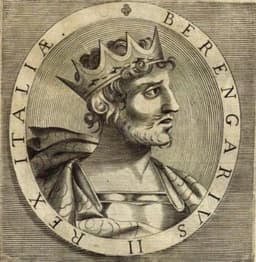
Berengar II
Emperor · Medieval
42.9Total
Basic Information
Born
1280
900
Died
1340
966
Era
Medieval
Medieval
Nationality
Abbasid Caliphate
Italy
Occupation
Emperor
Emperor
Civilization
Middle Eastern
Western
Score Comparison
Military (10%)
41.5
45.0
Political (20%)
33.6
30.8
Influence (20%)
45.5
49.4
Legacy (20%)
35.8
39.2
Leadership (15%)
44.5
51.9
Strategy (15%)
60.0
38.3
TOTAL
42.2
42.9
Al-Mustakfi I of Cairo — Complete Timeline
1302 AD
Accession as CaliphPolitical Action
Al-Mustakfi I succeeded Al-Hakim I as Abbasid caliph in Cairo. His reign continued the pattern of caliphs serving as figureheads under Mamluk sultans, with no independent political power.
Caliphal Succession
1340 AD
Deposition by Sultan Al-Nasir MuhammadPolitical Action◆ Major
Mamluk Sultan Al-Nasir Muhammad deposed Al-Mustakfi I, likely due to internal court politics. This demonstrated the caliph's vulnerability to the sultan's will, as the caliphate remained a tool of Mamluk authority.
DepositionMamluk Control
destructive
Berengar II — Complete Timeline
950 AD
Crowned King of ItalyPolitical Action◆ Major
Berengar II was crowned King of Italy in Pavia after the death of Lothair II. His rule was contested by the German king Otto I, who claimed the Italian throne through his marriage to Lothair's widow, Adelaide.
CoronationItalyKingship
Impact: regional
955 AD
Defeated by Otto I at the Battle of the LechfeldWar
Berengar II was defeated by Otto I at the Battle of the Lechfeld, where Otto also crushed the Magyars. This defeat forced Berengar to submit to Otto's suzerainty, reducing him to a vassal and ending independent Italian rule.
BattleOtto ISubmission
Impact: regionaltragic
962 AD
Rebellion against Otto IWar
Berengar II rebelled against Otto I's authority, attempting to regain full control of Italy. The rebellion failed, leading to Otto's second invasion of Italy and Berengar's eventual capture, solidifying Otto's control over the kingdom.
RebellionOtto IItaly
Impact: regionaldestructive
963 AD
Imprisonment by Otto IOther◆ Major
After a failed rebellion, Berengar II was captured by Otto I and imprisoned in Bamberg, Germany. He died in captivity in 966, marking the end of the independent Lombard kingdom of Italy and the beginning of direct German rule.
ImprisonmentItalyEnd of Independence
Impact: regionaltragic
This comparison has not been analyzed yet.
One-time AI generation (~1 minute). Scores and timeline are already available below.
Rankings
🥇
Berengar IILeader
Mil: 45.0Pol: 30.8Inf: 49.4
42.9
🥈
Al-Mustakfi I of Cairo
Mil: 41.5Pol: 33.6Inf: 45.5
42.2
+0.7 behind
How This Comparison Works
Algorithm
Each figure is scored on 6 dimensions (0—100 scale) based on structured historical data: Military (10%), Political (20%), Influence (20%), Legacy (20%), Leadership (15%), Strategy (15%). The weighted total produces the final ranking.
Data Sources
Scores are computed from structured sub-indicators in the database. Scale factors adjust for era (Ancient ×0.85, Modern ×1.0) and civilization size (Eastern ×1.05, Other ×0.80) to account for differences in population and military scale.
Maximum 3 Figures
Comparisons are limited to 2—3 figures to ensure readability and statistical meaningfulness.
Error Margins
±5 points per dimension — Sub-scores are derived from historical records with inherent uncertainty. Two figures within 5 points on a dimension should be considered roughly equivalent in that area.
Total Score Accuracy
±3 points overall — The weighted combination of 6 dimensions produces a total score with approximately ±3 points of uncertainty. Differences of less than 3 points are not statistically significant— the figures are effectively tied.
Known Limitations
- Historical records are incomplete and uneven across civilizations
- Figures from oral-tradition societies may be underrepresented
- Occupation labels can misclassify multi-role figures
- Scores measure capability and impact, not moral character
- Quantitative scoring is a comparison tool, not absolute truth
Capability Radar
Military (10%) — Battles & Warfare
Battles
30
35
Win Rate
32
30
Expansion
36
20
Political (20%) — Governance & Reform
Reform
5
20
Diplomacy
15
30
Economy
5
25
Influence (20%) — Cultural & Global Reach
Cultural
5
15
Global
5
10
Legacy (20%) — Historical Impact
Historical
10
20
Longevity
5
15
Leadership (15%) — Power & Stability
Tenure
10
45
Stability
10
20
Strategy (15%) — Tactics & Innovation
Strategy
39
25
Tactics
45
30
Reform
46
10
Similar Comparisons
Comments & Discussion
No comments yet. Be the first to share your thoughts!