Loading...
Al-Mutadid vs Le Hoan
Al-Mutadid leads by 0.5 pts · 2 figures compared
…
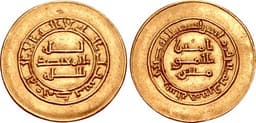
Al-Mutadid
Emperor · Medieval
57.9Total

Le Hoan
Emperor · Medieval
57.4Total
Basic Information
Born
857
941
Died
902
1005
Era
Medieval
Medieval
Nationality
Abbasid Caliphate
Vietnam
Occupation
Emperor
Emperor
Civilization
Middle Eastern
Eastern
Score Comparison
Military (10%)
52.5
70.0
Political (20%)
68.0
68.0
Influence (20%)
55.7
59.0
Legacy (20%)
47.5
50.0
Leadership (15%)
74.0
47.9
Strategy (15%)
55.0
58.0
TOTAL
57.9
57.4
Al-Mutadid — Complete Timeline
883 AD
Suppression of the Zanj RebellionWar◆ Major
Al-Mutadid, as regent and later caliph, led the final campaign that crushed the Zanj Rebellion. The rebel leader Ali ibn Muhammad was killed, and the revolt was brutally suppressed, restoring some order to southern Iraq.
Zanj RebellionMilitary CampaignRestoration
Impact: regionalconstructive
901 AD
Execution of the Qarmatian LeaderPolitical Action
Al-Mutadid ordered the execution of a captured Qarmatian leader, Yahya ibn Zikrawayh. This act was part of his efforts to suppress the Qarmatian movement, which threatened Abbasid rule in Syria and Iraq.
QarmatiansExecutionSuppression
Impact: regionaldestructive
Le Hoan — Complete Timeline
980 AD
Foundation of the Former Le DynastyPolitical Action◆ Major
After the assassination of Dinh Tien Hoang, Le Hoan was proclaimed emperor by the army and court officials. He founded the Former Le dynasty, taking the reign name Le Dai Hanh. His rule stabilized the country and continued the work of unifying Vietnam.
Dynasty FoundingSuccessionStabilization
Impact: nationalconstructive
981 AD
Repulsion of the Song InvasionWar
Le Hoan, as commander of the Vietnamese army, defeated a Song Chinese invasion force at the Battle of Bach Dang River. He used a strategy of placing iron-tipped stakes in the riverbed to impale enemy ships. The victory secured Vietnamese independence and established his legitimacy.
BattleSong DynastyVietnamese Independence
Impact: regionalconstructive
982 AD
Campaigns against ChampaWar◆ Major
Le Hoan launched a military campaign against the Champa kingdom to the south, sacking the Cham capital of Indrapura. The campaign expanded Vietnamese territory and secured the southern border. It also forced Champa to become a tributary state.
Military CampaignChampaTerritorial Expansion
Impact: regional
Expert Analysis
Origins
Al-Mutadid, born Ahmad ibn Talha in 857 AD, was the son of the Abbasid prince al-Muwaffaq, who effectively ruled the caliphate during the reign of his brother al-Mu'tamid. Raised in the turbulent court of Samarra, Al-Mutadid witnessed the decline of Abbasid power amid factional struggles and rebellions. His father's role as regent and military commander exposed him to governance and warfare from an early age.
Le Hoan was born in 941 AD in the village of Tho Lach, in what is now northern Vietnam. He served as a general under the Dinh dynasty, rising through ranks due to his military competence. After the assassination of Emperor Dinh Tien Hoang in 979 AD, Le Hoan became regent for the young heir, but soon assumed the throne himself, founding the Former Le dynasty.
Rise to Power
Al-Mutadid's rise began when his father al-Muwaffaq died in 891 AD, and he succeeded as regent. Upon the death of Caliph al-Mu'tamid in 892 AD, Al-Mutadid ascended the caliphate. His early reign focused on suppressing internal revolts, particularly the Zanj Rebellion (869-883 AD), which had devastated southern Iraq. Al-Mutadid led the final campaign that killed rebel leader Ali ibn Muhammad in 883 AD, earning him prestige.
Le Hoan's path to power was more abrupt. After Dinh Tien Hoang's murder in 979 AD, the heir Dinh Toan was only six years old. Le Hoan, as commander of the army, took control and faced a Song Chinese invasion. In 981 AD, he defeated the Song fleet at the Battle of Bach Dang River by using hidden stakes at low tide—a tactic later employed by Tran Hung Dao. This victory solidified his authority, and he was proclaimed emperor in 980 AD, founding the Former Le dynasty.
Leadership & Governance
Al-Mutadid governed as an autocratic restorer. He centralized authority, reducing the power of Turkish military commanders who had dominated his predecessors. He appointed loyalists to key posts and personally led campaigns. His governance focused on reasserting caliphal control over provinces like Egypt, which he reconquered from the Tulunids in 905 AD. However, his heavy-handed methods and reliance on force alienated many subjects.
Le Hoan ruled as a military emperor, prioritizing defense and expansion. He maintained a strong army and navy, repelling the Song and launching campaigns against Champa, sacking its capital Indrapura in 982 AD. Domestically, he upheld Confucian court rituals but allowed local autonomy. His leadership style was pragmatic; he often consulted generals and officials. However, his reign saw internal conspiracies, and he executed several potential rivals.
Triumph & Tragedy
Al-Mutadid's greatest triumph was the suppression of the Zanj Rebellion, which had threatened the Abbasid state for 14 years. His reconquest of Egypt restored direct control over a wealthy province, boosting revenue. Yet his failure to permanently quell the Qarmatian movement led to continued unrest; his execution of Qarmatian leader Yahya ibn Zikrawayh in 906 AD did not stop their raids. His reign also saw economic strain due to constant military campaigns.
Le Hoan's triumph was the repulsion of the Song invasion in 981 AD, securing Vietnamese independence for centuries. His campaigns against Champa expanded territory and tribute. However, his dynasty was short-lived; after his death in 1005 AD, succession disputes led to the collapse of the Former Le dynasty within four years. His reliance on personal leadership failed to create stable institutions.
Character & Destiny
Al-Mutadid was decisive and ruthless, known for personally executing enemies. He scored 74.0 in leadership, reflecting his ability to command loyalty from troops. Yet his political score of 68.0 indicates a mixed record: he restored authority but alienated elites. His strategy score of 55.0 suggests he relied on brute force rather than diplomacy. Historians note his reign as a temporary revival before further decline.
Le Hoan, with a military score of 70.0, was a brilliant tactician, as shown at Bach Dang. His leadership score of 47.9 is relatively low, reflecting his inability to secure a lasting dynasty. He was ambitious but lacked long-term vision. His strategy score of 58.0 indicates competent planning. He is remembered as a national hero in Vietnam, but his dynasty's brevity limits his legacy.
Legacy
Al-Mutadid's legacy is mixed: he temporarily reversed Abbasid decline, but his death in 908 AD left the caliphate vulnerable. His influence score of 55.7 reflects his limited impact on broader Islamic history. He is overshadowed by earlier Abbasid caliphs. The Zanj Rebellion's suppression was his most enduring achievement, but it did not address underlying social issues.
Le Hoan's legacy is stronger in Vietnamese national memory. He is credited with preserving independence and founding a dynasty, though it lasted only 24 years. His influence score of 59.0 is slightly higher than Al-Mutadid's, reflecting his role in shaping Vietnamese identity. The battle of Bach Dang became a symbol of resistance. However, his legacy score of 50.0 is modest compared to later Vietnamese rulers.
Conclusion
Al-Mutadid scored higher overall (57.9 vs 57.4), but the margin is negligible. However, Le Hoan's impact on Vietnamese history is more profound: he repelled a major invasion and set a precedent for national defense. Al-Mutadid's achievements were reactive, restoring a fading empire without lasting reforms. Le Hoan's victory at Bach Dang secured independence for centuries, while Al-Mutadid's gains were quickly lost after his death. Thus, Le Hoan had greater impact relative to his context. Despite a lower total score, his strategic victory and foundational role in Vietnamese history outweigh Al-Mutadid's temporary restoration.
Rankings
🥇
Al-MutadidLeader
Mil: 52.5Pol: 68.0Inf: 55.7
57.9
🥈
Le Hoan
Mil: 70.0Pol: 68.0Inf: 59.0
57.4
+0.5 behind
How This Comparison Works
Algorithm
Each figure is scored on 6 dimensions (0—100 scale) based on structured historical data: Military (10%), Political (20%), Influence (20%), Legacy (20%), Leadership (15%), Strategy (15%). The weighted total produces the final ranking.
Data Sources
Scores are computed from structured sub-indicators in the database. Scale factors adjust for era (Ancient ×0.85, Modern ×1.0) and civilization size (Eastern ×1.05, Other ×0.80) to account for differences in population and military scale.
Maximum 3 Figures
Comparisons are limited to 2—3 figures to ensure readability and statistical meaningfulness.
Error Margins
±5 points per dimension — Sub-scores are derived from historical records with inherent uncertainty. Two figures within 5 points on a dimension should be considered roughly equivalent in that area.
Total Score Accuracy
±3 points overall — The weighted combination of 6 dimensions produces a total score with approximately ±3 points of uncertainty. Differences of less than 3 points are not statistically significant— the figures are effectively tied.
Known Limitations
- Historical records are incomplete and uneven across civilizations
- Figures from oral-tradition societies may be underrepresented
- Occupation labels can misclassify multi-role figures
- Scores measure capability and impact, not moral character
- Quantitative scoring is a comparison tool, not absolute truth
Capability Radar
Military (10%) — Battles & Warfare
Battles
55
65
Win Rate
60
70
Expansion
50
50
Political (20%) — Governance & Reform
Reform
55
55
Diplomacy
50
70
Economy
45
50
Influence (20%) — Cultural & Global Reach
Cultural
40
45
Global
35
40
Legacy (20%) — Historical Impact
Historical
45
55
Longevity
40
50
Leadership (15%) — Power & Stability
Tenure
60
60
Stability
50
58
Strategy (15%) — Tactics & Innovation
Strategy
55
72
Tactics
50
68
Reform
45
55
Similar Comparisons
Comments & Discussion
No comments yet. Be the first to share your thoughts!