Loading...
Le Hoan vs Yang Guang
Yang Guang leads by 0.1 pts · 2 figures compared
…

Le Hoan
Emperor · Medieval
57.4Total
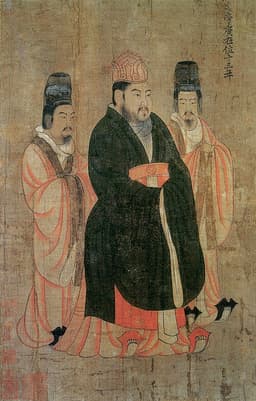
Yang Guang
Emperor · Medieval
57.5Total
Basic Information
Born
941
569
Died
1005
618
Era
Medieval
Medieval
Nationality
Vietnam
China
Occupation
Emperor
Emperor
Civilization
Eastern
Eastern
Score Comparison
Military (10%)
70.0
47.5
Political (20%)
68.0
62.7
Influence (20%)
59.0
72.0
Legacy (20%)
50.0
40.0
Leadership (15%)
47.9
62.2
Strategy (15%)
58.0
60.0
TOTAL
57.4
57.5
Le Hoan — Complete Timeline
980 AD
Foundation of the Former Le DynastyPolitical Action◆ Major
After the assassination of Dinh Tien Hoang, Le Hoan was proclaimed emperor by the army and court officials. He founded the Former Le dynasty, taking the reign name Le Dai Hanh. His rule stabilized the country and continued the work of unifying Vietnam.
Dynasty FoundingSuccessionStabilization
Impact: nationalconstructive
981 AD
Repulsion of the Song InvasionWar
Le Hoan, as commander of the Vietnamese army, defeated a Song Chinese invasion force at the Battle of Bach Dang River. He used a strategy of placing iron-tipped stakes in the riverbed to impale enemy ships. The victory secured Vietnamese independence and established his legitimacy.
BattleSong DynastyVietnamese Independence
Impact: regionalconstructive
982 AD
Campaigns against ChampaWar◆ Major
Le Hoan launched a military campaign against the Champa kingdom to the south, sacking the Cham capital of Indrapura. The campaign expanded Vietnamese territory and secured the southern border. It also forced Champa to become a tributary state.
Military CampaignChampaTerritorial Expansion
Impact: regional
Yang Guang — Complete Timeline
605 AD
Construction of the Grand CanalReform◆ Major
Emperor Yang Guang ordered the construction of the Grand Canal, linking the Yellow River and Yangtze River. The project mobilized millions of laborers and created a vital waterway for grain transport and trade, but the immense human cost led to widespread resentment and rebellion.
InfrastructureGrand CanalCorvée Labor
Impact: national
612 AD
Three Expeditions against GoguryeoWar◆ Major
Yang Guang launched three massive military campaigns against the Korean kingdom of Goguryeo. The first invasion in 612 ended in catastrophic defeat at the Battle of Salsu, with hundreds of thousands of Chinese soldiers killed. The repeated failures drained the treasury and sparked widespread revolts.
Goguryeo-Sui WarMilitary DisasterOverextension
Impact: regionaldestructive
613 AD
Rebellion of Yang XuanganWar◆ Major
While Yang Guang was campaigning against Goguryeo, the noble Yang Xuangan launched a major rebellion in the rear. The revolt was suppressed, but it exposed the fragility of Sui rule and encouraged further uprisings across the empire.
RebellionSui Dynasty Decline
Impact: nationaldestructive
618 AD
Assassination of Yang GuangPolitical Action
As rebellions engulfed the empire, Yang Guang was strangled to death in Jiangdu by his own guards led by Yuwen Huaji. His death marked the effective end of the Sui dynasty, which collapsed shortly after, leading to the rise of the Tang dynasty.
AssassinationSui CollapseDynastic Transition
Impact: nationaltragic
Expert Analysis
Origins
Le Hoan (941–1005) was born into a modest family in Ai Chau (modern Thanh Hoa, Vietnam). Orphaned young, he was adopted by a local official and later became a general under Dinh Tien Hoang, the founder of the Dinh dynasty. His military talent emerged early, earning him command of the royal army.
Yang Guang (569–618), born as the second son of Emperor Wen of Sui, grew up in the imperial court. He was educated in Confucian classics and military arts. His mother, Empress Dugu, favored him over his elder brother Yang Yong, leading to a succession struggle.
Rise to Power
Le Hoan's rise came after Dinh Tien Hoang's assassination in 979. The Dinh heir was a child, and the Song dynasty saw an opportunity to invade. As commander-in-chief, Le Hoan consolidated power, crushed a rival general, and was proclaimed emperor by the army and court in 980, establishing the Former Le dynasty. He immediately faced the Song invasion.
Yang Guang became crown prince in 600 after orchestrating the downfall of his brother, who was accused of luxury and disloyalty. When his father died in 604, Yang Guang took the throne, allegedly after having him killed. He immediately began massive projects to unify and expand the empire.
Leadership & Governance
Le Hoan ruled from 980 to 1005, focusing on military defense and expansion. He personally led campaigns, repelling the Song in 981 using a strategy of placing iron-tipped stakes in the Bach Dang River at low tide, trapping Song ships. He also pacified the south by sacking the Cham capital of Indrapura in 982. Domestically, he maintained Dinh-era institutions but faced rebellions from local lords, which he suppressed ruthlessly.
Yang Guang (r. 604–618) pursued an ambitious agenda: building the Grand Canal (605–609) to link north and south, reconstructing the Great Wall, and expanding the examination system for bureaucrats. However, his governance was marked by overreach: he conscripted millions for canal and wall projects, causing widespread suffering. His three invasions of Goguryeo (612–614) were disastrous, with the first losing over 300,000 men. He alienated the aristocracy by centralizing power and executing officials.
Triumph & Tragedy
Le Hoan's greatest triumph was defeating the Song at Bach Dang River (981), securing Vietnamese independence for centuries. He expanded territory by conquering Champa's capital. His tragedy was internal instability: his harsh rule provoked rebellions, and his dynasty collapsed after his death in 1005, leading to chaos.
Yang Guang's triumph was the Grand Canal, which became a vital economic artery for centuries, facilitating trade and cultural exchange. His tragedy was the collapse of the Sui dynasty: his overambitious projects and military failures drained the treasury and sparked rebellions (e.g., Yang Xuangan's in 613). He was assassinated in 618, and the Sui fell shortly after.
Character & Destiny
Le Hoan was pragmatic and militarily focused. He seized power when needed, but his authoritarian style alienated allies. He scored 47.9 in leadership, reflecting his inability to build lasting institutions. His death led to a succession crisis, undoing his achievements.
Yang Guang was visionary but reckless. He had grand plans but ignored human costs. His political score of 62.7 shows skill in maneuvering to power, but his military score of 47.5 reflects catastrophic failures. His character—arrogant and stubborn—led to his downfall. Historians see him as a classic overreacher.
Legacy
Le Hoan is remembered in Vietnam as a national hero who repelled Chinese invasion. His Former Le dynasty lasted only 29 years, but his victory at Bach Dang River set a precedent for Vietnamese resistance. He scores 50.0 in legacy.
Yang Guang's Grand Canal endured, linking major rivers and enabling China's economic integration. However, his reputation is negative: a tyrant who bankrupted the state. His legacy score is 40.0, as his failures overshadowed his achievements.
Conclusion
Yang Guang has a slightly higher total score (57.5 vs 57.4), but his impact was more transformative yet disastrous. Le Hoan's focused military success had enduring national significance for Vietnam. In terms of net positive impact, Le Hoan's defense of sovereignty outweighs Yang Guang's destructive ambition. Le Hoan achieved his goals without collapsing his state, while Yang Guang's ambition destroyed his dynasty. Thus, Le Hoan had greater positive impact.
Rankings
🥇
Yang GuangLeader
Mil: 47.5Pol: 62.7Inf: 72.0
57.5
🥈
Le Hoan
Mil: 70.0Pol: 68.0Inf: 59.0
57.4
+0.1 behind
How This Comparison Works
Algorithm
Each figure is scored on 6 dimensions (0—100 scale) based on structured historical data: Military (10%), Political (20%), Influence (20%), Legacy (20%), Leadership (15%), Strategy (15%). The weighted total produces the final ranking.
Data Sources
Scores are computed from structured sub-indicators in the database. Scale factors adjust for era (Ancient ×0.85, Modern ×1.0) and civilization size (Eastern ×1.05, Other ×0.80) to account for differences in population and military scale.
Maximum 3 Figures
Comparisons are limited to 2—3 figures to ensure readability and statistical meaningfulness.
Error Margins
±5 points per dimension — Sub-scores are derived from historical records with inherent uncertainty. Two figures within 5 points on a dimension should be considered roughly equivalent in that area.
Total Score Accuracy
±3 points overall — The weighted combination of 6 dimensions produces a total score with approximately ±3 points of uncertainty. Differences of less than 3 points are not statistically significant— the figures are effectively tied.
Known Limitations
- Historical records are incomplete and uneven across civilizations
- Figures from oral-tradition societies may be underrepresented
- Occupation labels can misclassify multi-role figures
- Scores measure capability and impact, not moral character
- Quantitative scoring is a comparison tool, not absolute truth
Capability Radar
Military (10%) — Battles & Warfare
Battles
65
55
Win Rate
70
40
Expansion
50
60
Political (20%) — Governance & Reform
Reform
55
75
Diplomacy
70
40
Economy
50
70
Influence (20%) — Cultural & Global Reach
Cultural
45
70
Global
40
65
Legacy (20%) — Historical Impact
Historical
55
75
Longevity
50
80
Leadership (15%) — Power & Stability
Tenure
60
60
Stability
58
20
Strategy (15%) — Tactics & Innovation
Strategy
72
50
Tactics
68
45
Reform
55
30
Similar Comparisons
Comments & Discussion
No comments yet. Be the first to share your thoughts!