Loading...
Al-Mutawakkil vs Colocolo
Al-Mutawakkil leads by 2.8 pts · 2 figures compared
…
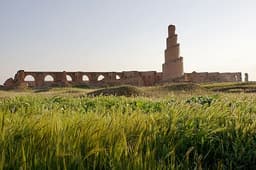
Al-Mutawakkil
Emperor · Medieval
52.9Total

Colocolo
Emperor · Medieval
50.1Total
Basic Information
Born
822
1490
Died
861
1555
Era
Medieval
Medieval
Nationality
Abbasid Caliphate
Mapuche
Occupation
Emperor
Emperor
Civilization
Middle Eastern
Other
Score Comparison
Military (10%)
50.0
50.0
Political (20%)
61.3
46.6
Influence (20%)
57.2
53.3
Legacy (20%)
50.0
45.8
Leadership (15%)
55.3
61.1
Strategy (15%)
35.7
41.7
TOTAL
52.9
50.1
Al-Mutawakkil — Complete Timeline
848 AD
End of the MihnaReform
Al-Mutawakkil ended the Mihna, the inquisition that enforced the Mu'tazilite doctrine of the createdness of the Quran. He restored traditionalist orthodoxy and ended the persecution of scholars who opposed the doctrine.
Religious ReformMihna
Impact: regionalprogressive
851 AD
Construction of the Great Mosque of SamarraCultural◆ Major
Al-Mutawakkil commissioned the construction of the Great Mosque of Samarra, featuring the famous Malwiya minaret. This mosque was one of the largest in the Islamic world and symbolized Abbasid architectural ambition.
ArchitectureMosque
Impact: regionalconstructive
861 AD
Assassination by Turkish GuardPolitical Action
Al-Mutawakkil was assassinated by his Turkish guard in Samarra. The murder was orchestrated by his son al-Muntasir, who succeeded him. This event marked the beginning of the 'Anarchy at Samarra' and the decline of Abbasid power.
AssassinationTurkish Guard
Impact: regionaltragic
Colocolo — Complete Timeline
1550 AD
Advocated for Unified Mapuche ResistancePolitical Action◆ Major
Colocolo, as an elder leader, called for the Mapuche tribes to unite under a single war leader to resist Spanish incursions. His speech at a council of chiefs helped establish the toqui system, leading to the election of Lautaro as the first toqui.
Arauco WarLeadershipUnification
Impact: regionalconstructive
1553 AD
Battle of TucapelWar
Colocolo participated in the Battle of Tucapel, where Mapuche forces under Lautaro defeated and killed Spanish governor Pedro de Valdivia. This victory was a turning point in the Arauco War, demonstrating Mapuche military capability.
Arauco WarBattleVictory
Impact: regional
Elected Toqui of the MapuchePolitical Action◆ Major
After Lautaro's death, Colocolo was elected toqui to lead the Mapuche resistance. He organized military campaigns against the Spanish, continuing the war effort and maintaining the unity he had advocated for.
Arauco WarLeadershipIndigenous Resistance
Impact: regional
Expert Analysis
Origins
Al-Mutawakkil (born 822 CE) was the tenth Abbasid caliph, son of Caliph al-Mu'tasim and a Greek concubine. He grew up in the palace of Samarra, a city built by his father to house the Turkish guard. His early education included Islamic theology and administration, but he was overshadowed by the powerful Turkish military elite that dominated the caliphate after al-Mu'tasim's reign.
Colocolo (born around 1500 CE) was a Mapuche elder from the Araucanía region in present-day Chile. The Mapuche were a decentralized agricultural society with a strong warrior tradition. Little is known of his early life, but he rose to prominence as a lonko (chief) respected for his wisdom and oratory. He lived through the early Spanish incursions led by Pedro de Valdivia in the 1540s.
Rise to Power
Al-Mutawakkil became caliph in 847 CE after the death of his brother al-Wathiq. His accession was supported by the Turkish guard, who expected him to continue their patronage. However, Al-Mutawakkil sought to assert caliphal authority by ending the Mihna (833-848 CE), an inquisition that enforced the Mu'tazilite doctrine of the createdness of the Quran. In 849 CE, he issued decrees restoring traditionalist orthodoxy, releasing imprisoned scholars like Ahmad ibn Hanbal, and prohibiting theological debate. This shift alienated the rationalist elites but garnered support from the Sunni populace.
Colocolo's rise was not to a hereditary throne but to influence among the Mapuche. After the Spanish founded settlements and forced labor systems, the Mapuche launched a rebellion in 1553. Colocolo, as an elder, convened a council of chiefs to elect a war leader. According to the epic poem "La Araucana" by Alonso de Ercilla, Colocolo gave a famous speech urging unity, which led to the election of Lautaro, a former Spanish page, as toqui. Colocolo's role was that of a kingmaker and advisor.
Leadership & Governance
Al-Mutawakkil governed as an absolute monarch, but his power was constrained by the Turkish military. He attempted to reduce their influence by promoting Arab and Persian officials and moving the capital back to Baghdad, but he failed to complete the transfer. His major architectural project was the Great Mosque of Samarra (completed 852 CE), with its 52-meter spiral minaret, one of the largest mosques in the Islamic world. He also enforced strict religious orthodoxy, forbidding non-Muslims from building new places of worship and destroying some churches. His governance scored 61.3 in political skill, reflecting his ability to navigate sectarian tensions, but his leadership score of 55.3 indicates the limits of his authority.
Colocolo's leadership was consultative and charismatic. After Lautaro's death in 1557, Colocolo was elected toqui and organized campaigns against the Spanish. He relied on guerrilla tactics, avoiding pitched battles where Spanish cavalry and firearms gave advantage. His strategy score of 41.7 suggests limited tactical innovation, but his leadership score of 61.1 reflects his ability to unite fractious tribes. He governed through consensus, holding councils with other lonkos, and his influence (53.3) stemmed from his moral authority rather than coercion.
Triumph & Tragedy
Al-Mutawakkil's greatest success was ending the Mihna, which healed a major schism in Sunni Islam and restored the traditionalist creed that dominated thereafter. The Great Mosque of Samarra remains a symbol of Abbasid architectural ambition. However, his greatest failure was his inability to curb the power of the Turkish guard. In 861 CE, he was assassinated in his palace by Turkish officers, likely with the complicity of his son al-Muntasir. This murder plunged the caliphate into a decade of instability known as the "Anarchy at Samarra," with four caliphs murdered in quick succession.
Colocolo's triumph was his role in the Mapuche uprising that killed Governor Pedro de Valdivia at the Battle of Tucapel (1553). This victory delayed Spanish conquest for decades. As toqui, he maintained resistance, but his tragedy was the eventual Spanish resurgence. After his death (around 1560), the Mapuche were forced into the Arauco War of attrition, and his dream of a unified front proved temporary. The Spanish never fully conquered the Mapuche, but Colocolo did not live to see the peace treaties.
Character & Destiny
Al-Mutawakkil was decisive but paranoid. He trusted the Turkish guard despite signs of disloyalty, and his favoritism toward his son al-Muntasir backfired when that son betrayed him. His character was shaped by a desire to restore caliphal independence, but he lacked the military strength to enforce it. Historical assessments note his piety and architectural legacy but criticize his political naivety.
Colocolo was a diplomat and unifier. His strength was persuasive speech and patience, but he lacked military prowess. His destiny was to be a transitional figure, bridging the initial resistance led by Lautaro and the later guerrilla war. The Spanish chroniclers respected him as a wise elder, while Mapuche oral tradition honors him as a founding father of resistance.
Legacy
Al-Mutawakkil's legacy is mixed. He ended the Mihna, which shaped Sunni orthodoxy, and his mosque is a UNESCO World Heritage site. However, his assassination marked the decline of the Abbasid caliphate, which became a puppet of Turkish generals. His political score of 61.3 and total of 52.9 reflect a ruler who achieved short-term religious goals but failed to secure dynastic stability.
Colocolo's legacy is as a symbol of Mapuche unity. He is celebrated in Chilean literature, particularly in "La Araucana," and his name is synonymous with indigenous resistance. The Mapuche people still invoke his memory in their struggles for autonomy. His total score of 50.1 is slightly lower than Al-Mutawakkil's, but his influence endures in a different context.
Conclusion
Al-Mutawakkil had greater immediate impact on Islamic civilization, ending a religious inquisition that affected millions, while Colocolo's impact was regional and ultimately unsuccessful in preventing Spanish colonization. Al-Mutawakkil's total score of 52.9 edges out Colocolo's 50.1, and his political and influence scores are higher. However, Colocolo's leadership score (61.1 vs 55.3) shows he was more effective in mobilizing people. In terms of historical significance, Al-Mutawakkil's actions shaped Sunni Islam for centuries, while Colocolo's legacy is primarily cultural and symbolic. Thus, Al-Mutawakkil had greater impact, but Colocolo's role as a unifier remains inspirational.
Rankings
🥇
Al-MutawakkilLeader
Mil: 50.0Pol: 61.3Inf: 57.2
52.9
🥈
Colocolo
Mil: 50.0Pol: 46.6Inf: 53.3
50.1
+2.8 behind
How This Comparison Works
Algorithm
Each figure is scored on 6 dimensions (0—100 scale) based on structured historical data: Military (10%), Political (20%), Influence (20%), Legacy (20%), Leadership (15%), Strategy (15%). The weighted total produces the final ranking.
Data Sources
Scores are computed from structured sub-indicators in the database. Scale factors adjust for era (Ancient ×0.85, Modern ×1.0) and civilization size (Eastern ×1.05, Other ×0.80) to account for differences in population and military scale.
Maximum 3 Figures
Comparisons are limited to 2—3 figures to ensure readability and statistical meaningfulness.
Error Margins
±5 points per dimension — Sub-scores are derived from historical records with inherent uncertainty. Two figures within 5 points on a dimension should be considered roughly equivalent in that area.
Total Score Accuracy
±3 points overall — The weighted combination of 6 dimensions produces a total score with approximately ±3 points of uncertainty. Differences of less than 3 points are not statistically significant— the figures are effectively tied.
Known Limitations
- Historical records are incomplete and uneven across civilizations
- Figures from oral-tradition societies may be underrepresented
- Occupation labels can misclassify multi-role figures
- Scores measure capability and impact, not moral character
- Quantitative scoring is a comparison tool, not absolute truth
Capability Radar
Military (10%) — Battles & Warfare
Battles
20
20
Win Rate
25
25
Expansion
10
15
Political (20%) — Governance & Reform
Reform
60
30
Diplomacy
40
40
Economy
45
15
Influence (20%) — Cultural & Global Reach
Cultural
40
40
Global
35
20
Legacy (20%) — Historical Impact
Historical
55
45
Longevity
40
40
Leadership (15%) — Power & Stability
Tenure
50
20
Stability
20
25
Strategy (15%) — Tactics & Innovation
Strategy
20
35
Tactics
15
30
Reform
10
25
Similar Comparisons
Comments & Discussion
No comments yet. Be the first to share your thoughts!