Loading...
Al-Mutawakkil vs Peter I of Bulgaria
Al-Mutawakkil leads by 1.4 pts · 2 figures compared
…
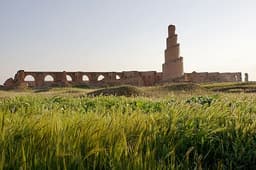
Al-Mutawakkil
Emperor · Medieval
52.9Total
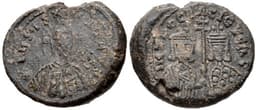
Peter I of Bulgaria
Emperor · Medieval
51.5Total
Basic Information
Born
822
900
Died
861
970
Era
Medieval
Medieval
Nationality
Abbasid Caliphate
Bulgaria
Occupation
Emperor
Emperor
Civilization
Middle Eastern
Western
Score Comparison
Military (10%)
50.0
21.2
Political (20%)
61.3
68.0
Influence (20%)
57.2
54.9
Legacy (20%)
50.0
45.0
Leadership (15%)
55.3
78.0
Strategy (15%)
35.7
25.0
TOTAL
52.9
51.5
Al-Mutawakkil — Complete Timeline
848 AD
End of the MihnaReform
Al-Mutawakkil ended the Mihna, the inquisition that enforced the Mu'tazilite doctrine of the createdness of the Quran. He restored traditionalist orthodoxy and ended the persecution of scholars who opposed the doctrine.
Religious ReformMihna
Impact: regionalprogressive
851 AD
Construction of the Great Mosque of SamarraCultural◆ Major
Al-Mutawakkil commissioned the construction of the Great Mosque of Samarra, featuring the famous Malwiya minaret. This mosque was one of the largest in the Islamic world and symbolized Abbasid architectural ambition.
ArchitectureMosque
Impact: regionalconstructive
861 AD
Assassination by Turkish GuardPolitical Action
Al-Mutawakkil was assassinated by his Turkish guard in Samarra. The murder was orchestrated by his son al-Muntasir, who succeeded him. This event marked the beginning of the 'Anarchy at Samarra' and the decline of Abbasid power.
AssassinationTurkish Guard
Impact: regionaltragic
Peter I of Bulgaria — Complete Timeline
927 AD
Long reign of peace and stabilityPolitical Action◆ Major
Peter I ruled Bulgaria for over 40 years, a period marked by peace with the Byzantine Empire and internal stability. He maintained the treaty signed with Byzantium and focused on consolidating the state.
ReignPeaceBulgarian Empire
Impact: nationalconstructive
Recognition as Tsar and marriage to Byzantine princessPolitical Action◆ Major
Peter I was recognized as Tsar of Bulgaria by the Byzantine Empire and married Maria Lekapene, the granddaughter of Byzantine Emperor Romanos I. This marriage solidified the peace treaty and elevated Bulgaria's status.
MarriageDiplomacyByzantine-Bulgar Relations
Impact: regionalconstructive
Expert Analysis
Origins
Al-Mutawakkil (born 822 CE) was the tenth Abbasid caliph, son of Caliph al-Mu'tasim. He grew up in the court at Samarra, a city built by his father to house the Turkish guard. His early life was shaped by the power struggles between the caliphate and its military elite. Peter I of Bulgaria (born c. 910 CE) was the son of Tsar Simeon I, the formidable ruler who had waged wars against Byzantium. Peter inherited a throne exhausted by decades of conflict. His upbringing was steeped in the Orthodox Christian faith and the legacy of his father's military campaigns.
Rise to Power
Al-Mutawakkil became caliph in 847 CE after the death of his brother al-Wathiq. His accession was supported by the Turkish guard, but he soon sought to assert independence from their influence. A key turning point was his decision in 849 CE to end the Mihna, the inquisition that enforced the Mu'tazilite doctrine. This won him support from traditionalist scholars but alienated the elite. Peter I became tsar in 927 CE after his father Simeon's death. He immediately sued for peace with the Byzantine Empire, marrying Maria Lekapene, granddaughter of Emperor Romanos I, in 927 CE. This treaty recognized Peter as tsar and secured a 40-year peace. His rise was marked by diplomacy rather than force.
Leadership & Governance
Al-Mutawakkil governed with a mix of religious conservatism and architectural ambition. He restored traditionalist orthodoxy by ending the Mihna and promoting the Hanbali school. He also commissioned the Great Mosque of Samarra (completed 852 CE), with its iconic Malwiya minaret, demonstrating his focus on monumental projects. However, he failed to manage the Turkish guard, who grew restive under his attempts to reduce their power. Peter I ruled Bulgaria through a decentralized system, relying on local governors and the church. He maintained peace by honoring the Byzantine treaty and suppressing rebellions, such as that of his brother Michael in 930 CE. His governance score of 78.0 in leadership reflects his ability to sustain stability, while Al-Mutawakkil's political score of 61.3 indicates his struggles with factionalism.
Triumph & Tragedy
Al-Mutawakkil's greatest triumph was ending the Mihna, a move that restored unity among Sunni Muslims and ended a divisive inquisition. His construction of the Great Mosque of Samarra also left a lasting architectural legacy. His tragedy was his assassination in 861 CE by his own Turkish guard, orchestrated by his son al-Muntasir. This murder plunged the caliphate into a decade of instability known as the Anarchy at Samarra. Peter I's triumph was his long reign of peace (927–969 CE), which allowed Bulgaria to recover from Simeon's wars. He also secured recognition as tsar and was later canonized as a saint by the Bulgarian Orthodox Church. His tragedy came late in his reign: the Byzantine Empire under Nikephoros II Phokas refused to renew the treaty, leading to a Rus' invasion in 968 CE and the loss of eastern Bulgaria. Peter died in 970 CE, his realm weakened.
Character & Destiny
Al-Mutawakkil was a determined caliph who sought to centralize power and assert religious authority. His decision to end the Mihna was politically astute, but his favoritism toward Turkish commanders and his son's ambitions led to his downfall. Historians note his lack of military acumen (scoring 50.0 in military) and strategic missteps (35.7 in strategy). Peter I was a pious and pacific ruler, earning a leadership score of 78.0. His character was suited to peacetime governance, but his reliance on diplomacy left Bulgaria vulnerable when Byzantine policy shifted. His canonization reflects his personal piety, but his inability to prepare for external threats limited his legacy.
Legacy
Al-Mutawakkil's legacy is mixed. He is remembered for ending the Mihna and building the Samarra mosque, but his assassination initiated a period of decline for the Abbasid Caliphate. His influence score of 57.2 reflects his impact on Sunni orthodoxy, but his political failures limited long-term stability. Peter I's legacy is more positive in Bulgarian history: he is venerated as a saint and credited with a peaceful reign that allowed cultural and religious development. However, his military weakness (scoring 21.2) meant that his achievements did not endure; the Byzantine conquests after his death erased many of his gains. His legacy score of 45.0 indicates a moderate impact, primarily religious.
Conclusion
Al-Mutawakkil had a greater impact on the broader Islamic world by ending the Mihna and shaping Sunni orthodoxy, but his reign ended in chaos. Peter I provided stability for Bulgaria but failed to secure its future. Despite Al-Mutawakkil's higher total score (52.9 vs 51.5), his impact was more profound and lasting, especially in religious history. Therefore, Al-Mutawakkil had greater historical significance, even though his reign was shorter and more turbulent.
Rankings
🥇
Al-MutawakkilLeader
Mil: 50.0Pol: 61.3Inf: 57.2
52.9
🥈
Peter I of Bulgaria
Mil: 21.2Pol: 68.0Inf: 54.9
51.5
+1.4 behind
How This Comparison Works
Algorithm
Each figure is scored on 6 dimensions (0—100 scale) based on structured historical data: Military (10%), Political (20%), Influence (20%), Legacy (20%), Leadership (15%), Strategy (15%). The weighted total produces the final ranking.
Data Sources
Scores are computed from structured sub-indicators in the database. Scale factors adjust for era (Ancient ×0.85, Modern ×1.0) and civilization size (Eastern ×1.05, Other ×0.80) to account for differences in population and military scale.
Maximum 3 Figures
Comparisons are limited to 2—3 figures to ensure readability and statistical meaningfulness.
Error Margins
±5 points per dimension — Sub-scores are derived from historical records with inherent uncertainty. Two figures within 5 points on a dimension should be considered roughly equivalent in that area.
Total Score Accuracy
±3 points overall — The weighted combination of 6 dimensions produces a total score with approximately ±3 points of uncertainty. Differences of less than 3 points are not statistically significant— the figures are effectively tied.
Known Limitations
- Historical records are incomplete and uneven across civilizations
- Figures from oral-tradition societies may be underrepresented
- Occupation labels can misclassify multi-role figures
- Scores measure capability and impact, not moral character
- Quantitative scoring is a comparison tool, not absolute truth
Capability Radar
Military (10%) — Battles & Warfare
Battles
20
15
Win Rate
25
10
Expansion
10
5
Political (20%) — Governance & Reform
Reform
60
40
Diplomacy
40
70
Economy
45
60
Influence (20%) — Cultural & Global Reach
Cultural
40
50
Global
35
20
Legacy (20%) — Historical Impact
Historical
55
40
Longevity
40
30
Leadership (15%) — Power & Stability
Tenure
50
80
Stability
20
85
Strategy (15%) — Tactics & Innovation
Strategy
20
15
Tactics
15
10
Reform
10
10
Similar Comparisons
Comments & Discussion
No comments yet. Be the first to share your thoughts!