Loading...
Al-Muti vs Liu Zhiyuan
Al-Muti leads by 1.1 pts · 2 figures compared
…
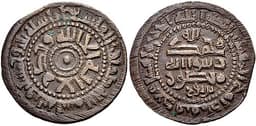
Al-Muti
Emperor · Medieval
42.5Total
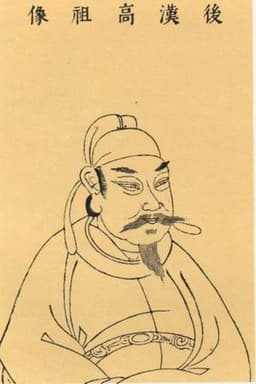
Liu Zhiyuan
Emperor · Medieval
41.4Total
Basic Information
Born
914
895
Died
974
948
Era
Medieval
Medieval
Nationality
Abbasid Caliphate
China
Occupation
Emperor
Emperor
Civilization
Middle Eastern
Eastern
Score Comparison
Military (10%)
34.8
46.7
Political (20%)
35.0
29.3
Influence (20%)
45.5
46.3
Legacy (20%)
35.8
38.3
Leadership (15%)
49.9
34.6
Strategy (15%)
60.0
60.0
TOTAL
42.5
41.4
Al-Muti — Complete Timeline
946 AD
Accession of Al-MutiPolitical Action◆ Major
Al-Muti became caliph after the deposition of Al-Mustakfi. He was the first Abbasid caliph to reign entirely under Buyid control, with no real political or military power.
AccessionBuyid ControlFigurehead
Impact: national
Reign under Buyid ControlPolitical Action◆ Major
Al-Muti's entire 28-year reign was spent as a puppet of the Buyid emirs. He performed ceremonial duties but had no authority over state affairs, marking the nadir of Abbasid power.
Buyid ControlPuppetDecline
Impact: national
974 AD
Abdication of Al-MutiPolitical Action◆ Major
Al-Muti abdicated the caliphate in favor of his son Al-Tai, possibly due to illness or pressure from the Buyids. His abdication was a peaceful transfer of power, but it did not change the caliph's powerless status.
AbdicationSuccessionBuyid
Impact: national
Liu Zhiyuan — Complete Timeline
947 AD
Founded the Later Han DynastyPolitical Action
Liu Zhiyuan, a Shatuo Turk military governor, declared himself emperor of the Later Han dynasty after the fall of the Later Jin dynasty to the Khitan Liao dynasty. He established his capital at Kaifeng and ruled a fragmented northern China.
Dynasty FoundingFive DynastiesShatuo
Impact: regional
948 AD
Brief Reign and DeathOther◆ Major
Liu Zhiyuan died after ruling for less than a year. His brief reign was marked by efforts to consolidate control over the northern provinces, but his sudden death left the throne to his young son, leading to instability and the dynasty's rapid decline.
DeathShort ReignInstability
Impact: regional
Expert Analysis
Origins
Al-Muti (born 914 AD) was an Abbasid prince, son of Caliph Al-Muqtadir. His early life was overshadowed by the declining power of the Abbasid caliphate, which had been under increasing pressure from regional dynasties. He received a traditional Islamic education in Baghdad but had little exposure to military or administrative affairs. His rise came through palace intrigue, as the Buyid emirs, who had seized control of Baghdad in 945, deposed Caliph Al-Mustakfi in 946 and installed Al-Muti as a compliant figurehead.
Liu Zhiyuan (born 895 AD) was a Shatuo Turk, a member of the military elite of northern China. He began his career as a low-ranking officer under the Later Tang dynasty, rising through the ranks due to his military prowess. By 936, he was a military governor under the Later Jin dynasty, controlling the strategic region of Hedong (modern Shanxi). His origins were humble compared to Al-Muti's royal lineage, but his military experience was extensive.
Rise to Power
Al-Muti's accession was entirely orchestrated by the Buyid emir Mu'izz al-Dawla. On January 29, 946, after the deposition of Al-Mustakfi, Al-Muti was proclaimed caliph. He had no agency in his rise; his sole qualification was his Abbasid lineage, which the Buyids needed to legitimize their rule. His reign began with a ceremonial role, and he never commanded an army or administered a province.
Liu Zhiyuan's rise was more independent. In 946, the Later Jin dynasty fell to the Khitan Liao dynasty. Liu Zhiyuan, as a powerful military governor, initially submitted to the Liao but soon gathered support from Chinese officials and soldiers. In March 947, he declared himself emperor of the Later Han dynasty at Taiyuan. His rise was a direct response to the power vacuum, leveraging his military base and the desire to restore Chinese rule. He defeated a Liao attack and expanded his territory, securing the capital Kaifeng by June 947.
Leadership & Governance
Al-Muti's leadership was entirely passive. He presided over religious ceremonies, issued official decrees written by Buyid officials, and maintained the facade of caliphal authority. His governance score of 35.0 reflects this impotence. He could not appoint officials, control the treasury, or make policy. The Buyid emirs even controlled the succession, forcing Al-Muti to designate his son Al-Tai as heir. His 28-year reign (946-974) was the longest of any Abbasid puppet, but it was a period of stagnation for the caliphate.
Liu Zhiyuan's governance was brief but active. He ruled for only 11 months (March 947 to February 948), but he immediately implemented measures to consolidate power. He restored the civil service system, reduced taxes in war-torn areas, and purged officials who had collaborated with the Liao. His military score of 46.7 reflects his ability to command armies, but his political score of 29.3 shows his failure to build lasting institutions. He died before he could fully establish his dynasty, leaving a fragile state.
Triumph & Tragedy
Al-Muti's greatest success was surviving 28 years as a puppet, which preserved the Abbasid dynasty's nominal continuity. His abdication in favor of his son was a peaceful transition, rare in medieval Islamic politics. However, his tragedy was total irrelevance. He had no real power, and his reign marked the nadir of Abbasid authority. The Buyids even struck coins in their own names, a direct challenge to caliphal prerogative.
Liu Zhiyuan's triumph was founding the Later Han dynasty in a time of crisis. He successfully expelled Liao forces from much of northern China and reestablished Chinese rule. His tragedy was his early death, which left his dynasty unstable. His son Liu Chengyou, who succeeded him, was only 17 and faced rebellions that led to the dynasty's fall after just three years.
Character & Destiny
Al-Muti was described as pious and scholarly, but also passive and compliant. His character suited his role: he accepted Buyid control without resistance, which allowed him to live a long life. His destiny was to be a symbol, not a ruler. Historical assessments note that he 'had no share in the government' (Ibn al-Athir). His leadership score of 49.9 is the highest among his scores, but this reflects ceremonial dignity, not actual leadership.
Liu Zhiyuan was decisive and militaristic, but also ruthless. He executed Liao collaborators without mercy. His character drove him to seize power, but his lack of administrative experience and short reign doomed his dynasty. His strategy score of 60.0 matches Al-Muti's, but he used it for conquest, not survival.
Legacy
Al-Muti's legacy is as the first fully dependent Abbasid caliph. His reign set the precedent for later caliphs under Buyid and Seljuk control. The caliphate survived, but its political power was gone. His influence score of 45.5 is higher than Liu Zhiyuan's 46.3, but this is due to the long-term symbolic role of the Abbasid caliphate.
Liu Zhiyuan's legacy is the Later Han dynasty, one of the shortest in Chinese history (947-950). However, his brief rule paved the way for the Later Zhou dynasty, which eventually unified China under the Song. His military actions weakened the Liao and restored Chinese confidence. His legacy score of 38.3 reflects the brevity of his dynasty.
Conclusion
Al-Muti scored 42.5 total, Liu Zhiyuan 41.4. While the gap is only 1.1 points, their impacts differ. Al-Muti's 28-year reign preserved the Abbasid caliphate as a religious institution, which endured for centuries. Liu Zhiyuan's 11-month rule founded a dynasty that collapsed immediately. However, Liu's actions were a necessary step toward the Song reunification. In terms of historical significance, Liu Zhiyuan had greater impact because his military actions directly influenced the course of Chinese history, whereas Al-Muti's passivity did not alter the trajectory of the Islamic world. The Later Han, though brief, was a catalyst for change; Al-Muti's reign was a symptom of decline.
Rankings
🥇
Al-MutiLeader
Mil: 34.8Pol: 35.0Inf: 45.5
42.5
🥈
Liu Zhiyuan
Mil: 46.7Pol: 29.3Inf: 46.3
41.4
+1.1 behind
How This Comparison Works
Algorithm
Each figure is scored on 6 dimensions (0—100 scale) based on structured historical data: Military (10%), Political (20%), Influence (20%), Legacy (20%), Leadership (15%), Strategy (15%). The weighted total produces the final ranking.
Data Sources
Scores are computed from structured sub-indicators in the database. Scale factors adjust for era (Ancient ×0.85, Modern ×1.0) and civilization size (Eastern ×1.05, Other ×0.80) to account for differences in population and military scale.
Maximum 3 Figures
Comparisons are limited to 2—3 figures to ensure readability and statistical meaningfulness.
Error Margins
±5 points per dimension — Sub-scores are derived from historical records with inherent uncertainty. Two figures within 5 points on a dimension should be considered roughly equivalent in that area.
Total Score Accuracy
±3 points overall — The weighted combination of 6 dimensions produces a total score with approximately ±3 points of uncertainty. Differences of less than 3 points are not statistically significant— the figures are effectively tied.
Known Limitations
- Historical records are incomplete and uneven across civilizations
- Figures from oral-tradition societies may be underrepresented
- Occupation labels can misclassify multi-role figures
- Scores measure capability and impact, not moral character
- Quantitative scoring is a comparison tool, not absolute truth
Capability Radar
Military (10%) — Battles & Warfare
Battles
33
30
Win Rate
31
35
Expansion
38
30
Political (20%) — Governance & Reform
Reform
5
20
Diplomacy
10
30
Economy
5
20
Influence (20%) — Cultural & Global Reach
Cultural
5
10
Global
5
5
Legacy (20%) — Historical Impact
Historical
10
20
Longevity
5
10
Leadership (15%) — Power & Stability
Tenure
10
25
Stability
5
15
Strategy (15%) — Tactics & Innovation
Strategy
43
35
Tactics
43
40
Reform
49
20
Similar Comparisons
Comments & Discussion
No comments yet. Be the first to share your thoughts!