Loading...
Al-Muti vs Napoleon Bonaparte
Napoleon Bonaparte leads by 28.4 pts · 2 figures compared
…
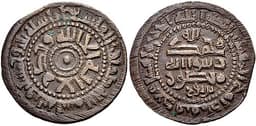
Al-Muti
Emperor · Medieval
42.5Total

Napoleon Bonaparte
General · Modern
70.9Total
Basic Information
Born
914
1769
Died
974
1821
Era
Medieval
Modern
Nationality
Abbasid Caliphate
France
Occupation
Emperor
General
Civilization
Middle Eastern
Western
Score Comparison
Military (10%)
34.8
94.0
Political (20%)
35.0
72.0
Influence (20%)
45.5
40.0
Legacy (20%)
35.8
80.0
Leadership (15%)
49.9
78.0
Strategy (15%)
60.0
90.0
TOTAL
42.5
70.9
Al-Muti — Complete Timeline
946 AD
Accession of Al-MutiPolitical Action◆ Major
Al-Muti became caliph after the deposition of Al-Mustakfi. He was the first Abbasid caliph to reign entirely under Buyid control, with no real political or military power.
AccessionBuyid ControlFigurehead
Impact: national
Reign under Buyid ControlPolitical Action◆ Major
Al-Muti's entire 28-year reign was spent as a puppet of the Buyid emirs. He performed ceremonial duties but had no authority over state affairs, marking the nadir of Abbasid power.
Buyid ControlPuppetDecline
Impact: national
974 AD
Abdication of Al-MutiPolitical Action◆ Major
Al-Muti abdicated the caliphate in favor of his son Al-Tai, possibly due to illness or pressure from the Buyids. His abdication was a peaceful transfer of power, but it did not change the caliph's powerless status.
AbdicationSuccessionBuyid
Impact: national
Napoleon Bonaparte — Complete Timeline
1799 AD
Coup of 18 BrumaireOther◆ Major
Napoleon Bonaparte, with support from his brother Lucien and key political figures, overthrew the Directory in a bloodless coup. He established the Consulate with himself as First Consul, effectively becoming the ruler of France. This event ended the French Revolution's most unstable period.
French RevolutionCoupRise to Power
Impact: regional
1804 AD
Promulgation of the Napoleonic CodeOther◆ Major
Napoleon enacted the Civil Code of the French, known as the Napoleonic Code, a comprehensive set of laws that replaced the fragmented feudal legal systems. The code established legal equality, protected property rights, and secularized law. It became the basis for legal systems in many European and world countries.
Legal ReformNapoleonic CodeCivil Law
Impact: globalconstructive
1805 AD
Battle of AusterlitzWar◆ Major
Napoleon's Grande Arm
Napoleonic WarsBattleDecisive Victory
Impact: global
1812 AD
Invasion of RussiaWar◆ Major
Napoleon led the Grande Arm
Napoleonic WarsInvasionDisaster
Impact: globaldestructive
1815 AD
Battle of WaterlooWar◆ Major
Napoleon's French army was defeated by the combined forces of the Duke of Wellington's Anglo-Allied army and Gebhard Leberecht von Bl
Napoleonic WarsBattleFinal Defeat
Impact: globaldestructive
Expert Analysis
al-muti-vs-napoleon-bonaparte
# The Emperor and the Shadow: Napoleon and Al-Muti
In the winter of 1812, Napoleon Bonaparte stood on the smoking ruins of Moscow, his Grande Armée freezing around him, his empire at its zenith and its breaking point. Eight centuries earlier, in the gardens of Baghdad, another ruler watched his world shrink to the size of a palace courtyard. Al-Muti, the twenty-third Abbasid caliph, sat on a throne that had once commanded the allegiance of half the world, but his hands held no power; the Buyid emirs held the swords. Two men, both called sovereign, yet separated by everything that defines a ruler: ambition, circumstance, and the cruel arithmetic of history.
Origins
Napoleon was born in 1769 on the island of Corsica, a place of fierce independence and recent French conquest. His family was minor nobility, poor enough to feel the sting of status without its comforts. The world into which he arrived was one of revolution—the old orders of Europe were cracking, and a young artillery officer with a hunger for glory could rise faster than any king’s son. Corsica taught him that power was something to be taken, not inherited.
Al-Muti entered the world in 914, in a Baghdad that was a shadow of Harun al-Rashid’s golden city. The Abbasid Caliphate had already fractured; provincial dynasties ruled from Spain to Egypt, and the caliphs themselves had become pawns in a game played by Turkish soldiers and Persian bureaucrats. Al-Muti was born into a house of diminishing returns. His father, al-Muqtadir, had been murdered by his own guards. His uncles and cousins had been blinded, deposed, or strangled with silken cords. The lesson of his childhood was clear: the throne was a cage, and the crown was a target.
Rise to Power
Napoleon’s ascent was a masterpiece of speed and audacity. At twenty-four, he drove the British out of Toulon. At twenty-six, he crushed a royalist uprising in Paris with a “whiff of grapeshot.” By thirty, he was conquering Italy, forging treaties, and writing his name across the map of Europe. The French Revolution had demolished the old ladder of birth; Napoleon built his own from ambition, talent, and the bodies of his enemies. Every battle—from the Pyramids to Austerlitz—was a stepping stone.
Al-Muti’s rise was not a climb but a survival. In 946, the Buyid emir Ahmad ibn Buya marched into Baghdad, deposed the caliph al-Mustakfi, and chose al-Muti as his replacement. The new caliph was thirty-two years old, a prince of the blood who had spent his life watching his family be destroyed. He did not seize power; power was handed to him, with the understanding that he would never use it. The Buyids needed a figurehead—a descendant of the Prophet’s uncle to legitimize their rule—and al-Muti was willing to be that figure. His accession was not a triumph but a transaction.
Leadership & Governance
Napoleon governed as he fought: with relentless energy and total control. He reformed France’s legal system with the Napoleonic Code, centralized the administration, created the Bank of France, and built schools and roads that still bear his mark. He was a military genius, scoring a 93 in strategy, but also a political architect who understood that law and order were the foundations of lasting power. Yet his governance was also a tyranny of personality—he trusted no one fully, promoted his family beyond their merits, and treated Europe as a chessboard where only one player mattered.
Al-Muti governed by absence. For twenty-eight years, from 946 to 974, he performed the rituals of the caliphate: leading Friday prayers, minting coins with his name, receiving ambassadors in the audience hall. But the real decisions—taxes, wars, appointments—were made by the Buyid emirs. Al-Muti’s political score of 45.5 reflects not incompetence but powerlessness. He was a master of survival, not of rule. He learned to read the moods of his captors, to smile when he wanted to scream, to be useful without being threatening. His strategy score of 66 suggests that he understood the game he was playing, even if he could not win it.
Triumph & Tragedy
Napoleon’s greatest moment was also his most terrible: the Battle of Austerlitz in 1805, where he destroyed the combined armies of Austria and Russia. It was a triumph of strategy, deception, and nerve—the sun of Austerlitz became the symbol of his invincibility. But his tragedy was Waterloo in 1815, where the same sun set on his empire. Exiled to Saint Helena, he died at fifty-one, a prisoner of the British, his body ravaged by cancer and his dreams reduced to memoirs.
Al-Muti’s triumphs were invisible. He survived. He saw his son, al-Tai, grow to manhood. He navigated the shifting alliances of Buyid politics without being murdered, blinded, or deposed by violence. His tragedy was that survival was all he had. In 974, he abdicated—possibly due to illness, possibly due to pressure—and handed the empty throne to his son. He died soon after, a forgotten man in a forgotten palace. The Abbasid Caliphate continued for another two centuries, but it was already a ghost.
Character & Destiny
Napoleon’s character was fire: restless, consuming, brilliant, and destructive. He believed that destiny was something to be seized, that will could overcome any obstacle. “Impossible,” he once said, “is a word to be found only in the dictionary of fools.” That conviction made him emperor of Europe, but it also blinded him. He invaded Russia against all advice, refused compromise when peace was possible, and could not bear to share the stage. His personality drove his rise and his fall with equal force.
Al-Muti’s character was water: patient, adaptive, invisible. He understood that in a world of iron fists, the only way to survive was to bend. He did not dream of conquest; he dreamed of not being strangled in his sleep. His destiny was not to shape history but to endure it. He was a placeholder, a name on a coin, a face on a prayer rug. The Buyids did not need him to be great; they needed him to be quiet.
Legacy
Napoleon’s legacy is written in stone and blood. The Napoleonic Code governs law across Europe and beyond. His military tactics are still studied in war colleges. His name is synonymous with ambition, genius, and the terrible cost of greatness. He scored a 94 in military and 82 in influence—numbers that reflect a man who changed the world, for better and worse.
Al-Muti’s legacy is a footnote. His total score of 49.4 places him among the forgotten. Historians remember him only as the first caliph to rule entirely under Buyid control, a symbol of the Abbasid decline. He left no laws, no battles, no monuments. He left only a name in a chronicle, a lesson in the fragility of power.
Conclusion
Two rulers, separated by a millennium, yet connected by a single truth: that power is never given freely, and that the throne is as much a prison as a prize. Napoleon tried to conquer the world and ended up on a rock in the South Atlantic. Al-Muti tried only to survive and ended up in the same dust. One burned bright and fast; the other flickered low and long. Their stories remind us that history does not reward effort or ambition alone—it rewards the strange alchemy of character, chance, and the age into which we are born. In the end, the emperor and the shadow both served the same master: time.
Rankings
🥇
Napoleon BonaparteLeader
Mil: 94.0Pol: 72.0Inf: 40.0
70.9
🥈
Al-Muti
Mil: 34.8Pol: 35.0Inf: 45.5
42.5
+28.4 behind
How This Comparison Works
Algorithm
Each figure is scored on 6 dimensions (0—100 scale) based on structured historical data: Military (10%), Political (20%), Influence (20%), Legacy (20%), Leadership (15%), Strategy (15%). The weighted total produces the final ranking.
Data Sources
Scores are computed from structured sub-indicators in the database. Scale factors adjust for era (Ancient ×0.85, Modern ×1.0) and civilization size (Eastern ×1.05, Other ×0.80) to account for differences in population and military scale.
Maximum 3 Figures
Comparisons are limited to 2—3 figures to ensure readability and statistical meaningfulness.
Error Margins
±5 points per dimension — Sub-scores are derived from historical records with inherent uncertainty. Two figures within 5 points on a dimension should be considered roughly equivalent in that area.
Total Score Accuracy
±3 points overall — The weighted combination of 6 dimensions produces a total score with approximately ±3 points of uncertainty. Differences of less than 3 points are not statistically significant— the figures are effectively tied.
Known Limitations
- Historical records are incomplete and uneven across civilizations
- Figures from oral-tradition societies may be underrepresented
- Occupation labels can misclassify multi-role figures
- Scores measure capability and impact, not moral character
- Quantitative scoring is a comparison tool, not absolute truth
Capability Radar
Military (10%) — Battles & Warfare
Battles
33
95
Win Rate
31
90
Expansion
38
95
Political (20%) — Governance & Reform
Reform
5
95
Diplomacy
10
80
Economy
5
85
Influence (20%) — Cultural & Global Reach
Cultural
5
85
Global
5
90
Legacy (20%) — Historical Impact
Historical
10
95
Longevity
5
90
Leadership (15%) — Power & Stability
Tenure
10
85
Stability
5
70
Strategy (15%) — Tactics & Innovation
Strategy
43
95
Tactics
43
98
Reform
49
92
Similar Comparisons
Comments & Discussion
No comments yet. Be the first to share your thoughts!