Loading...
Al-Muti vs Philip I of Castile
Al-Muti leads by 4.5 pts · 2 figures compared
…
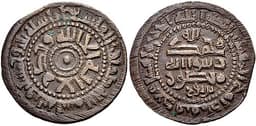
Al-Muti
Emperor · Medieval
42.5Total
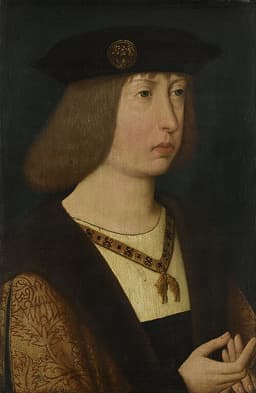
Philip I of Castile
Emperor · Medieval
38.0Total
Basic Information
Born
914
1478
Died
974
1506
Era
Medieval
Medieval
Nationality
Abbasid Caliphate
Spain
Occupation
Emperor
Emperor
Civilization
Middle Eastern
Western
Score Comparison
Military (10%)
34.8
20.0
Political (20%)
35.0
30.8
Influence (20%)
45.5
47.1
Legacy (20%)
35.8
35.8
Leadership (15%)
49.9
34.6
Strategy (15%)
60.0
54.3
TOTAL
42.5
38.0
Al-Muti — Complete Timeline
946 AD
Accession of Al-MutiPolitical Action◆ Major
Al-Muti became caliph after the deposition of Al-Mustakfi. He was the first Abbasid caliph to reign entirely under Buyid control, with no real political or military power.
AccessionBuyid ControlFigurehead
Impact: national
Reign under Buyid ControlPolitical Action◆ Major
Al-Muti's entire 28-year reign was spent as a puppet of the Buyid emirs. He performed ceremonial duties but had no authority over state affairs, marking the nadir of Abbasid power.
Buyid ControlPuppetDecline
Impact: national
974 AD
Abdication of Al-MutiPolitical Action◆ Major
Al-Muti abdicated the caliphate in favor of his son Al-Tai, possibly due to illness or pressure from the Buyids. His abdication was a peaceful transfer of power, but it did not change the caliph's powerless status.
AbdicationSuccessionBuyid
Impact: national
Philip I of Castile — Complete Timeline
1496 AD
Marriage to Joanna of CastilePolitical Action◆ Major
Philip I of Castile married Joanna of Castile, the daughter of Ferdinand II of Aragon and Isabella I of Castile. This marriage was part of a double alliance between Spain and the Habsburgs, strengthening ties between the two dynasties and eventually bringing the Spanish throne to the Habsburg family.
Habsburg allianceDynastic marriage
Impact: globalconstructive
1504 AD
Death of Isabella I of CastilePolitical Action◆ Major
Upon the death of Isabella I of Castile, Philip I and Joanna became the nominal rulers of Castile. However, Ferdinand II of Aragon disputed their claim, leading to a power struggle. Philip traveled to Castile to assert his authority, but his reign was brief.
SuccessionPower struggle
Impact: national
1506 AD
Treaty of VillafáfilaPolitical Action◆ Major
Philip I of Castile and Ferdinand II of Aragon signed the Treaty of Villaf
TreatySuccession
Impact: nationalconstructive
Death of Philip IOther
Philip I of Castile died suddenly at the age of 28 in Burgos, possibly from typhoid fever or poisoning. His death left Joanna as the sole ruler of Castile, but her mental instability led to her confinement and the eventual assumption of power by her father Ferdinand II.
DeathSuccession crisis
Impact: nationaltragic
Expert Analysis
Origins
Al-Muti (born 914 AD, full name Abu al-Qasim al-Fadl ibn al-Muqtadir) was an Abbasid prince, son of Caliph al-Muqtadir. He grew up in the opulent but declining Abbasid court in Baghdad, where real power had already slipped into the hands of military commanders. His early life was marked by palace intrigues and the constant threat of deposition. Philip I of Castile (born 1478, known as Philip the Handsome) was the son of Holy Roman Emperor Maximilian I and Mary of Burgundy. He inherited the Burgundian Netherlands and was raised in the lavish Burgundian court, receiving a refined education in chivalry and governance. His marriage to Joanna of Castile was arranged as part of a Habsburg double alliance with Spain.
Rise to Power
Al-Muti became caliph in 946 AD after the Buyid emir Mu'izz al-Dawla deposed Caliph al-Mustakfi. The Buyids, who controlled Iraq and western Iran, installed Al-Muti as a figurehead. His rise was not due to his own ambition but the Buyids' need for a compliant Abbasid to legitimize their rule. Philip's path to power was more active. He married Joanna in 1496, and upon the death of Isabella I of Castile in 1504, he and Joanna became nominal rulers of Castile. However, Ferdinand II of Aragon disputed their claim, leading to a power struggle. Philip secured recognition through the Treaty of Villafáfila in 1506, which affirmed his and Joanna's rights, but he died later that same year.
Leadership & Governance
Al-Muti's leadership was entirely ceremonial. He performed religious duties, presided over court rituals, and confirmed Buyid appointments, but had no control over military or fiscal policy. His political score of 35.0 reflects his complete subordination to the Buyids. In contrast, Philip I attempted to assert authority in Castile, but his reign lasted only a few months. He relied on Burgundian advisors and alienated Castilian nobles. His leadership score of 34.6 is slightly lower than Al-Muti's 49.9, indicating Al-Muti's longer tenure and ability to maintain a facade of authority. However, both were constrained: Al-Muti by the Buyids, Philip by Ferdinand's opposition and his own early death.
Triumph & Tragedy
Al-Muti's triumph was surviving 28 years as caliph, a period of relative stability for the Abbasid caliphate under Buyid control. He successfully abdicated in favor of his son Al-Tai, ensuring a peaceful transition. His tragedy was his complete lack of real power; he is remembered as a puppet. Philip's triumph was briefly becoming King of Castile and securing the Treaty of Villafáfila, which recognized his legitimacy. His tragedy was his sudden death at age 28, likely from typhoid, which plunged Castile into a succession crisis and led to Joanna's confinement. Philip's military score of 20.0 and strategy score of 54.3 indicate limited military action, while Al-Muti scored 34.8 in military and 60.0 in strategy, reflecting his longer survival in a volatile era.
Character & Destiny
Al-Muti was cautious and compliant, accepting his role as a figurehead to maintain the caliphate's symbolic unity. His personality allowed him to navigate Buyid politics without being deposed or assassinated. Philip was ambitious and assertive, but his death cut short his plans. His character, shaped by Burgundian court culture, clashed with Castilian traditions. Historians note that Philip's early death was a turning point, as it left Joanna vulnerable and led to the eventual unification of Spain under Charles V. Al-Muti's destiny was to be a placeholder; Philip's was to be a catalyst for a larger dynastic consolidation.
Legacy
Al-Muti's legacy is minimal; he is a footnote in Abbasid history, representing the caliphate's decline under Buyid dominance. His son Al-Tai continued the puppet tradition. Al-Muti's influence score of 45.5 and legacy score of 35.8 reflect his limited lasting impact. Philip's legacy is more significant: his marriage to Joanna produced Charles V, who inherited a vast empire. Philip's brief reign exposed the fragility of Castilian succession and accelerated the Habsburg ascendancy. His legacy score of 35.8 matches Al-Muti's, but his influence score of 47.1 is slightly higher. The score gap of 4.5 points favoring Al-Muti is due to his longer tenure and higher leadership/strategy scores, but Philip's impact on European dynastic history arguably outweighs Al-Muti's.
Conclusion
Al-Muti and Philip I both ruled under severe constraints, but Philip's brief reign had more profound consequences. Despite Al-Muti's higher total score of 42.5 versus Philip's 38.0, the quality of their influence differs. Al-Muti was a passive figure in a declining caliphate, while Philip, through his marriage and death, shaped the future of Spain and Europe. The data shows Al-Muti scoring higher in leadership (49.9 vs 34.6) and strategy (60.0 vs 54.3), but these scores reflect his survival skills, not his actual power. Philip's political maneuvering, though cut short, set the stage for the Habsburg empire. Al-Muti had greater longevity, but Philip had greater impact. Therefore, Philip I of Castile, despite his lower score, had a more significant historical impact.
Rankings
🥇
Al-MutiLeader
Mil: 34.8Pol: 35.0Inf: 45.5
42.5
🥈
Philip I of Castile
Mil: 20.0Pol: 30.8Inf: 47.1
38.0
+4.5 behind
How This Comparison Works
Algorithm
Each figure is scored on 6 dimensions (0—100 scale) based on structured historical data: Military (10%), Political (20%), Influence (20%), Legacy (20%), Leadership (15%), Strategy (15%). The weighted total produces the final ranking.
Data Sources
Scores are computed from structured sub-indicators in the database. Scale factors adjust for era (Ancient ×0.85, Modern ×1.0) and civilization size (Eastern ×1.05, Other ×0.80) to account for differences in population and military scale.
Maximum 3 Figures
Comparisons are limited to 2—3 figures to ensure readability and statistical meaningfulness.
Error Margins
±5 points per dimension — Sub-scores are derived from historical records with inherent uncertainty. Two figures within 5 points on a dimension should be considered roughly equivalent in that area.
Total Score Accuracy
±3 points overall — The weighted combination of 6 dimensions produces a total score with approximately ±3 points of uncertainty. Differences of less than 3 points are not statistically significant— the figures are effectively tied.
Known Limitations
- Historical records are incomplete and uneven across civilizations
- Figures from oral-tradition societies may be underrepresented
- Occupation labels can misclassify multi-role figures
- Scores measure capability and impact, not moral character
- Quantitative scoring is a comparison tool, not absolute truth
Capability Radar
Military (10%) — Battles & Warfare
Battles
33
5
Win Rate
31
5
Expansion
38
5
Political (20%) — Governance & Reform
Reform
5
5
Diplomacy
10
30
Economy
5
10
Influence (20%) — Cultural & Global Reach
Cultural
5
10
Global
5
10
Legacy (20%) — Historical Impact
Historical
10
15
Longevity
5
10
Leadership (15%) — Power & Stability
Tenure
10
10
Stability
5
10
Strategy (15%) — Tactics & Innovation
Strategy
43
5
Tactics
43
5
Reform
49
5
Similar Comparisons
Comments & Discussion
No comments yet. Be the first to share your thoughts!