Loading...
This comparison has not been analyzed yet.
One-time AI generation (~1 minute). Scores and timeline are already available below.
Al-Qadir vs Dayan Khan
Dayan Khan leads by 8.1 pts · 2 figures compared
…
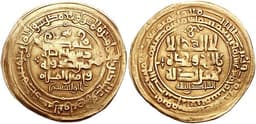
Al-Qadir
Emperor · Medieval
55.1Total

Dayan Khan
Emperor · Medieval
63.2Total
Basic Information
Born
947
1464
Died
1031
1517
Era
Medieval
Medieval
Nationality
Abbasid Caliphate
Mongolia
Occupation
Emperor
Emperor
Civilization
Middle Eastern
Eastern
Score Comparison
Military (10%)
21.2
61.7
Political (20%)
68.0
72.0
Influence (20%)
60.0
58.3
Legacy (20%)
52.0
58.0
Leadership (15%)
74.0
78.0
Strategy (15%)
36.8
55.0
TOTAL
55.1
63.2
Al-Qadir — Complete Timeline
1011 AD
Assertion of Sunni OrthodoxyPolitical Action◆ Major
Caliph Al-Qadir issued a manifesto condemning Shia doctrines and affirming Sunni orthodoxy. This document was read in mosques across Baghdad and served to strengthen Sunni identity against the Shia Buyid emirs who controlled the caliphate politically.
Sunni-Shia RelationsReligious PolicyBuyid Era
Impact: regionalconstructive
1018 AD
Al-Qadir CreedCultural◆ Major
Al-Qadir promulgated a formal creed (al-i'tiqad al-qadiri) that defined Sunni beliefs, including the createdness of the Quran and the legitimacy of the first four caliphs. This creed was enforced in Baghdad and influenced later Sunni theology.
TheologySunni OrthodoxyCreed
Impact: regionalconstructive
1020 AD
Suppression of Shia RitualsPolitical Action
Al-Qadir ordered the suppression of public Shia mourning rituals for Husayn ibn Ali in Baghdad. This action aimed to reduce Shia influence and assert caliphal authority over religious practices in the capital.
Religious SuppressionShiaBaghdad
destructive
Dayan Khan — Complete Timeline
1480 AD
Unification of Mongol TribesPolitical Action
Dayan Khan reunified the fragmented Mongol tribes under his rule, ending a period of division. He reestablished the Yuan dynasty's legacy and centralized authority, though his control was often contested.
UnificationMongol TribesCentralization
Impact: regionalconstructive
1500 AD
Reform of Mongol AdministrationReform◆ Major
Dayan Khan implemented administrative reforms, dividing Mongolia into six tumens (military-administrative units). This structure aimed to strengthen control and streamline governance, influencing Mongol organization for generations.
Administrative ReformTumen SystemMongolia
Impact: regionalconstructive
1510 AD
Conflict with the OiratsWar
Dayan Khan fought a series of campaigns against the Oirat Mongols, seeking to subdue them. While he achieved some victories, the Oirats remained a persistent challenge, limiting his unification efforts.
ConflictOiratMongolia
Impact: regional
This comparison has not been analyzed yet.
One-time AI generation (~1 minute). Scores and timeline are already available below.
Rankings
🥇
Dayan KhanLeader
Mil: 61.7Pol: 72.0Inf: 58.3
63.2
🥈
Al-Qadir
Mil: 21.2Pol: 68.0Inf: 60.0
55.1
+8.1 behind
How This Comparison Works
Algorithm
Each figure is scored on 6 dimensions (0—100 scale) based on structured historical data: Military (10%), Political (20%), Influence (20%), Legacy (20%), Leadership (15%), Strategy (15%). The weighted total produces the final ranking.
Data Sources
Scores are computed from structured sub-indicators in the database. Scale factors adjust for era (Ancient ×0.85, Modern ×1.0) and civilization size (Eastern ×1.05, Other ×0.80) to account for differences in population and military scale.
Maximum 3 Figures
Comparisons are limited to 2—3 figures to ensure readability and statistical meaningfulness.
Error Margins
±5 points per dimension — Sub-scores are derived from historical records with inherent uncertainty. Two figures within 5 points on a dimension should be considered roughly equivalent in that area.
Total Score Accuracy
±3 points overall — The weighted combination of 6 dimensions produces a total score with approximately ±3 points of uncertainty. Differences of less than 3 points are not statistically significant— the figures are effectively tied.
Known Limitations
- Historical records are incomplete and uneven across civilizations
- Figures from oral-tradition societies may be underrepresented
- Occupation labels can misclassify multi-role figures
- Scores measure capability and impact, not moral character
- Quantitative scoring is a comparison tool, not absolute truth
Capability Radar
Military (10%) — Battles & Warfare
Battles
10
65
Win Rate
10
70
Expansion
10
70
Political (20%) — Governance & Reform
Reform
60
80
Diplomacy
50
70
Economy
40
60
Influence (20%) — Cultural & Global Reach
Cultural
60
60
Global
40
50
Legacy (20%) — Historical Impact
Historical
60
70
Longevity
50
55
Leadership (15%) — Power & Stability
Tenure
60
75
Stability
50
65
Strategy (15%) — Tactics & Innovation
Strategy
10
75
Tactics
10
60
Reform
10
80
Similar Comparisons
Comments & Discussion
No comments yet. Be the first to share your thoughts!