Loading...
Al-Qadir vs Le Loi
Le Loi leads by 13.1 pts · 2 figures compared
…
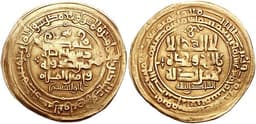
Al-Qadir
Emperor · Medieval
55.1Total
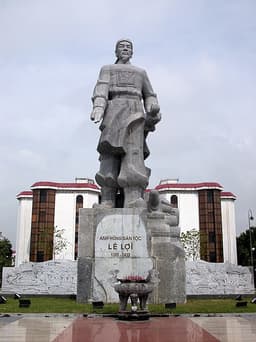
Le Loi
Emperor · Medieval
68.2Total
Basic Information
Born
947
1385
Died
1031
1433
Era
Medieval
Medieval
Nationality
Abbasid Caliphate
Vietnam
Occupation
Emperor
Emperor
Civilization
Middle Eastern
Eastern
Score Comparison
Military (10%)
21.2
74.7
Political (20%)
68.0
60.0
Influence (20%)
60.0
68.0
Legacy (20%)
52.0
68.0
Leadership (15%)
74.0
72.0
Strategy (15%)
36.8
69.1
TOTAL
55.1
68.2
Al-Qadir — Complete Timeline
1011 AD
Assertion of Sunni OrthodoxyPolitical Action◆ Major
Caliph Al-Qadir issued a manifesto condemning Shia doctrines and affirming Sunni orthodoxy. This document was read in mosques across Baghdad and served to strengthen Sunni identity against the Shia Buyid emirs who controlled the caliphate politically.
Sunni-Shia RelationsReligious PolicyBuyid Era
Impact: regionalconstructive
1018 AD
Al-Qadir CreedCultural◆ Major
Al-Qadir promulgated a formal creed (al-i'tiqad al-qadiri) that defined Sunni beliefs, including the createdness of the Quran and the legitimacy of the first four caliphs. This creed was enforced in Baghdad and influenced later Sunni theology.
TheologySunni OrthodoxyCreed
Impact: regionalconstructive
1020 AD
Suppression of Shia RitualsPolitical Action
Al-Qadir ordered the suppression of public Shia mourning rituals for Husayn ibn Ali in Baghdad. This action aimed to reduce Shia influence and assert caliphal authority over religious practices in the capital.
Religious SuppressionShiaBaghdad
destructive
Le Loi — Complete Timeline
1418 AD
Lam Son Uprising BeginsWar
Le Loi launched the Lam Son uprising against Ming Chinese occupation of Dai Viet. He gathered a small force in the Lam Son region of Thanh Hoa province, beginning a decade-long guerrilla war.
Ming OccupationVietnamese IndependenceGuerrilla War
Impact: national
1426 AD
Siege of Dong QuanWar◆ Major
Le Loi's forces besieged the Ming-held citadel of Dong Quan (Hanoi). The siege cut off Ming supply lines and forced the Chinese to negotiate, leading to the eventual withdrawal of Ming forces.
SiegeMing OccupationDai Viet
Impact: national
1427 AD
Battle of Chi Lang PassWar◆ Major
Le Loi's forces ambushed and defeated a large Ming relief army at Chi Lang Pass. This decisive victory forced the Ming court to recognize Dai Viet's independence and withdraw its remaining troops.
BattleMing OccupationIndependence
Impact: regional
1428 AD
Founding of the Later Le DynastyPolitical Action
Le Loi ascended the throne as Emperor Le Thai To, founding the Later Le dynasty. He established a new capital at Dong Kinh (Hanoi) and implemented policies to rebuild the war-torn country.
Later Le DynastyVietnamese HistoryReconstruction
Impact: regionalconstructive
Expert Analysis
Origins
Al-Qadir (born 947 CE) was a prince of the Abbasid caliphate, raised in Baghdad under the tutelage of his father, Caliph al-Muttaqi. His early life was marked by the political dominance of the Shia Buyid dynasty, which controlled the caliphate's military and administrative affairs. Al-Qadir received a traditional Islamic education, focusing on Sunni theology and law, which shaped his later zeal for orthodoxy.
Le Loi (born 1385 CE) was born into a wealthy aristocratic family in the Lam Son region of Thanh Hoa, Dai Viet (modern Vietnam). His family had a tradition of military service, and he was educated in Confucian classics and military strategy. The Ming Chinese occupation of Dai Viet (1407-1427) radicalized him, turning him from a local lord into a nationalist leader.
Rise to Power
Al-Qadir became caliph in 991 CE after the death of his cousin, Caliph al-Ta'i, who had been deposed by the Buyid amir Baha' al-Dawla. Al-Qadir initially cooperated with the Buyids but gradually asserted his authority. His rise was not through military conquest but through careful political maneuvering, using religious decrees to strengthen his position. In 1011, he issued a manifesto condemning Shia doctrines, which was read in mosques across Baghdad. This 'Al-Qadir Creed' (al-i'tiqad al-qadiri) defined Sunni beliefs, including the createdness of the Quran and the legitimacy of the first three caliphs.
Le Loi's rise began with the Lam Son uprising in 1418. He gathered a small force in the mountains of Thanh Hoa, initially numbering only a few hundred men. Over the next decade, he built a coalition of local lords and peasant fighters, using guerrilla tactics to harass the Ming occupiers. His turning point came in 1426 when he besieged the Ming citadel of Dong Quan (Hanoi), cutting off their supply lines. The decisive victory at Chi Lang Pass in 1427, where his forces ambushed a Ming relief army, forced the Ming court to recognize Dai Viet's independence.
Leadership & Governance
Al-Qadir's leadership was religious and ideological. He used his position as caliph to promulgate a formal creed, which he enforced through the state apparatus. He suppressed Shia rituals, such as public mourning for Husayn ibn Ali, and ordered the destruction of Shia texts. His governance was reactive, focused on preserving the caliphate's spiritual authority rather than expanding its temporal power. Politically, he scored 68.0, reflecting his ability to maintain influence despite Buyid dominance.
Le Loi was a pragmatic military leader and administrator. After founding the Later Le dynasty in 1428, he implemented policies to rebuild the war-torn country. He redistributed land to peasants, reduced taxes, and promoted Confucian education. His governance was proactive, aimed at consolidating independence and restoring national identity. His leadership score of 72.0 and political score of 60.0 reflect his effectiveness in both war and peace.
Triumph & Tragedy
Al-Qadir's greatest success was the assertion of Sunni orthodoxy, which laid the groundwork for the eventual decline of Buyid influence. His creed became a benchmark for later Sunni scholars. However, his failure was the limited scope of his power; he never fully freed the caliphate from foreign control. His military score of 21.2 indicates his lack of direct military authority.
Le Loi's triumph was the liberation of Dai Viet from Ming rule, a feat that earned him the title 'Le Thai To' (Great Ancestor). His military score of 74.7 reflects his strategic acumen. However, his tragedy was the short-lived nature of his dynasty's early stability; after his death, internal conflicts weakened the realm. He also failed to completely expel Ming influence, as cultural ties remained.
Character & Destiny
Al-Qadir was a determined ideologue, patient and calculating. He understood that direct confrontation with the Buyids was futile, so he used religious authority to erode their legitimacy. His character was shaped by a deep commitment to Sunni orthodoxy, which he saw as the only path to salvation for the caliphate. This focus on doctrine limited his political flexibility.
Le Loi was a charismatic and resilient leader. He endured years of hardship, including a near-defeat in 1419 when his forces were scattered. His ability to inspire loyalty and adapt to changing circumstances was key to his success. His destiny was tied to the Vietnamese struggle for independence, and he became a national hero.
Legacy
Al-Qadir's legacy is primarily theological. His creed influenced Sunni Islam for centuries, reinforcing the doctrine of the created Quran and the legitimacy of the Rashidun caliphs. He scored 52.0 in legacy, reflecting his impact on religious history. However, his political legacy was limited; the Abbasid caliphate continued to decline.
Le Loi's legacy is immense in Vietnam. He is revered as a national liberator and the founder of the Later Le dynasty, which lasted until 1789. His strategies are studied in Vietnamese military academies. He scored 68.0 in legacy, indicating his enduring impact on national identity. Statues and streets named after him are common across Vietnam.
Conclusion
Le Loi had a greater impact than Al-Qadir. His total score of 68.2 compared to Al-Qadir's 55.1 reflects his superior military, strategic, and legacy scores. While Al-Qadir influenced Sunni theology, his achievements were largely symbolic and did not alter the political landscape of the Islamic world. In contrast, Le Loi's expulsion of Ming China reshaped Southeast Asian geopolitics and created a national identity that persists today. The score gap of 13.1 points underscores Le Loi's broader and more tangible influence.
Rankings
🥇
Le LoiLeader
Mil: 74.7Pol: 60.0Inf: 68.0
68.2
🥈
Al-Qadir
Mil: 21.2Pol: 68.0Inf: 60.0
55.1
+13.1 behind
How This Comparison Works
Algorithm
Each figure is scored on 6 dimensions (0—100 scale) based on structured historical data: Military (10%), Political (20%), Influence (20%), Legacy (20%), Leadership (15%), Strategy (15%). The weighted total produces the final ranking.
Data Sources
Scores are computed from structured sub-indicators in the database. Scale factors adjust for era (Ancient ×0.85, Modern ×1.0) and civilization size (Eastern ×1.05, Other ×0.80) to account for differences in population and military scale.
Maximum 3 Figures
Comparisons are limited to 2—3 figures to ensure readability and statistical meaningfulness.
Error Margins
±5 points per dimension — Sub-scores are derived from historical records with inherent uncertainty. Two figures within 5 points on a dimension should be considered roughly equivalent in that area.
Total Score Accuracy
±3 points overall — The weighted combination of 6 dimensions produces a total score with approximately ±3 points of uncertainty. Differences of less than 3 points are not statistically significant— the figures are effectively tied.
Known Limitations
- Historical records are incomplete and uneven across civilizations
- Figures from oral-tradition societies may be underrepresented
- Occupation labels can misclassify multi-role figures
- Scores measure capability and impact, not moral character
- Quantitative scoring is a comparison tool, not absolute truth
Capability Radar
Military (10%) — Battles & Warfare
Battles
10
75
Win Rate
10
80
Expansion
10
65
Political (20%) — Governance & Reform
Reform
60
70
Diplomacy
50
75
Economy
40
65
Influence (20%) — Cultural & Global Reach
Cultural
60
80
Global
40
55
Legacy (20%) — Historical Impact
Historical
60
85
Longevity
50
75
Leadership (15%) — Power & Stability
Tenure
60
60
Stability
50
70
Strategy (15%) — Tactics & Innovation
Strategy
10
82
Tactics
10
78
Reform
10
70
Similar Comparisons
Comments & Discussion
No comments yet. Be the first to share your thoughts!