Loading...
Al-Radi vs John I of Castile
Al-Radi leads by 1.6 pts · 2 figures compared
…
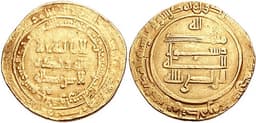
Al-Radi
Emperor · Medieval
37.5Total

John I of Castile
Emperor · Medieval
35.9Total
Basic Information
Born
909
1358
Died
940
1390
Era
Medieval
Medieval
Nationality
Abbasid Caliphate
Castile
Occupation
Emperor
Emperor
Civilization
Middle Eastern
Western
Score Comparison
Military (10%)
20.0
10.2
Political (20%)
30.7
27.9
Influence (20%)
47.9
47.9
Legacy (20%)
37.5
37.5
Leadership (15%)
33.6
38.1
Strategy (15%)
45.0
36.8
TOTAL
37.5
35.9
Al-Radi — Complete Timeline
934 AD
Accession of Al-RadiPolitical Action◆ Major
Al-Radi became caliph after the deposition of Al-Qahir. His reign saw the continued decline of Abbasid power, with the rise of the Buyid dynasty in Persia and the Hamdanids in Syria.
AccessionDeclineBuyids
Impact: national
940 AD
Last Friday Prayer Led by a CaliphCultural◆ Major
Al-Radi led the Friday prayers in Baghdad, a traditional duty of the caliph. This was the last time an Abbasid caliph personally performed this function, as later caliphs were too weak or controlled by others.
Friday PrayerTraditionLast
Impact: national
Death of Al-RadiPolitical Action◆ Major
Al-Radi died at age 31, possibly from illness. His death marked the end of the last caliph who had any real authority, as his successors were figureheads under Buyid control.
DeathEnd of EraBuyid Control
Impact: nationaltragic
John I of Castile — Complete Timeline
1383 AD
Claimed the Portuguese thronePolitical Action◆ Major
Upon the death of King Ferdinand I of Portugal without a male heir, John I of Castile asserted his claim to the Portuguese throne through his wife Beatrice, daughter of Ferdinand I. This claim was contested by Portuguese nobles, leading to the 1383-1385 Portuguese interregnum.
Portuguese successionIberian politics
Impact: regional
1385 AD
Battle of AljubarrotaWar
John I of Castile led his army against Portuguese forces commanded by John of Aviz at Aljubarrota. The Castilian army was decisively defeated, securing Portuguese independence and ending Castilian claims to the Portuguese throne. The battle established the Aviz dynasty in Portugal.
Portuguese independenceIberian war
Impact: regionaldestructive
1386 AD
Treaty of Windsor (1386)Political Action◆ Major
Following the defeat at Aljubarrota, John I of Castile signed the Treaty of Windsor with England, formalizing an alliance between Castile and England. The treaty included provisions for mutual military support and trade agreements, strengthening Castile's position in the Hundred Years' War.
Anglo-Castilian allianceHundred Years' War
Impact: regionalconstructive
Expert Analysis
Origins
Al-Radi (born 909 CE) was the twentieth caliph of the Abbasid Caliphate, ascending to the throne in 934 CE at the age of 25. He was the son of Caliph al-Muqtadir and a Greek slave concubine. His early life was marked by the political turmoil of a declining caliphate, where real power had shifted to military commanders and provincial governors. He received a traditional education in Islamic jurisprudence and theology, but his reign would be defined by his inability to stem the empire's fragmentation.
John I of Castile (born 1358 CE) was the son of Henry II of Castile and Joan Manuel of Villena. He inherited a kingdom that had recently undergone a civil war, with his father establishing the Trastámara dynasty by usurping the throne from Peter the Cruel. John was educated in chivalric and administrative traditions, preparing him for kingship. His upbringing emphasized military prowess and dynastic ambition, which would later lead him to claim the Portuguese throne.
Rise to Power
Al-Radi became caliph after the deposition of his uncle al-Qahir in 934 CE. His accession was orchestrated by the powerful vizier Ibn Muqlah and the military commander Bajkam. However, from the start, his authority was limited. The provinces of the Abbasid Caliphate were breaking away: the Hamdanids controlled northern Mesopotamia, the Ikhshidids held Egypt and Syria, and the Buyids were expanding from the east. Al-Radi's reign saw the caliphate lose control over most of its territory, reducing his effective rule to Baghdad and its immediate surroundings.
John I ascended the Castilian throne in 1379 CE upon the death of his father, Henry II. He inherited a stable kingdom but faced challenges from Portugal and England. In 1383, when King Ferdinand I of Portugal died without a male heir, John I asserted his claim to the Portuguese throne through his wife Beatrice, Ferdinand's daughter. This led to the 1383-1385 Portuguese succession crisis, culminating in the Battle of Aljubarrota on August 14, 1385.
Leadership & Governance
Al-Radi's leadership was characterized by symbolic authority rather than effective governance. He is noted as the last caliph to personally lead Friday prayers, a traditional duty of the caliph that signified religious leadership. However, his political score of 30.7 reflects his inability to control the state apparatus. He relied on viziers like Ibn Muqlah, who was later blinded and imprisoned. The caliphate's finances collapsed, and Baghdad faced food shortages and riots. Al-Radi's reign saw the rise of the Buyids, who would soon take over Baghdad and reduce future caliphs to puppets.
John I's leadership score of 38.1 is slightly higher, but his military score of 10.2 is low due to his decisive defeat at Aljubarrota. His governance focused on consolidating Trastámara rule and expanding Castilian influence. He pursued diplomatic alliances, including the Treaty of Windsor (1386) with England, which formalized an alliance that would last for centuries. However, his claim to Portugal failed, and the Treaty of Windsor primarily benefited England, as Castile gained little from it.
Triumph & Tragedy
Al-Radi's greatest triumph was maintaining the semblance of caliphal authority in a period of disintegration. He led the last Friday prayer by an Abbasid caliph, a symbolic act that has been remembered as the end of an era. His tragedy was his powerlessness: he died at age 31 in 940 CE, possibly from illness, leaving the caliphate in a state of collapse. His successors were figureheads controlled by Buyid emirs, and the Abbasid caliphate never recovered its temporal power.
John I's triumph was his ability to secure the Castilian throne and establish a dynasty that would rule for centuries. He also successfully negotiated the Treaty of Windsor, which aligned Castile with England. His tragedy was the catastrophic defeat at Aljubarrota, where his army was routed by a smaller Portuguese force led by John of Aviz (later John I of Portugal). This defeat ended his Portuguese ambitions and solidified Portuguese independence. John I died in 1390 CE from a fall from his horse, leaving a mixed legacy.
Character & Destiny
Al-Radi was described as pious and well-meaning but weak-willed and indecisive. His total score of 37.5 reflects his inability to act decisively in the face of crisis. His character led him to accept the erosion of his authority rather than fight for it. He scored 45.0 in strategy, but this was likely theoretical rather than practical, as he failed to implement any effective policies.
John I was ambitious and determined, as shown by his claim to Portugal. However, his strategic score of 36.8 and military score of 10.2 indicate poor decision-making in warfare. He underestimated the Portuguese resistance and failed to secure adequate alliances. His character was marked by a sense of entitlement to the Portuguese throne, which led to overreach. His leadership score of 38.1 suggests he was capable in domestic affairs but not in military campaigns.
Legacy
Al-Radi's legacy is that of the last caliph who had any real authority. After him, the Abbasid caliphs became ceremonial figures, and the institution of the caliphate lost its political power. His reign marked the end of an era, and historical assessments note that he was the last caliph to lead Friday prayers. His influence score of 47.9 reflects the symbolic importance of his role, even if his actual power was minimal.
John I's legacy is more mixed. He is remembered for the defeat at Aljubarrota, which secured Portuguese independence. His claim to Portugal is seen as a failed attempt at dynastic expansion. However, his Treaty of Windsor with England had long-term consequences, forming the basis of the Anglo-Portuguese Alliance (but for Castile, it was a short-lived arrangement). His legacy score of 37.5 is tied with Al-Radi's, but his impact on European politics is more tangible.
Conclusion
Al-Radi and John I both ruled during periods of transition and faced challenges that exposed their limitations. Al-Radi's total score of 37.5 edges out John I's 35.9, but the margin is small. However, Al-Radi's symbolic role as the last effective caliph gives him a greater historical impact. He represented the end of a thousand-year institution's political power, while John I's defeat at Aljubarrota was a setback for Castile but did not fundamentally alter its trajectory. Al-Radi's reign is a more significant historical marker, as it closed the chapter of the Abbasid caliphate's temporal authority. Therefore, Al-Radi had a greater impact, despite his weak leadership.
Rankings
🥇
Al-RadiLeader
Mil: 20.0Pol: 30.7Inf: 47.9
37.5
🥈
John I of Castile
Mil: 10.2Pol: 27.9Inf: 47.9
35.9
+1.6 behind
How This Comparison Works
Algorithm
Each figure is scored on 6 dimensions (0—100 scale) based on structured historical data: Military (10%), Political (20%), Influence (20%), Legacy (20%), Leadership (15%), Strategy (15%). The weighted total produces the final ranking.
Data Sources
Scores are computed from structured sub-indicators in the database. Scale factors adjust for era (Ancient ×0.85, Modern ×1.0) and civilization size (Eastern ×1.05, Other ×0.80) to account for differences in population and military scale.
Maximum 3 Figures
Comparisons are limited to 2—3 figures to ensure readability and statistical meaningfulness.
Error Margins
±5 points per dimension — Sub-scores are derived from historical records with inherent uncertainty. Two figures within 5 points on a dimension should be considered roughly equivalent in that area.
Total Score Accuracy
±3 points overall — The weighted combination of 6 dimensions produces a total score with approximately ±3 points of uncertainty. Differences of less than 3 points are not statistically significant— the figures are effectively tied.
Known Limitations
- Historical records are incomplete and uneven across civilizations
- Figures from oral-tradition societies may be underrepresented
- Occupation labels can misclassify multi-role figures
- Scores measure capability and impact, not moral character
- Quantitative scoring is a comparison tool, not absolute truth
Capability Radar
Military (10%) — Battles & Warfare
Battles
5
10
Win Rate
5
5
Expansion
5
10
Political (20%) — Governance & Reform
Reform
10
20
Diplomacy
15
25
Economy
10
20
Influence (20%) — Cultural & Global Reach
Cultural
15
10
Global
10
5
Legacy (20%) — Historical Impact
Historical
15
15
Longevity
10
10
Leadership (15%) — Power & Stability
Tenure
20
30
Stability
10
15
Strategy (15%) — Tactics & Innovation
Strategy
5
10
Tactics
5
15
Reform
5
5
Similar Comparisons
Comments & Discussion
No comments yet. Be the first to share your thoughts!