Loading...
Al-Radi vs Michael of Chernigov
Michael of Chernigov leads by 1.5 pts · 2 figures compared
…
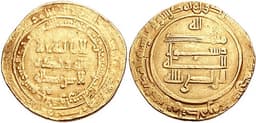
Al-Radi
Emperor · Medieval
37.5Total
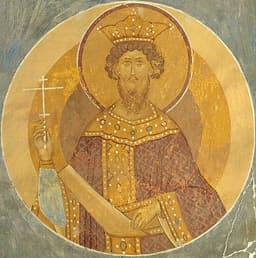
Michael of Chernigov
Emperor · Medieval
39.0Total
Basic Information
Born
909
1185
Died
940
1246
Era
Medieval
Medieval
Nationality
Abbasid Caliphate
Kievan Rus
Occupation
Emperor
Emperor
Civilization
Middle Eastern
Western
Score Comparison
Military (10%)
20.0
21.2
Political (20%)
30.7
27.9
Influence (20%)
47.9
51.8
Legacy (20%)
37.5
44.2
Leadership (15%)
33.6
38.1
Strategy (15%)
45.0
30.3
TOTAL
37.5
39.0
Al-Radi — Complete Timeline
934 AD
Accession of Al-RadiPolitical Action◆ Major
Al-Radi became caliph after the deposition of Al-Qahir. His reign saw the continued decline of Abbasid power, with the rise of the Buyid dynasty in Persia and the Hamdanids in Syria.
AccessionDeclineBuyids
Impact: national
940 AD
Last Friday Prayer Led by a CaliphCultural◆ Major
Al-Radi led the Friday prayers in Baghdad, a traditional duty of the caliph. This was the last time an Abbasid caliph personally performed this function, as later caliphs were too weak or controlled by others.
Friday PrayerTraditionLast
Impact: national
Death of Al-RadiPolitical Action◆ Major
Al-Radi died at age 31, possibly from illness. His death marked the end of the last caliph who had any real authority, as his successors were figureheads under Buyid control.
DeathEnd of EraBuyid Control
Impact: nationaltragic
Michael of Chernigov — Complete Timeline
1239 AD
Prince of Chernigov during Mongol invasionWar◆ Major
Michael of Chernigov ruled as Prince of Chernigov when the Mongol Empire under Batu Khan invaded Rus'. Chernigov was besieged and captured by the Mongols in 1239. Michael fled to Hungary and then to Poland, seeking military aid against the invaders. His inability to defend his principality marked the collapse of Chernigov's independence.
Mongol invasionPrincipality lossExile
Impact: regionaltragic
1246 AD
Martyrdom at the Golden Horde courtOther◆ Major
Michael of Chernigov was summoned to the court of Batu Khan in Sarai. He refused to perform pagan rituals, including walking through fire and bowing to idols, as required by Mongol custom. For his refusal, he was executed by the Mongols along with his boyar Fedor. His death was later recognized as a martyrdom for the Orthodox faith.
MartyrdomReligious defianceMongol execution
Impact: regionaltragic
Expert Analysis
Origins
Al-Radi (born 909 CE) was the son of Caliph al-Muqtadir and a Byzantine slave concubine. He grew up in the Abbasid court in Baghdad, receiving a traditional education in Islamic law and governance. His early life was marked by the political turmoil of the caliphate, which had already lost effective control over much of its territory to regional dynasties. Al-Radi ascended to the caliphate in 934 CE after the deposition of his uncle al-Qahir, who had been blinded and imprisoned.
Michael of Chernigov (born c. 1185 CE) was a prince of the Rurikid dynasty, the ruling family of Kievan Rus. He was the son of Vsevolod IV of Kiev and Maria of Poland. Michael spent his early years in the princely courts of Chernigov and Novgorod, learning the arts of war and diplomacy. His formative experiences included the political fragmentation of Kievan Rus, which was divided among competing princes, and the growing threat of the Mongol Empire.
Rise to Power
Al-Radi became caliph at age 25, inheriting a weakened position. The Abbasid caliphate had lost its military and fiscal independence to the Buyid amirs, who controlled Baghdad. Al-Radi's reign (934-940 CE) saw the continued erosion of caliphal authority. His most notable act was personally leading the Friday prayers in 935 CE, a symbolic gesture of religious leadership. However, he could not command armies or collect taxes independently. His total score of 37.5 reflects his limited political and military power.
Michael of Chernigov became Prince of Chernigov in 1223 CE, just after the Mongol invasion of Rus' at the Battle of the Kalka River. He gained prominence through his resistance to the Mongols and his diplomatic efforts to unite the Rus' princes. In 1238 CE, Chernigov was besieged and captured by the Mongols under Batu Khan. Michael fled to Hungary and Poland, seeking support, but failed to secure alliances. He returned to Rus' and was summoned to the Golden Horde in 1246 CE. His total score of 39.0 is slightly higher than Al-Radi's, driven by his influence and legacy.
Leadership & Governance
Al-Radi's governance was constrained by the Buyids. He had no real administrative power; his role was ceremonial and religious. He attempted to assert authority by dismissing viziers and appointing loyalists, but these efforts were short-lived. His leadership score of 33.6 reflects his inability to reverse the caliphate's decline. In contrast, Michael of Chernigov exercised more direct authority as a prince, but his rule was disrupted by the Mongol invasion. He led military campaigns against the Mongols, but with limited success (military score 21.2). His political score of 27.9 indicates his struggles to maintain unity among the Rus' princes.
Triumph & Tragedy
Al-Radi's greatest success was maintaining the symbolic role of the caliph as the leader of the Muslim community. His leading of Friday prayers was a significant religious act. However, his reign was marked by tragedy: the caliphate's irreversible decline, economic hardship, and his own early death at age 31, possibly from illness. He left no lasting political reforms.
Michael of Chernigov's triumph was his martyrdom. Summoned to the Golden Horde, he refused to perform pagan rituals (walking through fire and bowing to idols), choosing death over apostasy. This act of defiance led to his canonization as a saint by the Russian Orthodox Church in 1547. His tragedy was the loss of his principality and the suffering of his people under Mongol rule. He failed to protect his lands, and his death did not change the course of the invasion.
Character & Destiny
Al-Radi was a figure of limited ambition, content with religious duties. He lacked the ruthlessness needed to challenge the Buyids. His character was shaped by the constraints of his position, leading to a passive destiny. Historians view him as the last caliph with any real authority, but his reign was a swan song. Michael of Chernigov was a devout and principled ruler, willing to die for his faith. His stubbornness in refusing Mongol rituals sealed his fate. He is remembered as a martyr, but his political decisions were ineffective. His character contributed to his tragic end.
Legacy
Al-Radi's legacy is minimal. He is remembered primarily as the last caliph to lead Friday prayers, a footnote in Islamic history. The Abbasid caliphate continued as a puppet institution for centuries, but Al-Radi's death marked the end of any pretense of caliphal power. His influence score of 47.9 reflects this symbolic importance. Michael of Chernigov's legacy is more substantial. As a saint, he is venerated in the Orthodox Church, and his story inspired resistance against foreign domination. His legacy score of 44.2 is higher than Al-Radi's 37.5, but still modest.
Conclusion
While Michael of Chernigov scores slightly higher overall (39.0 vs 37.5), Al-Radi's role as the last effective caliph gives him greater historical significance in the context of the Islamic world. Michael's martyrdom had a lasting religious impact, but his political and military achievements were negligible. Al-Radi, despite his weakness, represented the end of an era. In the broader scope of history, Al-Radi's impact on the caliphate's trajectory was more consequential. Therefore, Al-Radi had greater impact.
Rankings
🥇
Michael of ChernigovLeader
Mil: 21.2Pol: 27.9Inf: 51.8
39.0
🥈
Al-Radi
Mil: 20.0Pol: 30.7Inf: 47.9
37.5
+1.5 behind
How This Comparison Works
Algorithm
Each figure is scored on 6 dimensions (0—100 scale) based on structured historical data: Military (10%), Political (20%), Influence (20%), Legacy (20%), Leadership (15%), Strategy (15%). The weighted total produces the final ranking.
Data Sources
Scores are computed from structured sub-indicators in the database. Scale factors adjust for era (Ancient ×0.85, Modern ×1.0) and civilization size (Eastern ×1.05, Other ×0.80) to account for differences in population and military scale.
Maximum 3 Figures
Comparisons are limited to 2—3 figures to ensure readability and statistical meaningfulness.
Error Margins
±5 points per dimension — Sub-scores are derived from historical records with inherent uncertainty. Two figures within 5 points on a dimension should be considered roughly equivalent in that area.
Total Score Accuracy
±3 points overall — The weighted combination of 6 dimensions produces a total score with approximately ±3 points of uncertainty. Differences of less than 3 points are not statistically significant— the figures are effectively tied.
Known Limitations
- Historical records are incomplete and uneven across civilizations
- Figures from oral-tradition societies may be underrepresented
- Occupation labels can misclassify multi-role figures
- Scores measure capability and impact, not moral character
- Quantitative scoring is a comparison tool, not absolute truth
Capability Radar
Military (10%) — Battles & Warfare
Battles
5
15
Win Rate
5
10
Expansion
5
5
Political (20%) — Governance & Reform
Reform
10
10
Diplomacy
15
25
Economy
10
10
Influence (20%) — Cultural & Global Reach
Cultural
15
30
Global
10
20
Legacy (20%) — Historical Impact
Historical
15
35
Longevity
10
30
Leadership (15%) — Power & Stability
Tenure
20
30
Stability
10
15
Strategy (15%) — Tactics & Innovation
Strategy
5
15
Tactics
5
20
Reform
5
5
Similar Comparisons
Comments & Discussion
No comments yet. Be the first to share your thoughts!