Loading...
Al-Saffah vs Taspar Qaghan
Al-Saffah leads by 6.9 pts · 2 figures compared
…
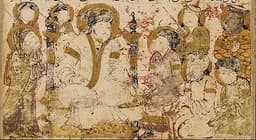
Al-Saffah
Emperor · Medieval
60.0Total
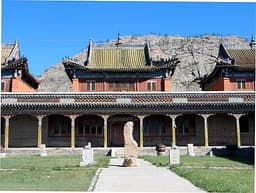
Taspar Qaghan
Emperor · Medieval
53.1Total
Basic Information
Born
721
530
Died
754
581
Era
Medieval
Medieval
Nationality
Abbasid Caliphate
Gokturk Khaganate
Occupation
Emperor
Emperor
Civilization
Middle Eastern
Eastern
Score Comparison
Military (10%)
65.0
47.5
Political (20%)
68.0
68.0
Influence (20%)
59.0
57.2
Legacy (20%)
56.0
48.3
Leadership (15%)
58.8
40.0
Strategy (15%)
57.5
57.5
TOTAL
60.0
53.1
Al-Saffah — Complete Timeline
750 AD
Proclamation as CaliphPolitical Action
Al-Saffah was proclaimed the first Abbasid caliph in Kufa after the Abbasid Revolution overthrew the Umayyads. His title 'al-Saffah' means 'the Shedder of Blood', reflecting the violent transition.
CaliphateRevolutionAbbasid
Impact: global
Massacre of the UmayyadsPolitical Action◆ Major
Al-Saffah ordered the systematic elimination of the Umayyad family to prevent any restoration. Most Umayyad princes were killed, though one, Abd al-Rahman I, escaped to Spain and founded the Emirate of Cordoba.
MassacreUmayyadPurge
Impact: globaldestructive
Establishment of the Abbasid CaliphatePolitical Action
Al-Saffah established the Abbasid Caliphate, moving the capital from Damascus to a new city near Kufa. This shift marked the beginning of a new era in Islamic history, with a focus on Persian influence and Baghdad.
CaliphateCapitalIslamic History
Impact: global
Taspar Qaghan — Complete Timeline
572 AD
Accession as Khagan of the First Turkic KhaganatePolitical Action◆ Major
Taspar Qaghan succeeded his brother Muqan Qaghan as the fourth ruler of the First Turkic Khaganate. His reign marked the peak of the khaganate's power and territorial extent in Central Asia.
SuccessionTurkic KhaganateCentral Asia
Impact: regional
574 AD
Adoption of Buddhism as state religionCultural◆ Major
Taspar Qaghan converted to Buddhism and declared it the state religion of the Turkic Khaganate. He built monasteries and invited Buddhist monks from China, promoting the spread of Buddhism among the Turkic elite and along the Silk Road.
Religious ConversionBuddhismSilk Road
Impact: regionalprogressive
576 AD
Alliance with the Byzantine Empire against the Sasanian EmpirePolitical Action◆ Major
Taspar Qaghan maintained diplomatic relations with the Byzantine Empire, continuing the alliance initiated by his predecessors against the Sasanian Empire. This alliance facilitated trade and military cooperation between the two empires.
DiplomacyByzantine-Sasanian WarsAlliance
Impact: globalconstructive
581 AD
Death and division of the khaganatePolitical Action
Taspar Qaghan died, leading to a succession crisis that split the First Turkic Khaganate into Eastern and Western halves. His death marked the end of the united khaganate and the beginning of internal conflicts.
Succession CrisisDivisionTurkic Khaganate
Impact: regionaldestructive
Expert Analysis
Origins
Al-Saffah, born around 721 CE, was a descendant of Abbas ibn Abd al-Muttalib, the Prophet Muhammad's uncle, giving him a strong claim to leadership within the Islamic community. His early life was shaped by the growing discontent against the Umayyad Caliphate, which alienated non-Arab Muslims and Shi'a factions. He was raised in the Abbasid family's secret revolutionary network centered in Kufa and Khurasan.
Taspar Qaghan, born circa 546 CE, was a member of the Ashina clan, the ruling dynasty of the First Turkic Khaganate. He was the son of Bumin Qaghan, the founder of the khaganate. His early life was immersed in the nomadic warrior culture of the steppes, with education in military tactics and tribal diplomacy. He ascended to power after the death of his brother Muqan Qaghan in 572 CE.
Rise to Power
Al-Saffah's rise was orchestrated by the Abbasid revolutionary movement, which capitalized on widespread opposition to the Umayyads. The turning point came in 747 CE when the Abbasid general Abu Muslim launched an open revolt in Khurasan. Al-Saffah was proclaimed caliph in Kufa on November 28, 749 CE, after the Abbasid forces captured the city. He adopted the regnal title 'al-Saffah' (the Shedder of Blood), signaling his intent to eliminate the Umayyad dynasty.
Taspar Qaghan succeeded his brother Muqan in 572 CE without major conflict, inheriting a khaganate at its territorial peak, stretching from the Caspian Sea to Manchuria. His rise was smooth due to the stable succession practices of the Ashina clan, though he faced challenges from rival tribes such as the Tiele and the Chinese Sui dynasty's growing influence.
Leadership & Governance
Al-Saffah's governance focused on consolidating Abbasid rule through centralization and patronage. He moved the capital from Damascus to a new city near Kufa, later establishing Baghdad as the permanent capital under his successor. He implemented a policy of inclusion for non-Arab Muslims (mawali), granting them equal status in the military and administration. However, his rule was marked by brutality, including the massacre of Umayyad princes at a banquet in 750 CE, where 80 members were killed, and the suppression of Shi'a revolts.
Taspar Qaghan ruled as a steppe khagan, maintaining the traditional structure of the khaganate with a dual system of eastern and western wings. He is noted for adopting Buddhism as the state religion around 574 CE, building monasteries and inviting monks from China. This was a strategic move to unify the diverse tribes under a common spiritual framework, but it alienated traditional Tengriists. He also maintained the alliance with the Byzantine Empire against the Sasanian Persians, continuing the diplomatic ties initiated by his father.
Triumph & Tragedy
Al-Saffah's greatest triumph was the successful overthrow of the Umayyad Caliphate and the establishment of the Abbasid dynasty, which would rule for over 500 years. His political score of 68.0 reflects his ability to unite disparate factions. However, his tragedy was the short-lived nature of his reign (749-754 CE) and the violent purges that created lasting resentment among Shi'a and Umayyad loyalists. His military score of 65.0 shows competence but not brilliance in the field.
Taspar Qaghan's triumph was maintaining the unity of the vast Turkic Khaganate during his reign, with influence score of 57.2. His adoption of Buddhism was a cultural milestone, but it failed to take deep root among the nomadic population. His tragedy was the succession crisis after his death in 581 CE, which led to the division of the khaganate into Eastern and Western halves, ending the unified Turkic state. His leadership score of 40.0 indicates weakness in managing succession.
Character & Destiny
Al-Saffah was ruthless and calculating, as shown by his systematic elimination of the Umayyads. His title 'al-Saffah' reflects his willingness to shed blood to secure power. He was also politically astute, leveraging the Abbasid network. His early death at age 33 prevented him from fully shaping the caliphate, but his actions set the tone for the Abbasid era.
Taspar Qaghan was more diplomatic and culturally inclined, as seen in his religious reforms and alliances. However, his lack of strong leadership in managing tribal loyalties and succession led to fragmentation. He is remembered as a transitional figure between the khaganate's peak and its decline.
Legacy
Al-Saffah's legacy is the Abbasid Caliphate, which ushered in the Islamic Golden Age. His reign established the Abbasid dynasty that lasted until 1258 CE. The shift of the capital to Baghdad under his successor Al-Mansur centralized power and fostered cultural exchange. The massacre of the Umayyads ensured no restoration, but also created a legacy of violence.
Taspar Qaghan's legacy is mixed. He is the last khagan of a united Turkic Khaganate, and his adoption of Buddhism influenced later Turkic states like the Uyghur Khaganate. However, the division after his death weakened the khaganate, leading to eventual subjugation by the Tang Dynasty. His influence scored 57.2, but legacy scored only 48.3.
Conclusion
Al-Saffah had a greater impact on world history. With a total score of 60.0 against Taspar Qaghan's 53.1, Al-Saffah's establishment of the Abbasid Caliphate fundamentally altered the course of Islamic civilization and the Middle East. While Taspar Qaghan's reign marked a peak for the Turkic Khaganate, his failure to secure unity led to its dissolution. Al-Saffah's political and military actions created a dynasty that shaped centuries of history, whereas Taspar Qaghan's legacy is more localized and transient.
Rankings
🥇
Al-SaffahLeader
Mil: 65.0Pol: 68.0Inf: 59.0
60.0
🥈
Taspar Qaghan
Mil: 47.5Pol: 68.0Inf: 57.2
53.1
+6.9 behind
How This Comparison Works
Algorithm
Each figure is scored on 6 dimensions (0—100 scale) based on structured historical data: Military (10%), Political (20%), Influence (20%), Legacy (20%), Leadership (15%), Strategy (15%). The weighted total produces the final ranking.
Data Sources
Scores are computed from structured sub-indicators in the database. Scale factors adjust for era (Ancient ×0.85, Modern ×1.0) and civilization size (Eastern ×1.05, Other ×0.80) to account for differences in population and military scale.
Maximum 3 Figures
Comparisons are limited to 2—3 figures to ensure readability and statistical meaningfulness.
Error Margins
±5 points per dimension — Sub-scores are derived from historical records with inherent uncertainty. Two figures within 5 points on a dimension should be considered roughly equivalent in that area.
Total Score Accuracy
±3 points overall — The weighted combination of 6 dimensions produces a total score with approximately ±3 points of uncertainty. Differences of less than 3 points are not statistically significant— the figures are effectively tied.
Known Limitations
- Historical records are incomplete and uneven across civilizations
- Figures from oral-tradition societies may be underrepresented
- Occupation labels can misclassify multi-role figures
- Scores measure capability and impact, not moral character
- Quantitative scoring is a comparison tool, not absolute truth
Capability Radar
Military (10%) — Battles & Warfare
Battles
60
55
Win Rate
65
50
Expansion
70
50
Political (20%) — Governance & Reform
Reform
55
45
Diplomacy
60
65
Economy
45
50
Influence (20%) — Cultural & Global Reach
Cultural
45
40
Global
50
45
Legacy (20%) — Historical Impact
Historical
65
50
Longevity
55
40
Leadership (15%) — Power & Stability
Tenure
40
60
Stability
35
55
Strategy (15%) — Tactics & Innovation
Strategy
55
55
Tactics
50
50
Reform
40
40
Similar Comparisons
Comments & Discussion
No comments yet. Be the first to share your thoughts!