Loading...
Al-Saffah vs Julius Caesar
Julius Caesar leads by 22.8 pts · 2 figures compared
…
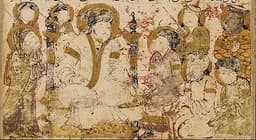
Al-Saffah
Emperor · Medieval
60.0Total

Julius Caesar
General · Ancient
82.8Total
Basic Information
Born
721
-100
Died
754
-44
Era
Medieval
Ancient
Nationality
Abbasid Caliphate
Roman Republic
Occupation
Emperor
General
Civilization
Middle Eastern
Western
Score Comparison
Military (10%)
65.0
88.0
Political (20%)
68.0
78.0
Influence (20%)
59.0
85.0
Legacy (20%)
56.0
82.0
Leadership (15%)
58.8
80.0
Strategy (15%)
57.5
85.0
TOTAL
60.0
82.8
Al-Saffah — Complete Timeline
750 AD
Proclamation as CaliphPolitical Action
Al-Saffah was proclaimed the first Abbasid caliph in Kufa after the Abbasid Revolution overthrew the Umayyads. His title 'al-Saffah' means 'the Shedder of Blood', reflecting the violent transition.
CaliphateRevolutionAbbasid
Impact: global
Massacre of the UmayyadsPolitical Action◆ Major
Al-Saffah ordered the systematic elimination of the Umayyad family to prevent any restoration. Most Umayyad princes were killed, though one, Abd al-Rahman I, escaped to Spain and founded the Emirate of Cordoba.
MassacreUmayyadPurge
Impact: globaldestructive
Establishment of the Abbasid CaliphatePolitical Action
Al-Saffah established the Abbasid Caliphate, moving the capital from Damascus to a new city near Kufa. This shift marked the beginning of a new era in Islamic history, with a focus on Persian influence and Baghdad.
CaliphateCapitalIslamic History
Impact: global
Julius Caesar — Complete Timeline
58 BC
Gallic WarsWar◆ Major
Caesar, as proconsul of Gaul, launched a series of campaigns that conquered all of Gaul (modern France, Belgium, and parts of Switzerland). He fought numerous battles, including against the Helvetii, the Belgae, and the Gallic chieftain Vercingetorix. The wars brought immense wealth and a loyal army to Caesar.
Gallic WarsConquestRoman Expansion
Impact: regional
49 BC
Crossing the RubiconPolitical Action◆ Major
Caesar led Legio XIII across the Rubicon River into Italy, defying the Roman Senate's order to disband his army. This act triggered a civil war against Pompey and the Optimates, ultimately leading to Caesar's dictatorship and the end of the Roman Republic.
Roman Civil WarEnd of RepublicPower Struggle
Impact: global
48 BC
Battle of PharsalusWar◆ Major
Caesar's outnumbered army defeated the larger forces of Pompey the Great at Pharsalus in Greece. Caesar's tactical use of a reserve line to counter Pompey's cavalry charge proved decisive. Pompey fled to Egypt, where he was assassinated, leaving Caesar as the undisputed master of the Roman world.
Roman Civil WarBattleDecisive Victory
Impact: regional
44 BC
Appointment as Dictator for LifePolitical Action◆ Major
The Roman Senate appointed Caesar dictator perpetuo (dictator for life), granting him unprecedented personal power. This move concentrated military, legislative, and judicial authority in one person, effectively ending the Roman Republic's traditional system of checks and balances and alarming many senators.
DictatorshipEnd of RepublicPower Consolidation
Impact: regionaldestructive
Assassination on the Ides of MarchPolitical Action◆ Major
A group of Roman senators, led by Marcus Junius Brutus and Gaius Cassius Longinus, stabbed Caesar to death at a meeting of the Senate in the Theatre of Pompey. The assassination was intended to restore the Republic, but instead triggered another civil war that led to the rise of the Roman Empire.
AssassinationRoman PoliticsEnd of Republic
Impact: globaldestructive
Expert Analysis
al-saffah-vs-julius-caesar
# The Short and the Long: Al-Saffah and Julius Caesar
The blood still glistened on the marble floor of the banquet hall at Abu Futrus, near the old Umayyad capital. Eighty princes of the fallen dynasty had been invited to a feast of reconciliation. As the wine flowed, the doors slammed shut. Armed men poured in. Within hours, the Umayyad line was broken, their bodies laid out on leather mats while the new caliph, Al-Saffah, watched from behind a curtain. Three years later, he was dead of smallpox, his dynasty barely begun. Half a world away and eight centuries earlier, another man had crossed a small river in northern Italy with a single legion, knowing that the act would mean either supreme power or death. Julius Caesar lived another five years—long enough to reshape the world, and short enough to die before seeing his work undone.
Origins
Gaius Julius Caesar was born in 100 BCE into a patrician family that had fallen on hard times. The Roman Republic was a cauldron of ambition; its aristocratic class competed ferociously for military commands, priesthoods, and governorships. Caesar’s uncle by marriage was Gaius Marius, the great populist general, and his wife Cornelia was the daughter of Marius’s rival Cinna. From his youth, Caesar was entangled in the violent factionalism that defined late Republican Rome. He learned early that survival meant audacity.
Abu al-Abbas, born in 721 CE, came from a different world. The Umayyad Caliphate stretched from Spain to India, but its Arab elite had grown corrupt and exclusive. The Abbasid family, descendants of the Prophet’s uncle, had spent decades quietly building a revolutionary network in the eastern province of Khurasan. Al-Saffah was not a soldier by training. He was a claimant, a symbol, a man chosen by a clandestine movement that had already done the hard work of organizing rebellion. His origins were not in personal struggle but in dynastic destiny.
Rise to Power
Caesar’s path was a ladder of individual achievement. He won the Civic Crown for bravery at the Siege of Mytilene at age twenty. He was captured by pirates, laughed at their ransom demand, and later crucified them. He climbed the *cursus honorum*—quaestor, aedile, praetor—spending borrowed fortunes on games and bribes. His great breakthrough came in 58 BCE, when he secured the governorship of Gaul. Over eight years, he conquered a territory larger than Italy itself, built a loyal army, and amassed wealth that made him the most powerful man in the Republic.
Al-Saffah rose in a single, coordinated convulsion. The Abbasid Revolution had been years in planning, but its climax came in 749–750 CE. While the Umayyad caliph Marwan II campaigned in the west, the revolutionary army emerged from Khurasan under the black banners of the Abbasids. Al-Saffah was proclaimed caliph in Kufa in 750 CE. Within months, Marwan II was dead, hunted down in Egypt. Al-Saffah did not conquer his way to power; he was placed upon a throne that others had prepared.
Leadership & Governance
Caesar governed through personal magnetism and institutional reform. As dictator, he overhauled the calendar, extended Roman citizenship to provincials, initiated public works, and reformed debt laws. He ruled not by terror but by calculated clemency—pardoning former enemies like Brutus and Cassius, a decision that would cost him his life. His military genius was inseparable from his political vision: every campaign was also a political calculation. The Gallic Wars (58–50 BCE) were as much about building a personal power base as about conquering tribes.
Al-Saffah governed by elimination. His title, *Al-Saffah*, means “the Blood-Shedder” or “the Generous One”—a double-edged epithet. He ordered the massacre of the Umayyad family not out of cruelty alone, but because the Umayyads had survived a previous rebellion by simply outlasting their enemies. Al-Saffah understood that to secure a new dynasty, the old one had to be erased. He moved the capital from Damascus eastward to a site near Kufa, later to become Baghdad, shifting the center of Islamic power toward Persia. His reign was too short for deep reform. He spent most of it suppressing revolts and consolidating control.
Triumph & Tragedy
Caesar’s greatest triumph was the conquest of Gaul, which he recorded in his *Commentaries*—a masterpiece of self-promotion that remains a classic of military literature. His crossing of the Rubicon in 49 BCE was the defining gamble of his life. His tragedy was the Ides of March, 44 BCE, when sixty senators stabbed him to death at the foot of Pompey’s statue. He had centralized power but failed to make it legitimate. The Republic was too wounded to heal, and his assassins, for all their noble intentions, only plunged Rome into another civil war.
Al-Saffah’s triumph was the Abbasid Revolution itself—one of the most successful dynastic overthrows in medieval history. His tragedy was his obscurity. He reigned for only four years, from 750 to 754 CE, and died before he could shape the caliphate in his image. His brother Al-Mansur, who succeeded him, would build Baghdad and consolidate the dynasty. Al-Saffah became a footnote, the man who cleared the ground for others to build.
Character & Destiny
Caesar was restless, brilliant, and ruthless in pursuit of glory. He wrote his own history, controlled his own narrative, and understood that in politics, perception is power. His personality—confident, charming, and utterly unafraid—drove him to take risks that would have paralyzed lesser men. He once said, “*Veni, vidi, vici*”—I came, I saw, I conquered. But his fatal flaw was the belief that his personal authority could substitute for institutional legitimacy.
Al-Saffah was a different kind of figure: a revolutionary figurehead rather than a revolutionary general. His personality is harder to discern; we know him through the actions of his regime. He was cautious enough to let others fight his battles, ruthless enough to order mass executions, and pragmatic enough to understand that his role was transitional. His destiny was to be the spark, not the flame.
Legacy
Caesar’s legacy is immeasurable. The Roman Empire was his creation in embryo. His name became a title—*Caesar*—that would be used by emperors for centuries. His reforms outlasted him, and his assassination, far from restoring the Republic, doomed it. He is remembered not just as a conqueror but as a figure who changed the very meaning of power in the Western world.
Al-Saffah’s legacy is the Abbasid Caliphate itself. By destroying the Umayyads and moving the capital east, he enabled the Golden Age of Islam—the centuries of scholarship, trade, and cultural flourishing centered on Baghdad. But he is rarely named. History remembers the builders, not the wreckers. Al-Saffah was the wrecking ball that cleared the site.
Conclusion
One man conquered the world and was murdered by his friends. The other conquered a dynasty and died in his bed, but both were consumed by the same fire: the hunger for absolute power in a world that had no room for it. Caesar’s story is a tragedy of greatness; Al-Saffah’s is a tragedy of brevity. In the end, each was a man who arrived at the door of history at precisely the right moment, walked through, and changed everything—before being swept away by the very forces they had unleashed. The short and the long: both measured not by years, but by the shadows they cast.
Rankings
🥇
Julius CaesarLeader
Mil: 88.0Pol: 78.0Inf: 85.0
82.8
🥈
Al-Saffah
Mil: 65.0Pol: 68.0Inf: 59.0
60.0
+22.8 behind
How This Comparison Works
Algorithm
Each figure is scored on 6 dimensions (0—100 scale) based on structured historical data: Military (10%), Political (20%), Influence (20%), Legacy (20%), Leadership (15%), Strategy (15%). The weighted total produces the final ranking.
Data Sources
Scores are computed from structured sub-indicators in the database. Scale factors adjust for era (Ancient ×0.85, Modern ×1.0) and civilization size (Eastern ×1.05, Other ×0.80) to account for differences in population and military scale.
Maximum 3 Figures
Comparisons are limited to 2—3 figures to ensure readability and statistical meaningfulness.
Error Margins
±5 points per dimension — Sub-scores are derived from historical records with inherent uncertainty. Two figures within 5 points on a dimension should be considered roughly equivalent in that area.
Total Score Accuracy
±3 points overall — The weighted combination of 6 dimensions produces a total score with approximately ±3 points of uncertainty. Differences of less than 3 points are not statistically significant— the figures are effectively tied.
Known Limitations
- Historical records are incomplete and uneven across civilizations
- Figures from oral-tradition societies may be underrepresented
- Occupation labels can misclassify multi-role figures
- Scores measure capability and impact, not moral character
- Quantitative scoring is a comparison tool, not absolute truth
Capability Radar
Military (10%) — Battles & Warfare
Battles
60
95
Win Rate
65
92
Expansion
70
97
Political (20%) — Governance & Reform
Reform
55
90
Diplomacy
60
85
Economy
45
82
Influence (20%) — Cultural & Global Reach
Cultural
45
88
Global
50
94
Legacy (20%) — Historical Impact
Historical
65
95
Longevity
55
96
Leadership (15%) — Power & Stability
Tenure
40
75
Stability
35
60
Strategy (15%) — Tactics & Innovation
Strategy
55
94
Tactics
50
96
Reform
40
88
Similar Comparisons
Comments & Discussion
CaesarEatsBarbarians6/17/2026
Six years isn’t “short”—Caesar lived longer than most ancient warlords. The real comparison is tactical creativity: Saffah massacred prisoners at a banquet (effective, but derivative). Caesar built bridges, dodged Pompey’s armies, then turned Gaul into a Rome-friendly buffer zone. One was a cleanup hitter, the other a strategic genius. Five years of Caesar reshaped Western governance for millennia; Saffah’s bloodbath barely outlasted his smallpox. Spare me the false symmetry.
河马考古学6/17/2026
拿一个当了三年哈里发的小军阀跟恺撒比?滑稽。恺撒在高卢打了八年仗,征服了八百座城市,还写了本书。萨法赫呢?历史上他最出名的就是餐桌大屠杀,连自己亲戚都害怕他。史书记载他甚至不敢直视杀人的场面,躲在帘子后面看。这不是什么短与长的对比,这是暗杀者和军事天才的差距。
MariusRedux6/17/2026
Data point: Caesar’s campaigns involved moving armies across the Alps in winter—logistical nightmares that would break modern supply chains. Saffah’s “achievement” was a dinner party ambush. And let’s talk scale: Caesar’s reforms touched land redistribution, calendar reform, and citizenship law. Saffah’s legacy is a paranoia so extreme he killed his own general Abu Muslim. Short reigns don’t excuse shallow impact.
文献考据狂6/17/2026
史料对比能看出本质差异。恺撒的《高卢战记》英文版至今还能买到,小学四年级也能读;萨法赫自己的生平没留下一行亲笔文字。公元750年那场宴会上到底有多少死者?阿拉伯史家记载有出入,有人说是80人,也有人说更多。但数字不重要,关键是他靠屠杀立威,恺撒靠征服立信。八年和三年,这不是时间长短的问题,是历史记忆深浅的问题。
灰衣刺客6/17/2026
你们都在夸恺撒,别忘了他也是独裁者。萨法赫至少开了阿拔斯王朝,延续五百年。恺撒死了,屋大维立刻把他制度改成帝国,元老院形同虚设。谁对制度的改变更永久?恺撒短期颠覆共和,萨法赫长期奠定王朝。三比五,五百年打五年的影响力,这个账你们怎么不算?萨法赫的“短”是个人寿命短,恺撒的“长”只是个人名气长。