Loading...
This comparison has not been analyzed yet.
One-time AI generation (~1 minute). Scores and timeline are already available below.
Alan Garcia vs Bassirou Diomaye Faye
Alan Garcia leads by 11.0 pts · 2 figures compared
…

Alan Garcia
Politician · Modern
46.4Total
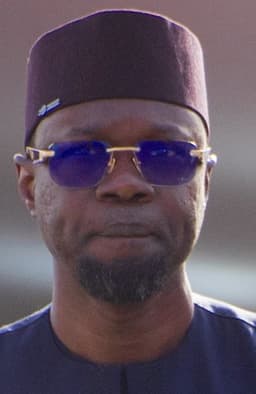
Bassirou Diomaye Faye
Politician · Modern
35.4Total
Basic Information
Born
1949
1980
Died
—
—
Era
Modern
Modern
Nationality
Peru
Senegal
Occupation
Politician
Politician
Civilization
Western
Other
Score Comparison
Military (10%)
12.4
16.7
Political (20%)
46.6
27.9
Influence (20%)
51.0
47.1
Legacy (20%)
41.7
35.0
Leadership (15%)
74.0
31.2
Strategy (15%)
39.1
43.2
TOTAL
46.4
35.4
Alan Garcia — Complete Timeline
1985 AD
First Presidency and Hyperinflation (1985-1990)Political Action◆ Major
Alan García assumed the presidency of Peru at age 36. His administration implemented heterodox economic policies, including price controls and a refusal to pay foreign debt. This led to hyperinflation exceeding 7,000% annually, economic collapse, and the rise of the Shining Path insurgency.
Economic CrisisHyperinflationDebt Crisis
Impact: nationaldestructive
2006 AD
Second Presidency and Economic Growth (2006-2011)Political Action◆ Major
García won a second term, this time pursuing free-market policies. His administration oversaw a period of strong economic growth driven by high commodity prices and foreign investment. He signed a free trade agreement with the United States and expanded social programs, reducing poverty.
Economic GrowthFree TradePoverty Reduction
Impact: nationalconstructive
2019 AD
Corruption Scandals and Suicide (2019)Other◆ Major
García was implicated in the Odebrecht corruption scandal, accused of receiving bribes during his second term. Facing imminent arrest, he shot himself in his home in Lima. His death ended a major corruption investigation and highlighted the widespread impact of the Odebrecht case in Latin America.
CorruptionOdebrechtSuicide
Impact: regionaltragic
Bassirou Diomaye Faye — Complete Timeline
2024 AD
Election as President of SenegalPolitical Action◆ Major
Bassirou Diomaye Faye won the 2024 Senegalese presidential election in the first round, defeating the ruling coalition candidate. At 44, he became the youngest elected president in Senegal's history. Faye, a former tax inspector, ran on an anti-corruption platform.
ElectionSenegalYouth
Impact: nationalconstructive
Release from prison before electionPolitical Action◆ Major
Faye was released from prison in March 2024 after being detained on charges of defamation and incitement. His release, part of a political amnesty, allowed him to campaign for the presidency, which he won weeks later.
PrisonAmnestyElection
Impact: national
This comparison has not been analyzed yet.
One-time AI generation (~1 minute). Scores and timeline are already available below.
Rankings
🥇
Alan GarciaLeader
Mil: 12.4Pol: 46.6Inf: 51.0
46.4
🥈
Bassirou Diomaye Faye
Mil: 16.7Pol: 27.9Inf: 47.1
35.4
+11.0 behind
How This Comparison Works
Algorithm
Each figure is scored on 6 dimensions (0—100 scale) based on structured historical data: Military (10%), Political (20%), Influence (20%), Legacy (20%), Leadership (15%), Strategy (15%). The weighted total produces the final ranking.
Data Sources
Scores are computed from structured sub-indicators in the database. Scale factors adjust for era (Ancient ×0.85, Modern ×1.0) and civilization size (Eastern ×1.05, Other ×0.80) to account for differences in population and military scale.
Maximum 3 Figures
Comparisons are limited to 2—3 figures to ensure readability and statistical meaningfulness.
Error Margins
±5 points per dimension — Sub-scores are derived from historical records with inherent uncertainty. Two figures within 5 points on a dimension should be considered roughly equivalent in that area.
Total Score Accuracy
±3 points overall — The weighted combination of 6 dimensions produces a total score with approximately ±3 points of uncertainty. Differences of less than 3 points are not statistically significant— the figures are effectively tied.
Known Limitations
- Historical records are incomplete and uneven across civilizations
- Figures from oral-tradition societies may be underrepresented
- Occupation labels can misclassify multi-role figures
- Scores measure capability and impact, not moral character
- Quantitative scoring is a comparison tool, not absolute truth
Capability Radar
Military (10%) — Battles & Warfare
Battles
21
20
Win Rate
28
22
Expansion
27
26
Political (20%) — Governance & Reform
Reform
40
10
Diplomacy
45
10
Economy
30
10
Influence (20%) — Cultural & Global Reach
Cultural
25
5
Global
20
5
Legacy (20%) — Historical Impact
Historical
30
5
Longevity
20
5
Leadership (15%) — Power & Stability
Tenure
65
5
Stability
20
10
Strategy (15%) — Tactics & Innovation
Strategy
33
31
Tactics
32
35
Reform
40
34
Similar Comparisons
Comments & Discussion
No comments yet. Be the first to share your thoughts!