Loading...
Albert Kesselring vs Pancho Villa
Albert Kesselring leads by 6.5 pts · 2 figures compared
…

Albert Kesselring
General · Modern
58.4Total
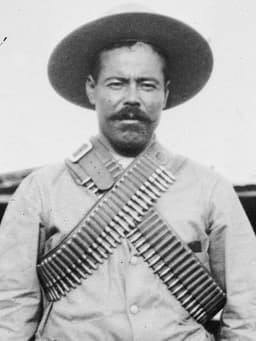
Pancho Villa
General · Modern
51.9Total
Basic Information
Born
1885
1878
Died
1960
1923
Era
Modern
Modern
Nationality
Germany
Mexico
Occupation
General
General
Civilization
Western
Western
Score Comparison
Military (10%)
72.5
70.0
Political (20%)
46.6
35.1
Influence (20%)
61.0
55.0
Legacy (20%)
50.0
54.0
Leadership (15%)
72.0
47.3
Strategy (15%)
56.2
52.5
TOTAL
58.4
51.9
Albert Kesselring — Complete Timeline
1940 AD
Command of Luftflotte 2 in the Battle of BritainWar◆ Major
Kesselring commanded Luftflotte 2 during the Battle of Britain. His air fleet conducted bombing raids against British airfields and cities. The Luftwaffe failed to achieve air superiority, leading to the cancellation of Operation Sea Lion, the planned invasion of Britain.
World War IIAir WarBattle of Britain
Impact: globaldestructive
1943 AD
Supreme Commander in ItalyWar◆ Major
Kesselring was appointed Commander-in-Chief of German forces in Italy after the Allied invasion. He organized a successful defensive campaign, delaying the Allied advance up the Italian peninsula. His strategy included the use of fortified lines and delaying actions.
World War IIItalian CampaignDefense
Impact: regional
1944 AD
Defense of the Gustav Line and Monte CassinoWar◆ Major
Kesselring commanded the defense of the Gustav Line, anchored by Monte Cassino. German forces held off repeated Allied assaults for months. The battle resulted in the destruction of the Monte Cassino abbey and heavy casualties on both sides before the line was finally breached.
World War IIItalian CampaignBattle
Impact: regionaldestructive
1945 AD
Surrender and War Crimes TrialPolitical Action◆ Major
Kesselring surrendered his forces in Italy in May 1945. He was tried by a British military court for war crimes, including the Ardeatine massacre and the shooting of partisans. He was sentenced to death, but the sentence was commuted to life imprisonment. He was released in 1952.
World War IIWar Crimes TrialPost-War
Impact: nationaltragic
Pancho Villa — Complete Timeline
1911 AD
Battle of Ciudad JuarezWar◆ Major
Villa's forces, under Madero's command, captured Ciudad Juarez, a key border city. The victory forced Porfirio Diaz to resign and sign the Treaty of Ciudad Juarez, ending the first phase of the revolution.
BattleRevolutionDiaz Resignation
Impact: national
1913 AD
Division of the North CommandWar◆ Major
After Victoriano Huerta's coup, Villa formed the Division of the North, a powerful military force. He led it to victories at Torreon and Zacatecas, becoming a dominant revolutionary general.
Military CommandRevolutionary ArmyVictories
Impact: regional
1914 AD
Battle of ZacatecasWar
Villa's Division of the North decisively defeated Huerta's federal forces at Zacatecas. The victory broke Huerta's military power and led to his resignation, but also caused a rift with Carranza.
BattleHuerta DefeatRevolutionary Victory
Impact: national
1916 AD
Columbus RaidWar◆ Major
Villa's forces attacked Columbus, New Mexico, killing 18 Americans. The raid prompted U.S. President Wilson to send a punitive expedition under General Pershing into Mexico, which failed to capture Villa.
Cross-Border RaidUS InterventionPunitive Expedition
Impact: regionaldestructive
1923 AD
Assassination of Pancho VillaPolitical Action◆ Major
Villa was assassinated by gunmen while driving in Parral, Chihuahua. The attack was likely ordered by political rivals, ending his post-revolutionary influence and securing the government's control.
AssassinationPolitical ViolenceEnd of Era
Impact: nationaltragic
Expert Analysis
Origins
Albert Kesselring was born on November 30, 1885, in Marktsteft, Bavaria, into a middle-class family. His father was a school inspector. Kesselring joined the Bavarian Army as a cadet in 1904, serving in the artillery. He received training at the Bavarian War Academy and served on the General Staff during World War I. His early career was marked by technical proficiency and a focus on logistics.
Pancho Villa was born José Doroteo Arango Arámbula on June 5, 1878, in San Juan del Río, Durango, Mexico, into a poor peasant family. After his father died, he worked as a sharecropper and later turned to banditry. Villa joined the Mexican Revolution in 1910, supporting Francisco I. Madero against Porfirio Díaz. His early life shaped his guerrilla tactics and distrust of authority.
Rise to Power
Kesselring rose through the ranks of the Reichswehr after World War I, transitioning to the Luftwaffe in 1933. He became Chief of the Luftwaffe General Staff in 1936, overseeing expansion. During the Polish campaign (1939), he commanded Luftflotte 1. His key turning point came in 1940 when he commanded Luftflotte 2 in the Battle of Britain, where his air fleet conducted bombing raids against British airfields and cities. Kesselring's reputation for efficiency and loyalty to Hitler secured him high command.
Villa's rise began with the Battle of Ciudad Juárez in April 1911, where his forces, under Madero, captured the border city, forcing Díaz to resign. After Huerta's coup in 1913, Villa formed the Division of the North, a powerful military force. His decisive victory at the Battle of Zacatecas on June 23, 1914, broke Huerta's federal army and made Villa the dominant revolutionary leader in northern Mexico. His control of Chihuahua and vast popular support made him a key figure in the revolution.
Leadership & Governance
Kesselring's leadership style was characterized by strategic flexibility and personal charisma, earning the nickname "Smiling Albert." As Supreme Commander in Italy from 1943, he organized a successful defensive campaign, delaying the Allied advance through the Gustav Line and Monte Cassino. He used defensive lines, counterattacks, and withdrawals to maximize German resistance. However, his governance in Italy involved harsh occupation policies, including reprisals against civilians.
Villa led the Division of the North with a mix of guerrilla tactics and conventional battles. He was known for his ability to mobilize and inspire troops, often leading from the front. As governor of Chihuahua, he implemented land reforms and expropriated haciendas for the poor. However, his governance was chaotic and marked by personal rule, lack of institutional structure, and frequent conflicts with other revolutionary leaders.
Triumph & Tragedy
Kesselring's greatest triumph was the defense of Italy, where he held the Allies at bay for over a year, scoring 72.5 in military. His use of terrain and defensive lines prolonged the war. However, his greatest failure was the inability to prevent the Allied breakthrough at Monte Cassino and the subsequent advance. After the war, he was tried for war crimes, including the Ardeatine massacre (335 civilians killed in reprisal), and sentenced to death, later commuted to life imprisonment. He was released in 1952.
Villa's triumph was the victory at Zacatecas, which crushed Huerta's regime and made him a national hero. He also successfully raided Columbus, New Mexico, in 1916, killing 18 Americans, which demonstrated his reach. However, his tragedy was the decline after 1915: defeats by Carranza and Obregón, the U.S. punitive expedition led by General Pershing, and his eventual retreat to Canutillo. He was assassinated in 1923 in Parral, likely on orders of political rivals.
Character & Destiny
Kesselring was pragmatic, disciplined, and loyal to the Nazi regime. His strategic mind focused on military efficiency, but he was complicit in war crimes. His character allowed him to maintain command despite German defeats. Historians note that his "smiling" demeanor masked a ruthless willingness to sacrifice lives for strategic goals.
Villa was impulsive, charismatic, and driven by personal vendettas and revolutionary ideals. His nature led to both brilliant victories and reckless decisions, like the Columbus raid, which invited U.S. intervention. His division with other revolutionaries and inability to govern contributed to his downfall. Villa's destiny was that of a folk hero who could not transition from guerrilla leader to national leader.
Legacy
Kesselring's legacy is mixed: he is remembered as a capable tactician in defensive warfare, but his association with the Nazi regime and war crimes tarnishes his reputation. His score in legacy is 50.0. Post-war, his memoirs influenced German military history. In modern Germany, he is not celebrated.
Villa's legacy is profound in Mexico: he is a symbol of the revolution, remembered as a champion of the poor. His score in legacy is 54.0. His image appears in popular culture, and his tactics influenced guerrilla warfare. However, his legacy is also divisive due to violence and banditry. The Columbus raid remains a point of contention in U.S.-Mexico relations.
Conclusion
Albert Kesselring had a greater measurable impact on global events, scoring 58.4 total versus Villa's 51.9. Kesselring's defensive campaigns in Italy directly shaped the course of World War II, delaying the Allied advance and causing significant casualties. Villa's impact, while significant in Mexican history, was more localized and short-term. Kesselring's military score of 72.5 compared to Villa's 70.0 reflects his strategic consistency. Despite his moral failures, Kesselring's influence on 20th-century warfare is undeniable. Villa remains a national hero, but his overall historical impact is less than Kesselring's.
Rankings
🥇
Albert KesselringLeader
Mil: 72.5Pol: 46.6Inf: 61.0
58.4
🥈
Pancho Villa
Mil: 70.0Pol: 35.1Inf: 55.0
51.9
+6.5 behind
How This Comparison Works
Algorithm
Each figure is scored on 6 dimensions (0—100 scale) based on structured historical data: Military (10%), Political (20%), Influence (20%), Legacy (20%), Leadership (15%), Strategy (15%). The weighted total produces the final ranking.
Data Sources
Scores are computed from structured sub-indicators in the database. Scale factors adjust for era (Ancient ×0.85, Modern ×1.0) and civilization size (Eastern ×1.05, Other ×0.80) to account for differences in population and military scale.
Maximum 3 Figures
Comparisons are limited to 2—3 figures to ensure readability and statistical meaningfulness.
Error Margins
±5 points per dimension — Sub-scores are derived from historical records with inherent uncertainty. Two figures within 5 points on a dimension should be considered roughly equivalent in that area.
Total Score Accuracy
±3 points overall — The weighted combination of 6 dimensions produces a total score with approximately ±3 points of uncertainty. Differences of less than 3 points are not statistically significant— the figures are effectively tied.
Known Limitations
- Historical records are incomplete and uneven across civilizations
- Figures from oral-tradition societies may be underrepresented
- Occupation labels can misclassify multi-role figures
- Scores measure capability and impact, not moral character
- Quantitative scoring is a comparison tool, not absolute truth
Capability Radar
Military (10%) — Battles & Warfare
Battles
75
65
Win Rate
65
60
Expansion
30
40
Political (20%) — Governance & Reform
Reform
20
20
Diplomacy
55
25
Economy
25
15
Influence (20%) — Cultural & Global Reach
Cultural
30
55
Global
45
50
Legacy (20%) — Historical Impact
Historical
55
60
Longevity
40
45
Leadership (15%) — Power & Stability
Tenure
60
35
Stability
40
10
Strategy (15%) — Tactics & Innovation
Strategy
78
55
Tactics
80
70
Reform
40
30
Similar Comparisons
Comments & Discussion
No comments yet. Be the first to share your thoughts!