Loading...
Alberto Fujimori vs Chen Yun
Alberto Fujimori leads by 0.0 pts · 2 figures compared
…

Alberto Fujimori
Politician · Modern
55.2Total
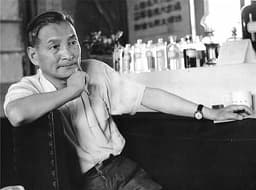
Chen Yun
Politician · Modern
55.2Total
Basic Information
Born
1938
1905
Died
—
1995
Era
Modern
Modern
Nationality
Peru
China
Occupation
Politician
Politician
Civilization
Western
Eastern
Score Comparison
Military (10%)
55.0
11.7
Political (20%)
45.0
70.3
Influence (20%)
57.2
62.0
Legacy (20%)
47.5
55.0
Leadership (15%)
72.0
78.0
Strategy (15%)
60.0
25.6
TOTAL
55.2
55.2
Alberto Fujimori — Complete Timeline
1990 AD
Economic stabilization and privatizationReform◆ Major
Fujimori implemented shock therapy economic reforms, including privatization of state enterprises, elimination of price controls, and reduction of tariffs. These policies ended hyperinflation and stabilized the economy, but also led to increased poverty and inequality in the short term.
Economic ReformNeoliberalismStabilization
Impact: national
Election as President of PeruPolitical Action
Fujimori, a political outsider, won the Peruvian presidential election, defeating novelist Mario Vargas Llosa. He ran on a platform of economic reform and anti-corruption, inheriting a country plagued by hyperinflation and the Shining Path insurgency.
ElectionPolitical OutsiderCrisis
Impact: national
1992 AD
Capture of Abimael GuzmánWar◆ Major
Fujimori's intelligence service captured Abimael Guzm
CounterinsurgencyVictoryShining Path
Impact: nationalconstructive
Self-coup and dissolution of CongressPolitical Action◆ Major
Fujimori staged a self-coup, dissolving Congress, suspending the constitution, and purging the judiciary. He claimed the action was necessary to fight corruption and the Shining Path. The coup was condemned internationally but supported by the military and many Peruvians.
CoupAuthoritarianismConstitutional Crisis
Impact: nationaldestructive
2000 AD
Resignation and exilePolitical Action◆ Major
Fujimori resigned the presidency while in Japan, after a corruption scandal involving his intelligence chief Vladimiro Montesinos. He remained in exile in Japan for five years, avoiding prosecution until his arrest in Chile in 2005.
ResignationCorruptionExile
Impact: nationaldestructive
Chen Yun — Complete Timeline
1925 AD
Joined the Chinese Communist PartyPolitical Action◆ Major
Chen Yun joined the Chinese Communist Party during the May Thirtieth Movement. He began his career as a labor organizer in Shanghai, rising through the ranks of the party's underground apparatus.
CCP MembershipLabor MovementShanghai
Impact: nationalconstructive
1961 AD
Led economic reconstruction after the Great Leap ForwardReform◆ Major
Chen Yun was appointed to lead economic recovery efforts after the disastrous Great Leap Forward. He implemented policies that reduced central planning, allowed private plots, and stabilized the economy, saving millions from famine.
Economic ReformGreat Leap ForwardFamine Relief
Impact: nationalconstructive
1966 AD
Purged during the Cultural RevolutionPolitical Action◆ Major
Chen Yun was purged from his leadership positions during the Cultural Revolution, accused of being a capitalist roader. He was sent to work in a factory in Jiangxi, but survived the period without being killed.
Cultural RevolutionPurgeEconomic Planning
Impact: nationaldestructive
1978 AD
Advocated for market reforms under Deng XiaopingReform◆ Major
Chen Yun supported Deng Xiaoping's economic reforms, advocating for a 'birdcage economy' that combined state planning with market mechanisms. He helped design the Special Economic Zones and agricultural decollectivization.
Deng XiaopingEconomic ReformMarket Economy
Impact: nationalconstructive
1987 AD
Served as Chairman of the Central Advisory CommissionPolitical Action
Chen Yun became Chairman of the Central Advisory Commission, a body of retired senior leaders. He used this position to influence economic policy, often cautioning against excessive market liberalization.
Advisory CommissionEconomic PolicyElder Statesman
Impact: national
Expert Analysis
Origins
Alberto Fujimori was born in 1938 in Lima, Peru, to Japanese immigrants. He studied agricultural engineering and later earned a master's in mathematics. His background as a university rector gave him an outsider status in politics. Chen Yun was born in 1905 in Jiangsu, China, to a poor peasant family. He joined the Chinese Communist Party in 1925 as a labor organizer, rising through party ranks during the civil war. His early career in economic management began in the 1940s.
Rise to Power
Fujimori, a political novice, won the 1990 Peruvian presidential election against novelist Mario Vargas Llosa, campaigning on economic reform. He faced hyperinflation and the Shining Path insurgency. Chen Yun rose through the CCP's economic apparatus, becoming a key planner under Mao. He was purged during the Cultural Revolution (1966-1976) but rehabilitated in 1977, becoming a central figure in Deng Xiaoping's reform era.
Leadership & Governance
Fujimori's leadership was autocratic. In 1992, he staged a self-coup, dissolving Congress and suspending the constitution to push through economic shock therapy. He privatized state enterprises, eliminated price controls, and reduced tariffs, stabilizing the economy. Chen Yun advocated for a 'birdcage economy'—state planning with market mechanisms. He supported Deng's reforms but warned against rapid liberalization, emphasizing macroeconomic balance. Fujimori scored 72.0 in leadership, Chen Yun 78.0, reflecting Chen's consensus-building style.
Triumph & Tragedy
Fujimori's greatest triumph was capturing Shining Path leader Abimael Guzmán in 1992, crippling the insurgency. Economically, his reforms ended hyperinflation and attracted foreign investment. However, his authoritarian methods led to corruption scandals, resulting in his 2000 resignation and exile to Japan. Chen Yun's triumph was guiding China's economic recovery after the Great Leap Forward and later shaping market reforms. His tragedy was being purged during the Cultural Revolution, and his cautious stance sometimes clashed with Deng's faster pace. Fujimori's military score is 55.0, Chen Yun's 11.7, reflecting their different domains.
Character & Destiny
Fujimori was pragmatic and ruthless, willing to break democratic norms to achieve his goals. His Japanese heritage and outsider status shaped his independent streak. Chen Yun was known as a cautious, meticulous planner who prioritized stability. His low-key style contrasted with Mao's charisma, but his expertise made him indispensable. Fujimori's destiny was a dramatic fall from power; Chen Yun's was a steady influence until his death in 1995.
Legacy
Fujimori's legacy is mixed: he ended terrorism and hyperinflation but undermined democracy. His policies set Peru on a neoliberal path. Chen Yun is remembered as a key architect of China's economic reforms, balancing market forces with state control. His 'birdcage' concept influenced China's gradual opening. Fujimori's influence score is 57.2, Chen Yun's 62.0, reflecting Chen's longer-term impact on a global power.
Conclusion
While both were effective in their contexts, Chen Yun had greater impact. His economic framework guided China's rise as a global economic power, affecting billions. Fujimori's achievements were significant but confined to Peru and marred by authoritarian excess. Chen Yun's legacy scores 55.0, Fujimori's 47.5, and his political score of 70.3 versus Fujimori's 45.0 underscores his deeper institutional influence. Chen Yun's cautious, sustainable approach proved more enduring.
Rankings
🥇
Alberto FujimoriLeader
Mil: 55.0Pol: 45.0Inf: 57.2
55.2
🥈
Chen Yun
Mil: 11.7Pol: 70.3Inf: 62.0
55.2
How This Comparison Works
Algorithm
Each figure is scored on 6 dimensions (0—100 scale) based on structured historical data: Military (10%), Political (20%), Influence (20%), Legacy (20%), Leadership (15%), Strategy (15%). The weighted total produces the final ranking.
Data Sources
Scores are computed from structured sub-indicators in the database. Scale factors adjust for era (Ancient ×0.85, Modern ×1.0) and civilization size (Eastern ×1.05, Other ×0.80) to account for differences in population and military scale.
Maximum 3 Figures
Comparisons are limited to 2—3 figures to ensure readability and statistical meaningfulness.
Error Margins
±5 points per dimension — Sub-scores are derived from historical records with inherent uncertainty. Two figures within 5 points on a dimension should be considered roughly equivalent in that area.
Total Score Accuracy
±3 points overall — The weighted combination of 6 dimensions produces a total score with approximately ±3 points of uncertainty. Differences of less than 3 points are not statistically significant— the figures are effectively tied.
Known Limitations
- Historical records are incomplete and uneven across civilizations
- Figures from oral-tradition societies may be underrepresented
- Occupation labels can misclassify multi-role figures
- Scores measure capability and impact, not moral character
- Quantitative scoring is a comparison tool, not absolute truth
Capability Radar
Military (10%) — Battles & Warfare
Battles
30
16
Win Rate
70
17
Expansion
10
20
Political (20%) — Governance & Reform
Reform
65
80
Diplomacy
55
70
Economy
60
90
Influence (20%) — Cultural & Global Reach
Cultural
30
40
Global
45
60
Legacy (20%) — Historical Impact
Historical
55
75
Longevity
30
65
Leadership (15%) — Power & Stability
Tenure
70
75
Stability
40
85
Strategy (15%) — Tactics & Innovation
Strategy
60
26
Tactics
40
27
Reform
50
28
Similar Comparisons
Comments & Discussion
No comments yet. Be the first to share your thoughts!