Loading...
Alcide De Gasperi vs Qin Shi Huang
Qin Shi Huang leads by 13.5 pts · 2 figures compared
…
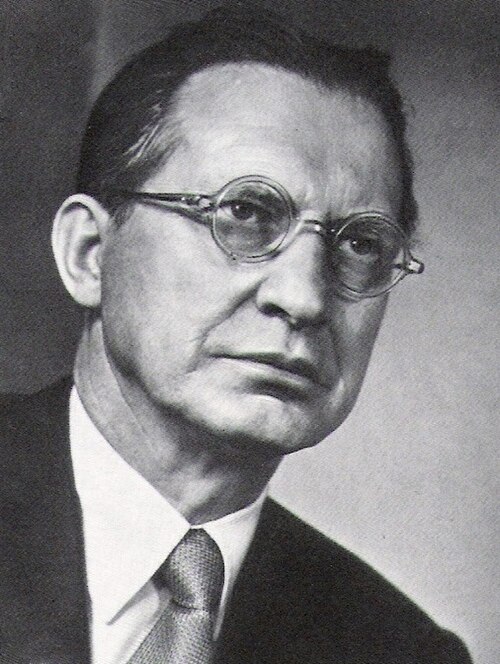
Alcide De Gasperi
Politician · Modern
70.0Total
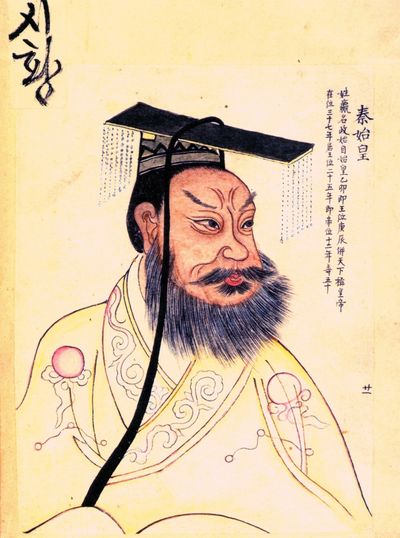
Qin Shi Huang
Emperor · Ancient
83.5Total
Basic Information
Born
1881
-259
Died
1954
-210
Era
Modern
Ancient
Nationality
Italy
China
Occupation
Politician
Emperor
Civilization
Western
Eastern
Score Comparison
Military (10%)
19.2
80.0
Political (20%)
88.0
88.0
Influence (20%)
70.0
82.0
Legacy (20%)
72.0
85.0
Leadership (15%)
84.9
88.0
Strategy (15%)
62.3
75.0
TOTAL
70.0
83.5
Rankings
🥇
Qin Shi HuangLeader
Mil: 80.0Pol: 88.0Inf: 82.0
83.5
🥈
Alcide De Gasperi
Mil: 19.2Pol: 88.0Inf: 70.0
70.0
+13.5 behind
How This Comparison Works
Algorithm
Each figure is scored on 6 dimensions (0—100 scale) based on structured historical data: Military (10%), Political (20%), Influence (20%), Legacy (20%), Leadership (15%), Strategy (15%). The weighted total produces the final ranking.
Data Sources
Scores are computed from structured sub-indicators in the database. Scale factors adjust for era (Ancient ×0.85, Modern ×1.0) and civilization size (Eastern ×1.05, Other ×0.80) to account for differences in population and military scale.
Maximum 3 Figures
Comparisons are limited to 2—3 figures to ensure readability and statistical meaningfulness.
Error Margins
±5 points per dimension — Sub-scores are derived from historical records with inherent uncertainty. Two figures within 5 points on a dimension should be considered roughly equivalent in that area.
Total Score Accuracy
±3 points overall — The weighted combination of 6 dimensions produces a total score with approximately ±3 points of uncertainty. Differences of less than 3 points are not statistically significant— the figures are effectively tied.
Known Limitations
- Historical records are incomplete and uneven across civilizations
- Figures from oral-tradition societies may be underrepresented
- Occupation labels can misclassify multi-role figures
- Scores measure capability and impact, not moral character
- Quantitative scoring is a comparison tool, not absolute truth
Capability Radar
Military (10%) — Battles & Warfare
Battles
11
85
Win Rate
15
90
Expansion
17
90
Political (20%) — Governance & Reform
Reform
85
95
Diplomacy
80
75
Economy
70
90
Influence (20%) — Cultural & Global Reach
Cultural
60
95
Global
65
85
Legacy (20%) — Historical Impact
Historical
70
95
Longevity
65
95
Leadership (15%) — Power & Stability
Tenure
75
70
Stability
75
65
Strategy (15%) — Tactics & Innovation
Strategy
21
85
Tactics
23
80
Reform
27
95
Expert Analysis
alcide-de-gasperi-vs-qin-shi-huang
# The Emperor and the Democrat: Two Titans of Unlikely Unity
On a spring morning in 221 BC, a thirty-eight-year-old king stood before his generals in the captured palace of a defeated enemy, declaring himself the First Emperor of all China. Two thousand one hundred and sixty-seven years later, in December 1945, a sixty-four-year-old politician from the Alpine foothills walked into a government building in Rome to become the first prime minister of a republic born from the ashes of fascism. One man commanded armies that slaughtered hundreds of thousands; the other commanded coalitions that reconciled bitter enemies. Both achieved something that had seemed impossible: they forged unity where only division had existed before. How did two men, separated by millennia and civilizations, arrive at such similar destinations through such radically different roads?
Origins
Ying Zheng was born into war. In 259 BC, the Chinese world was tearing itself apart in the final convulsions of the Warring States period, seven kingdoms locked in a death struggle that had already lasted two centuries. His father was a prince of Qin, the westernmost state, a kingdom hardened by frontier warfare and despised by the more cultured eastern states as barbaric. Zheng's childhood was spent as a hostage in the rival state of Zhao, where he learned early that trust was a luxury and power the only currency that mattered. When he returned to Qin at thirteen to ascend a precarious throne, he inherited a state built for conquest: efficient, ruthless, and singularly focused on total victory.
Alcide De Gasperi was born into a different kind of turbulence. In 1881, the Italian peninsula had been unified for barely two decades, and the new kingdom was already riven by the chasm between its industrializing north and impoverished south. De Gasperi grew up in the Trentino, then part of the Austro-Hungarian Empire, a frontier region where identities were contested and loyalties divided. His father was a tax collector of modest means, and young Alcide learned early the art of navigating between worlds. He studied literature and philosophy in Vienna, absorbing the cosmopolitan culture of the Habsburg capital while never forgetting his Italian roots. Where Zheng learned that power came from the sword, De Gasperi learned that it came from persuasion.
Rise to Power
Zheng's path was direct and bloody. At twenty-two, he crushed a coup attempt by his own regent and began the systematic conquest of his neighbors. Between 230 and 221 BC, his armies devoured kingdom after kingdom: Han fell in 230, Zhao in 228, Wei in 225, Chu in 223, Yan in 222, and finally Qi in 221. Each campaign was a masterpiece of logistics and terror. Zheng's general Wang Jian understood that war was not a game of chivalry but of annihilation; when Chu finally surrendered, its king was paraded in chains through the streets of the Qin capital. By the time the last independent ruler submitted, Ying Zheng had become something unprecedented: the master of all Chinese civilization.
De Gasperi's rise was a study in patience and principle. He entered politics as a Catholic activist in the Austrian parliament, defending Italian-speaking minorities. When World War I ended and the Trentino became part of Italy, he joined the Italian Popular Party, a Christian democratic movement. But Mussolini's rise forced him underground; in 1927, the Fascists arrested him and sentenced him to four years in prison. After his release, he found refuge in the Vatican library, spending nearly a decade cataloging manuscripts while the world burned. Only when Mussolini fell in 1943 did De Gasperi emerge, helping to found the Christian Democracy party that would rebuild Italy. His rise was not conquest but resurrection.
Leadership and Governance
As emperor, Qin Shi Huang governed through standardization and fear. He imposed a single script across his empire, unified currency and weights, and built a network of roads and canals that bound his realm together. He ordered the burning of books that contradicted his Legalist philosophy and buried alive scholars who resisted. The Great Wall, begun in 214 BC, was a monument not just to defense but to the emperor's absolute power over life and labor. His rule was efficient, rational, and terrifying—a machine of state that left no room for dissent.
De Gasperi governed through coalition and compromise. As prime minister from 1945 to 1953, he faced a shattered economy, a divided nation, and the looming threat of a Communist takeover. In May 1947, he made the fateful decision to expel the Italian Communist and Socialist parties from his government, a move that risked civil war but ultimately anchored Italy in the Western alliance. He signed the harsh Peace Treaty of Paris that same year, accepting the loss of colonies and territory rather than continuing the cycle of conflict. In 1949, he led Italy into NATO, securing American support and definitively breaking with the Fascist past. Where Qin Shi Huang unified through force, De Gasperi unified through choice.
Triumph and Tragedy
The First Emperor's greatest triumph was the creation of an imperial system that would last, in various forms, for over two thousand years. His greatest tragedy was his own obsession with immortality. In his final years, he became paranoid, sending expeditions to find the elixir of life while building a mausoleum complex guarded by the famous Terracotta Army—thousands of life-sized soldiers meant to serve him in the afterlife. He died in 210 BC at the age of forty-nine, possibly from mercury poisoning caused by the very elixirs meant to save him. Within four years, his dynasty had collapsed, destroyed by the very harshness he had used to build it.
De Gasperi's triumph was the creation of a stable, democratic Italy that became a founding member of the European project. His tragedy was watching his own party drift away from his centrist vision. After leaving office in 1953, he died the following year, but he lived long enough to see Italy's economic miracle begin—the transformation of a poor, war-torn nation into one of the world's leading industrial powers. His legacy was not a dynasty but a system.
Character and Destiny
Qin Shi Huang was a man of absolute certainty. He believed that human nature was corrupt and that only harsh laws could control it. His Legalist philosophy left no room for mercy, no space for debate. This certainty gave him the strength to unify China, but it also blinded him to the limits of power. He could not imagine that his empire might outlive him, nor could he conceive that the very people he ruled might resent his iron grip.
De Gasperi was a man of profound humility. A devout Catholic, he saw politics as a service, not a conquest. He once said, "The statesman's first duty is to listen." This humility allowed him to build coalitions, to forgive his former jailers, to accept the compromises necessary for democracy. But it also meant that he was sometimes seen as too cautious, too willing to negotiate when stronger action might have been needed.
Legacy
Today, Qin Shi Huang is remembered as both a unifier and a tyrant. The Terracotta Army draws millions of visitors to Xi'an, a silent testament to his ambition. The Great Wall stands as a symbol of Chinese civilization. But his name is also associated with book burnings and mass burials, with a vision of unity achieved through terror. He is the founder of China, but also a warning about the costs of absolute power.
De Gasperi is remembered as a founding father of European democracy. His face appears on Italian coins, and his name graces streets and squares across the continent. He is celebrated not for conquest but for reconciliation—for proving that a nation shattered by war could rebuild itself through democratic means. His legacy is the Italian Republic itself, a nation that chose freedom over fear.
Conclusion
The Emperor and the Democrat never met, could never have met. One lived in a world where power meant the ability to kill; the other in a world where power meant the ability to persuade. Yet both faced the same fundamental challenge: how to bring together people who saw themselves as enemies. Qin Shi Huang answered with iron; De Gasperi answered with patience. Both succeeded, and both paid a price. Their stories remind us that unity is never inevitable, never easy, and never without cost. The question they leave us is not which method was better, but which world we want to live in—the world of the Terracotta Army, silent and eternal, or the world of the parliamentary debate, noisy and uncertain. History offers no easy answer, only the choice itself.
Alcide De Gasperi — Complete Timeline
1946 AD
First Prime Minister of the Italian RepublicPolitical Action
De Gasperi became the first prime minister of the newly proclaimed Italian Republic in December 1945. He led a coalition government that included Christian Democrats, Socialists, and Communists. His government oversaw the transition from monarchy to republic.
RepublicGovernmentTransition
Impact: nationalconstructive
1947 AD
Peace Treaty of ParisPolitical Action◆ Major
De Gasperi signed the Treaty of Paris, which formally ended World War II for Italy. Italy lost its colonies, ceded territory to Yugoslavia and France, and paid reparations. The treaty was unpopular but allowed Italy to regain sovereignty and join the Western alliance.
TreatyWorld War IIDiplomacy
Impact: global
Expulsion of Communists from GovernmentPolitical Action
De Gasperi expelled the Italian Communist Party and Socialist Party from his coalition government in May 1947. This move aligned Italy with the United States and the Marshall Plan, deepening the Cold War divide. It solidified Christian Democratic dominance for decades.
Cold WarMarshall PlanCoalition
Impact: global
1949 AD
Italian Membership in NATOPolitical Action◆ Major
De Gasperi led Italy into the North Atlantic Treaty Organization (NATO) as a founding member. This decision anchored Italy in the Western bloc during the Cold War and secured U.S. military and economic support. It was opposed by the Communist Party.
NATOCold WarAlliance
Impact: globalconstructive
Qin Shi Huang — Complete Timeline
246 BC
Construction of the Mausoleum and Terracotta ArmyOther◆ Major
Qin Shi Huang commissioned a vast mausoleum complex near Xi'an, guarded by thousands of life-sized terracotta soldiers, horses, and chariots. The project employed hundreds of thousands of workers and reflected his obsession with immortality and imperial power.
Impact: global
230 BC
Conquest of the Six Warring StatesWar
From 230 to 221 BCE, Ying Zheng led the Qin state in a series of campaigns that conquered the Han, Zhao, Wei, Chu, Yan, and Qi states. This unified China under a single ruler for the first time, ending the Warring States period.
Impact: global
221 BC
Standardization of Writing, Currency, and MeasurementsReform◆ Major
Qin Shi Huang ordered the standardization of Chinese script, currency, and weights and measures across the unified empire. This facilitated administration, trade, and cultural integration, laying a foundation for future dynasties.
Impact: globalconstructive
Proclamation of the Qin DynastyPolitical Action
After conquering the last independent state, Ying Zheng declared himself Shi Huangdi (First Emperor), founding the Qin Dynasty. He adopted a new title to signify his supreme authority and initiated centralized imperial rule.
Impact: global
214 BC
Initiation of the Great Wall ConstructionOther◆ Major
Qin Shi Huang ordered the connection and extension of existing northern fortifications to create a unified defensive wall against nomadic Xiongnu raids. This project involved massive conscripted labor and became the precursor to the later Great Wall.
Impact: regional
213 BC
Burning of Books and Burying of ScholarsPolitical Action◆ Major
On the advice of Li Si, Qin Shi Huang ordered the burning of historical records and philosophical texts not aligned with Legalist doctrine. He also had 460 Confucian scholars buried alive to suppress dissent and consolidate ideological control.
Impact: nationaldestructive
Similar Comparisons
Comments & Discussion
QIN'S SPIN DOCTOR6/17/2026
Sure, Qin Shi Huang unified China by standardizing writing and axle widths, but let's not kid ourselves—his "unity" was built on mass graves. Terracotta warriors don't feed people. De Gasperi? He stitched together Fascists, Communists, and monarchists into a democratic Italy with cash from the Marshall Plan. One used bronze swords and corvée labor; the other used parliamentary debate and NATO diplomacy. I'll take the coalition-builder who let his enemies vote over the emperor who buried them ali
反秦复辟派6/17/2026
秦始皇就是个高压独裁者,靠焚书坑儒和严刑峻法制造假统一。他统一文字,但烧掉百家经典;他修长城,但死了百万民工。这叫什么功绩?而加斯佩里呢?他在战后意大利调和天主教、社会主义和自由主义,靠博弈而非刀剑建立共和国。一个命令,一个劝说——这就是暴君和政治家的区别。别美化那个把人当泥土的皇帝。
DATA DETECTIVE DAN6/17/2026
The comparison cherry-picks time frames. De Gasperi ruled for 8 years; Qin Shi Huang unified in 9 years but his dynasty collapsed 15 years after his death. De Gasperi's Italy has lasted 78 years. That's not a style difference—that's a durability metric. Qin's legalism created a brittle tyranny; De Gasperi's Christian democracy built resilient institutions. One left terracotta; the other left prosperity. I'd wager the Italian postwar recovery GDP growth (~6% annually) beats any ancient metric, be
古典学人6/17/2026
拿中国第一个皇帝和意大利共和国的奠基人比?抱歉,这俩背景完全不同。秦始皇是法家信徒,讲究「以法为教,以吏为师」;加斯佩里是天主教政治家,信奉「无条件的合作」。一个用商鞅的连坐制,一个用阿登纳的欧洲联合。秦始皇确实统一了度量衡,但加斯佩里统一了意大利的政坛裂缝——从法西斯残余到共产党,都能坐在一张桌子前。我想知道,哪个文明的遗产更持久:兵马俑,还是民主制度?
PACIFIST STRATEGIST6/17/2026
Let's cut the "both unifiers" nonsense. Qin united China through genocidal warfare—estimates suggest his conquests killed 2–3% of the contemporary population. De Gasperi united Italy by forgiving Fascist collaborators and integrating Communists into labor pacts. The means define the ends. One built a mausoleum guarded by an army of clones; the other built a European project. I'd rather live in De Gasperi's fractured democracy than Qin's orderly graveyard. Unity purchased at the point of a sword