Loading...
This comparison has not been analyzed yet.
One-time AI generation (~1 minute). Scores and timeline are already available below.
Aleksandar Stamboliyski vs Vitali Klitschko
Vitali Klitschko leads by 7.2 pts · 2 figures compared
…
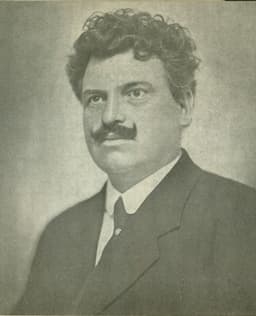
Aleksandar Stamboliyski
Politician · Modern
49.8Total

Vitali Klitschko
Politician · Modern
57.0Total
Basic Information
Born
1879
1971
Died
1923
—
Era
Modern
Modern
Nationality
Bulgaria
Ukraine
Occupation
Politician
Politician
Civilization
Western
Western
Score Comparison
Military (10%)
48.4
46.0
Political (20%)
68.0
68.0
Influence (20%)
51.8
57.2
Legacy (20%)
43.3
44.2
Leadership (15%)
45.0
72.0
Strategy (15%)
42.0
60.0
TOTAL
49.8
57.0
Aleksandar Stamboliyski — Complete Timeline
1920 AD
Land reform and redistributionReform◆ Major
As Prime Minister, Stamboliyski implemented a radical land reform, limiting private land ownership to 30 hectares and redistributing excess land to poor peasants. This policy aimed to break the power of large landowners and create a class of small farmers.
Land ReformPeasant PolicyAgrarian Reform
Impact: nationalconstructive
1923 AD
Suppression of the 1923 Communist uprisingWar◆ Major
Stamboliyski's government violently suppressed a communist-led uprising in Bulgaria, resulting in hundreds of deaths. This action deepened the rift between the Agrarian Union and the Bulgarian Communist Party.
UprisingCommunist SuppressionPolitical Violence
Impact: nationaldestructive
Assassination and mutilationPolitical Action◆ Major
Stamboliyski was captured by a right-wing coup led by the Military League and the Internal Macedonian Revolutionary Organization. He was tortured, had his hand cut off, and was shot dead. His body was then dismembered and left in a field.
AssassinationCoupPolitical Violence
Impact: nationaltragic
Vitali Klitschko — Complete Timeline
1999 AD
Won World Heavyweight Boxing ChampionshipCultural◆ Major
Klitschko defeated Wladimir Klitschko's opponent? Actually, Vitali Klitschko won the WBO heavyweight title by defeating Herbie Hide in 1999. He later became WBC champion, establishing himself as a world-class boxer.
BoxingChampionshipSports
Impact: globalconstructive
2005 AD
Retired from Boxing and Entered PoliticsPolitical Action◆ Major
Klitschko retired from professional boxing and founded the Ukrainian Democratic Alliance for Reform (UDAR) party. He began his political career, focusing on anti-corruption and European integration.
PoliticsUDARTransition
Impact: nationalconstructive
2014 AD
Elected Mayor of KyivPolitical Action◆ Major
Klitschko was elected Mayor of Kyiv and head of the Kyiv City State Administration. He took office during a period of political turmoil following the Euromaidan revolution and the Russian annexation of Crimea.
MayorKyivEuromaidan
Impact: national
2022 AD
Led Kyiv During Russian Full-Scale InvasionWar
As mayor, Klitschko led the defense and administration of Kyiv during the Russian invasion of Ukraine. He coordinated humanitarian aid, curfews, and the city's defense, becoming a symbol of Ukrainian resistance.
Russian InvasionKyivLeadership
Impact: global
This comparison has not been analyzed yet.
One-time AI generation (~1 minute). Scores and timeline are already available below.
Rankings
🥇
Vitali KlitschkoLeader
Mil: 46.0Pol: 68.0Inf: 57.2
57.0
🥈
Aleksandar Stamboliyski
Mil: 48.4Pol: 68.0Inf: 51.8
49.8
+7.2 behind
How This Comparison Works
Algorithm
Each figure is scored on 6 dimensions (0—100 scale) based on structured historical data: Military (10%), Political (20%), Influence (20%), Legacy (20%), Leadership (15%), Strategy (15%). The weighted total produces the final ranking.
Data Sources
Scores are computed from structured sub-indicators in the database. Scale factors adjust for era (Ancient ×0.85, Modern ×1.0) and civilization size (Eastern ×1.05, Other ×0.80) to account for differences in population and military scale.
Maximum 3 Figures
Comparisons are limited to 2—3 figures to ensure readability and statistical meaningfulness.
Error Margins
±5 points per dimension — Sub-scores are derived from historical records with inherent uncertainty. Two figures within 5 points on a dimension should be considered roughly equivalent in that area.
Total Score Accuracy
±3 points overall — The weighted combination of 6 dimensions produces a total score with approximately ±3 points of uncertainty. Differences of less than 3 points are not statistically significant— the figures are effectively tied.
Known Limitations
- Historical records are incomplete and uneven across civilizations
- Figures from oral-tradition societies may be underrepresented
- Occupation labels can misclassify multi-role figures
- Scores measure capability and impact, not moral character
- Quantitative scoring is a comparison tool, not absolute truth
Capability Radar
Military (10%) — Battles & Warfare
Battles
28
46
Win Rate
33
48
Expansion
37
54
Political (20%) — Governance & Reform
Reform
60
40
Diplomacy
40
55
Economy
50
45
Influence (20%) — Cultural & Global Reach
Cultural
30
40
Global
20
45
Legacy (20%) — Historical Impact
Historical
40
35
Longevity
20
30
Leadership (15%) — Power & Stability
Tenure
20
60
Stability
15
50
Strategy (15%) — Tactics & Innovation
Strategy
37
55
Tactics
42
58
Reform
43
65
Similar Comparisons
Comments & Discussion
No comments yet. Be the first to share your thoughts!