Loading...
Aleksandar Stamboliyski vs Napoleon Bonaparte
Napoleon Bonaparte leads by 21.1 pts · 2 figures compared
…
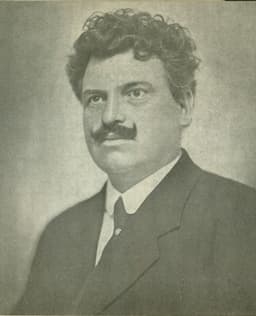
Aleksandar Stamboliyski
Politician · Modern
49.8Total

Napoleon Bonaparte
General · Modern
70.9Total
Basic Information
Born
1879
1769
Died
1923
1821
Era
Modern
Modern
Nationality
Bulgaria
France
Occupation
Politician
General
Civilization
Western
Western
Score Comparison
Military (10%)
48.4
94.0
Political (20%)
68.0
72.0
Influence (20%)
51.8
40.0
Legacy (20%)
43.3
80.0
Leadership (15%)
45.0
78.0
Strategy (15%)
42.0
90.0
TOTAL
49.8
70.9
Aleksandar Stamboliyski — Complete Timeline
1920 AD
Land reform and redistributionReform◆ Major
As Prime Minister, Stamboliyski implemented a radical land reform, limiting private land ownership to 30 hectares and redistributing excess land to poor peasants. This policy aimed to break the power of large landowners and create a class of small farmers.
Land ReformPeasant PolicyAgrarian Reform
Impact: nationalconstructive
1923 AD
Suppression of the 1923 Communist uprisingWar◆ Major
Stamboliyski's government violently suppressed a communist-led uprising in Bulgaria, resulting in hundreds of deaths. This action deepened the rift between the Agrarian Union and the Bulgarian Communist Party.
UprisingCommunist SuppressionPolitical Violence
Impact: nationaldestructive
Assassination and mutilationPolitical Action◆ Major
Stamboliyski was captured by a right-wing coup led by the Military League and the Internal Macedonian Revolutionary Organization. He was tortured, had his hand cut off, and was shot dead. His body was then dismembered and left in a field.
AssassinationCoupPolitical Violence
Impact: nationaltragic
Napoleon Bonaparte — Complete Timeline
1799 AD
Coup of 18 BrumaireOther◆ Major
Napoleon Bonaparte, with support from his brother Lucien and key political figures, overthrew the Directory in a bloodless coup. He established the Consulate with himself as First Consul, effectively becoming the ruler of France. This event ended the French Revolution's most unstable period.
French RevolutionCoupRise to Power
Impact: regional
1804 AD
Promulgation of the Napoleonic CodeOther◆ Major
Napoleon enacted the Civil Code of the French, known as the Napoleonic Code, a comprehensive set of laws that replaced the fragmented feudal legal systems. The code established legal equality, protected property rights, and secularized law. It became the basis for legal systems in many European and world countries.
Legal ReformNapoleonic CodeCivil Law
Impact: globalconstructive
1805 AD
Battle of AusterlitzWar◆ Major
Napoleon's Grande Arm
Napoleonic WarsBattleDecisive Victory
Impact: global
1812 AD
Invasion of RussiaWar◆ Major
Napoleon led the Grande Arm
Napoleonic WarsInvasionDisaster
Impact: globaldestructive
1815 AD
Battle of WaterlooWar◆ Major
Napoleon's French army was defeated by the combined forces of the Duke of Wellington's Anglo-Allied army and Gebhard Leberecht von Bl
Napoleonic WarsBattleFinal Defeat
Impact: globaldestructive
Expert Analysis
aleksandar-stamboliyski-vs-napoleon-bonaparte
# The Emperor and the Peasant: Two Paths of Power, Two Ends of Fate
On a summer morning in 1923, a former prime minister of Bulgaria was dragged from his farmhouse, his hands chopped off with a butcher’s knife, his body hacked to pieces, and his head delivered to Sofia in a box. Just over a hundred years earlier, in 1821, a former emperor of France died in exile on a remote Atlantic island, attended by a handful of loyal servants, his final words a whisper of “France, army, head of the army.” Napoleon Bonaparte and Aleksandar Stamboliyski—one reshaped the map of Europe, the other tried to reshape the soil of Bulgaria. Both rose from modest origins. Both sought to impose their will on history. But their endings could not have been more different. Why did the conqueror die in bed while the reformer died in pieces?
Origins
Napoleon was born in 1769 on Corsica, a Mediterranean island that had just become French. His family was minor nobility, poor but proud. He spoke Italian before French, and throughout his life carried a sense of being an outsider. This hunger for acceptance drove him to excel at military academies in Brienne and Paris, where he devoured the works of Caesar and Alexander. The French Revolution, erupting when he was twenty, shattered the old order and opened a path for talent over birth. He seized it.
Aleksandar Stamboliyski was born in 1879 in the village of Slavovitsa, Bulgaria, then a newly independent nation still shaking off Ottoman rule. His father was a peasant. Stamboliyski never forgot it. He studied agriculture in Germany, then returned to Bulgaria to organize the peasantry into a political force. While Napoleon learned how to command armies, Stamboliyski learned how to mobilize farmers. One studied war; the other studied land.
Rise to Power
Napoleon’s ascent was meteoric. At twenty-four, he drove the British out of Toulon and was promoted to brigadier general. At twenty-six, he suppressed a royalist uprising in Paris with a “whiff of grapeshot,” earning the gratitude of the revolutionary government. By thirty, he had conquered Italy and Egypt and returned to France as its most celebrated general. In 1799, he staged a coup and made himself First Consul. In 1804, he crowned himself Emperor. He did not wait for power; he took it.
Stamboliyski’s rise was slower and more democratic. He became leader of the Bulgarian Agrarian National Union and entered parliament in 1908. He was imprisoned during World War I for opposing the war, which he saw as a slaughter of peasants for the benefit of urban elites. When Bulgaria collapsed in 1918, the king summoned him from prison to form a government. In 1920, Stamboliyski became prime minister—not through conquest, but through the ballot box. He was the first peasant leader in Europe to lead a nation.
Leadership & Governance
Napoleon governed with a mixture of brilliance and iron. He reformed French law into the Napoleonic Code, which enshrined equality before the law, protected property rights, and secularized the state. He built roads, standardized education, and established the Bank of France. But he also censored the press, restored slavery in the colonies, and placed his brothers on European thrones. His military genius was unmatched: at Austerlitz in 1805, he destroyed a combined Russian and Austrian army with a trap of devastating simplicity. He understood that victory was not just about tactics but about morale, speed, and the psychological destruction of the enemy.
Stamboliyski ruled with a farmer’s stubbornness. He forced through a radical land reform in 1920, limiting private holdings to thirty hectares and redistributing the surplus to poor peasants. He introduced compulsory labor service, built rural schools, and tried to break the power of urban professionals and the military. He was not a military man: his strategy score of 35.3 reflects a man who saw war as a waste of life. But his political score of 63.2 shows a leader who understood that power in a peasant nation came from the land, not the palace.
Triumph & Tragedy
Napoleon’s greatest triumph was Austerlitz, where he crushed the Third Coalition and forced the Holy Roman Empire to dissolve. His greatest tragedy was the invasion of Russia in 1812. He marched six hundred thousand men into the snow and returned with fewer than forty thousand. The disaster broke his aura of invincibility. He was exiled to Elba in 1814, escaped in 1815, and was finally defeated at Waterloo by the Duke of Wellington and the Prussian army. He spent his last six years on Saint Helena, dictating his memoirs and dying of stomach cancer—or, as some suspect, arsenic poisoning.
Stamboliyski’s triumph was his land reform, which for a brief time gave Bulgarian peasants hope of dignity. His tragedy came in 1923. When a communist uprising erupted, he suppressed it with violence, killing hundreds. The right-wing Military League and the Internal Macedonian Revolutionary Organization saw their chance. On June 9, 1923, they staged a coup. Stamboliyski fled to his home village. He was captured, tortured, and killed with a brutality that shocked even hardened observers. His hands were cut off because he had signed the Treaty of Neuilly, which ceded Bulgarian territory. His body was left in a ditch.
Character & Destiny
Napoleon was driven by ambition and a belief that he was a man of destiny. “Impossible,” he once said, “is a word found only in the dictionary of fools.” He trusted his own genius above all else, and that confidence carried him to the gates of Moscow. But it also blinded him. He could not stop. He invaded Spain, Russia, and eventually all of Europe, until the continent united against him. His personality—restless, arrogant, brilliant—created his triumphs and ensured his fall.
Stamboliyski was driven by conviction. He believed that the peasant was the backbone of the nation and that urban elites were parasites. He was stubborn, blunt, and unwilling to compromise. He alienated the military, the middle class, and the old political parties. He trusted that his popularity among farmers would protect him. It did not. His personality—principled, rigid, contemptuous of enemies—made him a hero to the poor and a target to everyone else.
Legacy
Napoleon is remembered as one of the greatest military commanders in history. His Napoleonic Code influenced legal systems across Europe and the world. His conquests spread nationalism and the ideals of the French Revolution, even as he betrayed them. He is a figure of awe and controversy: a liberator and a tyrant, a genius and a gambler. His legacy score of 78.0 reflects a man who changed the course of history.
Stamboliyski is largely forgotten outside Bulgaria. His legacy score of 59.5 is a reminder that history remembers conquerors more than reformers. But in Bulgaria, he is a symbol of the peasant struggle against elite domination. His land reform, though reversed after his death, inspired agrarian movements across Eastern Europe. He was a warning that democracy, without the protection of institutions, can be crushed by those who hold the guns.
Conclusion
Napoleon died in exile, a prisoner of the British, but with his body intact and his name immortal. Stamboliyski died in a field, his body mutilated, his name almost erased. Both were men of their time—one the product of revolution and war, the other of democracy and land. Napoleon’s tragedy was that he could not stop conquering. Stamboliyski’s tragedy was that he could not stop fighting. In the end, the emperor’s path led to a quiet death on an island; the peasant’s path led to a butcher’s knife. History is not always kind to the just. But it is always instructive.
Rankings
🥇
Napoleon BonaparteLeader
Mil: 94.0Pol: 72.0Inf: 40.0
70.9
🥈
Aleksandar Stamboliyski
Mil: 48.4Pol: 68.0Inf: 51.8
49.8
+21.1 behind
How This Comparison Works
Algorithm
Each figure is scored on 6 dimensions (0—100 scale) based on structured historical data: Military (10%), Political (20%), Influence (20%), Legacy (20%), Leadership (15%), Strategy (15%). The weighted total produces the final ranking.
Data Sources
Scores are computed from structured sub-indicators in the database. Scale factors adjust for era (Ancient ×0.85, Modern ×1.0) and civilization size (Eastern ×1.05, Other ×0.80) to account for differences in population and military scale.
Maximum 3 Figures
Comparisons are limited to 2—3 figures to ensure readability and statistical meaningfulness.
Error Margins
±5 points per dimension — Sub-scores are derived from historical records with inherent uncertainty. Two figures within 5 points on a dimension should be considered roughly equivalent in that area.
Total Score Accuracy
±3 points overall — The weighted combination of 6 dimensions produces a total score with approximately ±3 points of uncertainty. Differences of less than 3 points are not statistically significant— the figures are effectively tied.
Known Limitations
- Historical records are incomplete and uneven across civilizations
- Figures from oral-tradition societies may be underrepresented
- Occupation labels can misclassify multi-role figures
- Scores measure capability and impact, not moral character
- Quantitative scoring is a comparison tool, not absolute truth
Capability Radar
Military (10%) — Battles & Warfare
Battles
28
95
Win Rate
33
90
Expansion
37
95
Political (20%) — Governance & Reform
Reform
60
95
Diplomacy
40
80
Economy
50
85
Influence (20%) — Cultural & Global Reach
Cultural
30
85
Global
20
90
Legacy (20%) — Historical Impact
Historical
40
95
Longevity
20
90
Leadership (15%) — Power & Stability
Tenure
20
85
Stability
15
70
Strategy (15%) — Tactics & Innovation
Strategy
37
95
Tactics
42
98
Reform
43
92
Similar Comparisons
Comments & Discussion
数学猎人6/17/2026
统计上来说,拿破仑影响了超过7000万人的命运,他的法典至今还在德国、意大利等地沿用。斯托姆博利斯基呢?他的土地改革只撑了三年,人没了政策就没了。历史不是比谁更悲惨,而是比谁留下的东西更持久。拿破仑的遗产是石碑,斯托姆博利斯基的是墓碑。
CLASSICS_GUY6/17/2026
Here's the irony: Napoleon studied Caesar and Alexander—imperial dreamers. Stamboliyski read Bakunin and Russian populists—people who hated power. Both died disillusioned, but Napoleon's exile was a tragedy of greatness; Stamboliyski's mutilation was a tragedy of naiveté. The conqueror understood history's brutality; the peasant reformer thought he could escape it. He couldn't.
古典迷6/17/2026
拿破仑读书时就读战争史,他知道如何构建帝国。斯托姆博利斯基读的是农民起义理论,他以为光靠分田就能创造天堂。但历史永远更残酷:拿破仑的“帝国梦”在滑铁卢碎了,而斯托姆博利斯基的“田园梦”在屠刀下碎了。强者死于错误,弱者死于天真。
REVISIONIST_FIRE6/17/2026
Stop romanticizing Napoleon's "tragic death." He died a pampered exile with servants—still a colonial oppressor. Stamboliyski was murdered by the very fascist forces that Napoleon's system helped legitimize. The comparison is not about talent but
BOSS_LOVER6/17/2026
Let's be real: Stamboliyski's death shows why you don't leave your enemies alive. Napoleon had the sense to exile his—Stamboliyski tried to reform agriculture without crushing his opposition first. That's a rookie mistake from a peasant who read too many agrarian pamphlets. Napoleon lost Waterloo because he was outgeneraled; Stamboliyski lost his hands because he was naively soft. History respects power, not good intentions.
皇帝铁粉6/17/2026
拿破仑用大炮改写了欧洲版图,斯托姆博利斯基连自家的地主都没摆平。两人根本不是一个量级的:一个是世界级的征服者,另一个连村子都没出过。说斯托姆博利斯基“有远见”?别逗了,他把军队当敌人,结果死得连个全尸都没有。拿破仑至少死得像个皇帝。
DATA_GEEK6/17/2026
The numbers don't lie: Napoleon commanded armies of half a million, conquered half a continent, and still died in his own bed. Stamboliyski? A tiny Balkan country, agrarian reforms that pissed off everyone, and his corpse couldn't even stay assembled. If we're measuring impact, Napoleon wins on casualties, territory, and survival. Claiming they're comparable is like comparing an atom bomb to a firecracker.