Loading...
Alexander III of Russia vs Ivan IV the Terrible
Ivan IV the Terrible leads by 14.0 pts · 2 figures compared
…
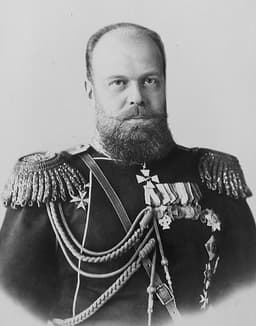
Alexander III of Russia
Emperor · Modern
49.3Total
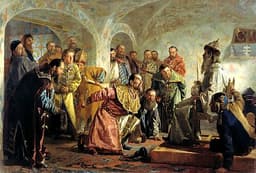
Ivan IV the Terrible
Emperor · Modern
63.3Total
Basic Information
Born
1845
1530
Died
1894
1584
Era
Modern
Modern
Nationality
Russia
Russia
Occupation
Emperor
Emperor
Civilization
Western
Western
Score Comparison
Military (10%)
21.2
80.0
Political (20%)
53.8
45.0
Influence (20%)
53.3
72.0
Legacy (20%)
43.3
55.0
Leadership (15%)
79.8
68.0
Strategy (15%)
30.3
66.3
TOTAL
49.3
63.3
Alexander III of Russia — Complete Timeline
1881 AD
Reversal of Alexander II's ReformsReform
Upon ascending the throne, Alexander III issued the Manifesto on Unshakeable Autocracy, rejecting his father's reformist policies. He strengthened the power of the nobility, increased censorship, and expanded the powers of the secret police, reversing many liberalizing measures.
Counter-ReformsAutocracyReaction
Impact: nationaldestructive
1882 AD
May Laws of 1882Political Action◆ Major
Alexander III approved the May Laws, which imposed severe restrictions on Jewish residence, property ownership, and education. These laws confined Jews to the Pale of Settlement, limited their access to higher education, and fueled anti-Semitic discrimination.
Anti-SemitismMay LawsPale of Settlement
Impact: nationaldestructive
1891 AD
Construction of the Trans-Siberian RailwayInvention◆ Major
Alexander III initiated the construction of the Trans-Siberian Railway, linking European Russia to the Pacific port of Vladivostok. The project aimed to develop Siberia and strengthen Russian control over the Far East. It became the longest railway in the world.
Trans-Siberian RailwayInfrastructureSiberia
Impact: globalconstructive
1894 AD
Franco-Russian AlliancePolitical Action◆ Major
Alexander III finalized a military alliance with France, ending Russia's diplomatic isolation. The alliance committed both powers to mutual defense against the Triple Alliance of Germany, Austria-Hungary, and Italy. This pact shaped European alliances leading to World War I.
Franco-Russian AllianceDiplomacyTriple Alliance
Impact: global
Ivan IV the Terrible — Complete Timeline
1547 AD
Coronation as First Tsar of RussiaPolitical Action
Ivan IV was crowned Tsar of All Russia at the Dormition Cathedral in Moscow, adopting the title of tsar (Caesar). This marked the formal transformation of the Grand Principality of Moscow into the Tsardom of Russia.
CoronationTsardomMoscow
Impact: national
1552 AD
Conquest of the Khanate of KazanWar
Ivan IV led a campaign that captured the city of Kazan after a long siege. The annexation of the Kazan Khanate opened the Volga River to Russian expansion and marked the beginning of Russian imperialism in the east.
KazanVolgaExpansion
Impact: regional
1558 AD
Livonian WarWar◆ Major
Ivan IV invaded Livonia (modern Latvia and Estonia) to gain access to the Baltic Sea. The war lasted 25 years and involved Poland-Lithuania, Sweden, and Denmark. It ended in Russian defeat with the Treaty of Yam-Zapolsky in 1582.
LivoniaBalticWar
Impact: regional
1565 AD
Establishment of the OprichninaPolitical Action
Ivan IV divided Russia into the oprichnina (his personal domain) and the zemshchina (the rest). He created a separate administration and a corps of oprichniki who carried out mass executions, land confiscations, and terror against the boyars.
OprichninaTerrorBoyars
Impact: nationaldestructive
1570 AD
Massacre of NovgorodWar◆ Major
Ivan IV led the oprichniki in a punitive expedition against Novgorod, suspecting the city of plotting to defect to Lithuania. Thousands were executed, and the city was looted and destroyed, ending its economic and political power.
NovgorodMassacreOprichnina
Impact: regionaltragic
1581 AD
Killed His Son Ivan IvanovichOther◆ Major
Ivan IV struck his eldest son and heir, Tsarevich Ivan Ivanovich, with a pointed staff during an argument, causing fatal injuries. This left the throne to the mentally weak Fyodor I, leading to the end of the Rurikid dynasty.
PatricideSuccessionRurikids
Impact: nationaltragic
Expert Analysis
Origins
Alexander III, born in 1845, was the second son of Tsar Alexander II. His early life was overshadowed by his elder brother Nicholas, who died in 1865, thrusting Alexander into the role of heir. He received a military education and was deeply influenced by his tutor, Konstantin Pobedonostsev, a conservative jurist who instilled in him a distrust of liberal reforms. Alexander's father had emancipated the serfs and introduced judicial reforms, but Alexander saw these as weakening autocratic power.
Ivan IV, born in 1530, was the son of Grand Prince Vasily III and Elena Glinskaya. His father died when Ivan was three, and his mother died (possibly poisoned) when he was eight. He grew up in a court riven by boyar factions, witnessing cruelty and deceit. This environment shaped his paranoid and vengeful personality. Ivan was crowned as Grand Prince of Moscow at age three, but real power was held by the boyars until he came of age.
Rise to Power
Alexander III ascended the throne in 1881 after his father was assassinated by revolutionaries. The assassination hardened his resolve against reform. His first act was to issue the Manifesto on Unshakeable Autocracy, rejecting the constitutional proposals his father had considered. He consolidated power by dismissing liberal ministers and appointing conservatives like Pobedonostsev. His rise was not contested; he inherited the throne and used the assassination as a mandate to strengthen autocracy.
Ivan IV's rise was more dramatic. He was crowned the first Tsar of All Russia in 1547 at age 16, adopting the title of Caesar to assert equality with the Byzantine emperors. Initially, he ruled with the help of the Chosen Council, a group of reformers. But in 1560, after the death of his wife Anastasia, he turned against the council and began to centralize power. In 1565, he established the Oprichnina, a separate territory and personal guard, which he used to crush boyar opposition.
Leadership & Governance
Alexander III governed as a staunch autocrat. He reversed his father's reforms, rolling back local self-government, restricting university autonomy, and imposing strict censorship. His regime promoted Russification, suppressing minority languages and religions. The May Laws of 1882 severely restricted Jewish rights, confining them to the Pale of Settlement. Economically, he pursued protectionist policies and encouraged industrialization, notably initiating the Trans-Siberian Railway in 1891. His foreign policy was cautious; he avoided war and forged the Franco-Russian Alliance in 1894, ending Russia's isolation. His leadership score is 79.8, reflecting his consistent, though repressive, governance.
Ivan IV's leadership was erratic and terror-based. His early reforms, such as the Sudebnik of 1550 (law code) and the Zemsky Sobor (parliament), improved administration. But from 1565, his rule became dominated by the Oprichnina, a state-within-a-state. The oprichniki, dressed in black, carried out mass executions and confiscations. Ivan's Livonian War (1558–1583) drained resources and ended in failure. His leadership score is 68.0, reflecting his initial successes but ultimate descent into tyranny.
Triumph & Tragedy
Alexander III's triumphs include maintaining peace during his reign—he is the only 19th-century Russian tsar not to fight a major war. The Trans-Siberian Railway, though not completed in his lifetime, was a visionary project that later transformed Russia. The Franco-Russian Alliance strengthened Russia's strategic position. However, his repressive policies sowed seeds of revolution. By suppressing dissent and enforcing Russification, he alienated minorities and intellectuals. His economic policies favored industrialization but created social tensions.
Ivan IV's triumphs are military: the conquest of the Khanates of Kazan (1552) and Astrakhan (1556) opened the Volga for Russian expansion and secured the eastern frontier. He also defeated the Crimean Tatars in 1572. His coronation as tsar elevated Moscow's status. Yet his tragedies are severe: the Oprichnina terror killed thousands, including the massacre of Novgorod in 1570, where an estimated 2,000-15,000 died. The Livonian War was a costly failure. In a fit of rage, he killed his own son and heir, Ivan Ivanovich, in 1581, leaving the throne to his feeble-minded son Feodor, leading to the Time of Troubles.
Character & Destiny
Alexander III was physically robust, firm, and stubborn. He was a devoted family man but politically rigid. His character shaped his destiny: his refusal to reform created a brittle system that collapsed under his son. He scored 53.8 in political, reflecting his failure to adapt. Ivan IV was intelligent but paranoid and prone to violent rages. His character led to the destruction of competent advisors and the creation of a terror state. His total score of 63.3 is higher than Alexander's 49.3, but his legacy is deeply mixed. Historians note that Ivan's policies centralized power but at enormous human cost.
Legacy
Alexander III's legacy is that of a reactionary. His reign is often seen as a period of stagnation that preceded revolution. The Trans-Siberian Railway is his most enduring positive contribution. He reinforced autocracy at a time when constitutionalism was rising in Europe. His influence score is 53.3, indicating moderate impact. Ivan IV's legacy is more complex. He is remembered as the first tsar and an empire-builder, but also as a tyrant. The Oprichnina set a precedent for state terror. His military conquests expanded Russia's territory significantly. His influence score of 72.0 reflects his lasting mark on Russian statehood and the popular imagination.
Conclusion
Ivan IV had greater impact on Russian history. His total score of 63.3 versus Alexander's 49.3 reflects his more dramatic and enduring contributions. Ivan transformed Russia from a principality into a centralized empire and tsardom, while Alexander merely preserved an outdated system. Ivan's terror foreshadowed later authoritarian regimes, and his conquests shaped Russia's borders for centuries. Alexander's reign, though peaceful, ultimately failed to address systemic issues, leading to revolution. While Ivan's methods were brutal, his impact on state-building and territorial expansion outweighs Alexander's cautious conservatism. HistoryVersus.com analysis: Ivan IV the Terrible outranks Alexander III by 14.0 points, with higher military (80.0 vs 21.2), influence (72.0 vs 53.3), and strategy (66.3 vs 30.3) scores. Alexander's only higher score is leadership (79.8 vs 68.0), but that reflects his rigid autocracy rather than effective governance.
Rankings
🥇
Ivan IV the TerribleLeader
Mil: 80.0Pol: 45.0Inf: 72.0
63.3
🥈
Alexander III of Russia
Mil: 21.2Pol: 53.8Inf: 53.3
49.3
+14.0 behind
How This Comparison Works
Algorithm
Each figure is scored on 6 dimensions (0—100 scale) based on structured historical data: Military (10%), Political (20%), Influence (20%), Legacy (20%), Leadership (15%), Strategy (15%). The weighted total produces the final ranking.
Data Sources
Scores are computed from structured sub-indicators in the database. Scale factors adjust for era (Ancient ×0.85, Modern ×1.0) and civilization size (Eastern ×1.05, Other ×0.80) to account for differences in population and military scale.
Maximum 3 Figures
Comparisons are limited to 2—3 figures to ensure readability and statistical meaningfulness.
Error Margins
±5 points per dimension — Sub-scores are derived from historical records with inherent uncertainty. Two figures within 5 points on a dimension should be considered roughly equivalent in that area.
Total Score Accuracy
±3 points overall — The weighted combination of 6 dimensions produces a total score with approximately ±3 points of uncertainty. Differences of less than 3 points are not statistically significant— the figures are effectively tied.
Known Limitations
- Historical records are incomplete and uneven across civilizations
- Figures from oral-tradition societies may be underrepresented
- Occupation labels can misclassify multi-role figures
- Scores measure capability and impact, not moral character
- Quantitative scoring is a comparison tool, not absolute truth
Capability Radar
Military (10%) — Battles & Warfare
Battles
10
75
Win Rate
10
70
Expansion
10
85
Political (20%) — Governance & Reform
Reform
40
75
Diplomacy
70
40
Economy
50
50
Influence (20%) — Cultural & Global Reach
Cultural
30
65
Global
30
60
Legacy (20%) — Historical Impact
Historical
40
75
Longevity
30
70
Leadership (15%) — Power & Stability
Tenure
60
85
Stability
70
20
Strategy (15%) — Tactics & Innovation
Strategy
10
70
Tactics
10
65
Reform
20
80
Similar Comparisons
Comments & Discussion
No comments yet. Be the first to share your thoughts!