Loading...
Alexander III of Russia vs Napoleon Bonaparte
Napoleon Bonaparte leads by 21.6 pts · 2 figures compared
…
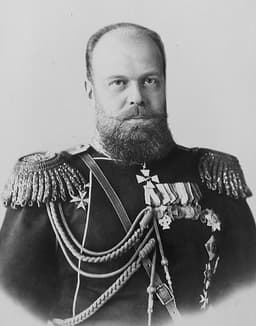
Alexander III of Russia
Emperor · Modern
49.3Total

Napoleon Bonaparte
General · Modern
70.9Total
Basic Information
Born
1845
1769
Died
1894
1821
Era
Modern
Modern
Nationality
Russia
France
Occupation
Emperor
General
Civilization
Western
Western
Score Comparison
Military (10%)
21.2
94.0
Political (20%)
53.8
72.0
Influence (20%)
53.3
40.0
Legacy (20%)
43.3
80.0
Leadership (15%)
79.8
78.0
Strategy (15%)
30.3
90.0
TOTAL
49.3
70.9
Alexander III of Russia — Complete Timeline
1881 AD
Reversal of Alexander II's ReformsReform
Upon ascending the throne, Alexander III issued the Manifesto on Unshakeable Autocracy, rejecting his father's reformist policies. He strengthened the power of the nobility, increased censorship, and expanded the powers of the secret police, reversing many liberalizing measures.
Counter-ReformsAutocracyReaction
Impact: nationaldestructive
1882 AD
May Laws of 1882Political Action◆ Major
Alexander III approved the May Laws, which imposed severe restrictions on Jewish residence, property ownership, and education. These laws confined Jews to the Pale of Settlement, limited their access to higher education, and fueled anti-Semitic discrimination.
Anti-SemitismMay LawsPale of Settlement
Impact: nationaldestructive
1891 AD
Construction of the Trans-Siberian RailwayInvention◆ Major
Alexander III initiated the construction of the Trans-Siberian Railway, linking European Russia to the Pacific port of Vladivostok. The project aimed to develop Siberia and strengthen Russian control over the Far East. It became the longest railway in the world.
Trans-Siberian RailwayInfrastructureSiberia
Impact: globalconstructive
1894 AD
Franco-Russian AlliancePolitical Action◆ Major
Alexander III finalized a military alliance with France, ending Russia's diplomatic isolation. The alliance committed both powers to mutual defense against the Triple Alliance of Germany, Austria-Hungary, and Italy. This pact shaped European alliances leading to World War I.
Franco-Russian AllianceDiplomacyTriple Alliance
Impact: global
Napoleon Bonaparte — Complete Timeline
1799 AD
Coup of 18 BrumaireOther◆ Major
Napoleon Bonaparte, with support from his brother Lucien and key political figures, overthrew the Directory in a bloodless coup. He established the Consulate with himself as First Consul, effectively becoming the ruler of France. This event ended the French Revolution's most unstable period.
French RevolutionCoupRise to Power
Impact: regional
1804 AD
Promulgation of the Napoleonic CodeOther◆ Major
Napoleon enacted the Civil Code of the French, known as the Napoleonic Code, a comprehensive set of laws that replaced the fragmented feudal legal systems. The code established legal equality, protected property rights, and secularized law. It became the basis for legal systems in many European and world countries.
Legal ReformNapoleonic CodeCivil Law
Impact: globalconstructive
1805 AD
Battle of AusterlitzWar◆ Major
Napoleon's Grande Arm
Napoleonic WarsBattleDecisive Victory
Impact: global
1812 AD
Invasion of RussiaWar◆ Major
Napoleon led the Grande Arm
Napoleonic WarsInvasionDisaster
Impact: globaldestructive
1815 AD
Battle of WaterlooWar◆ Major
Napoleon's French army was defeated by the combined forces of the Duke of Wellington's Anglo-Allied army and Gebhard Leberecht von Bl
Napoleonic WarsBattleFinal Defeat
Impact: globaldestructive
Expert Analysis
alexander-iii-of-russia-vs-napoleon-bonaparte
# The Emperor and the Autocrat: Two Visions of Power in an Age of Upheaval
On a frozen December morning in 1894, the most powerful man in Russia lay dying in his palace at Livadia. Alexander III, the colossus who had ruled with an iron fist for thirteen years, was only forty-nine. As his life ebbed away, he could take comfort in one achievement that eluded so many of his predecessors: during his entire reign, Russia had not fought a single major war. Half a continent away and eighty years earlier, another ruler had met a very different end. Napoleon Bonaparte, exiled on the remote island of Saint Helena, spent his final years dictating memoirs, obsessively reliving the battles that had made him master of Europe and then destroyed him. Two men, two empires, two utterly different conceptions of what it meant to lead.
Origins
Napoleon was born in 1769 on Corsica, an island that had only become French the year before. His family were minor nobility, but they were Corsican first and French second. This outsider status would define him. At military school in mainland France, he was mocked for his accent and his poverty. He devoured books on military history and Enlightenment philosophy, forging in his mind a vision of a world remade by merit and will. The French Revolution, which erupted when he was twenty, shattered the old order and opened a path for a brilliant artillery officer of no particular birth.
Alexander III was born into the opposite pole of existence. The second son of Tsar Alexander II, he was never meant to rule. His older brother Nicholas was the heir, groomed for power from childhood. But Nicholas died in 1865, and the reluctant, heavy-set Alexander was thrust into a role for which he had little preparation. Where Napoleon was lean, restless, and burning with ambition, Alexander was solid, cautious, and deeply conservative. He had seen his father, the "Tsar Liberator" who freed the serfs, blown apart by a terrorist’s bomb in 1881. That image seared itself into his soul.
Rise to Power
Napoleon’s ascent was meteoric. In 1793, at just twenty-four, he drove the British out of Toulon and was promoted to brigadier general. In 1796, he took command of a ragged army in Italy and turned it into an instrument of lightning conquest. Victory followed victory: Lodi, Arcole, Rivoli. He dictated peace terms to Austria before he was thirty. In 1799, he seized power in a coup, becoming First Consul, and by 1804 he crowned himself Emperor of the French. Each step was a gamble, a calculated risk that paid off because he understood something his enemies did not: that speed, concentration, and morale could shatter any army, any system.
Alexander III rose not by brilliance but by default. He became Tsar in 1881, immediately after his father’s assassination. His first act was to issue the Manifesto on Unshakeable Autocracy, a blunt rejection of the reforms his father had set in motion. Where Napoleon had ridden the wave of revolution, Alexander built a dam against it. He believed that Russia’s strength lay in its tradition of absolute rule, in the Orthodox Church, in the unity of the Tsar and the peasantry against the Westernized intelligentsia.
Leadership & Governance
As a ruler, Napoleon was a whirlwind of energy and reform. He centralized the French state, created the Bank of France, and most famously, codified the Napoleonic Code—a system of laws that enshrined equality before the law, property rights, and secular administration. It was a revolutionary document that spread across Europe wherever his armies marched. He was a military genius of the first rank, with a strategy score of 93 and a military score of 94, but his political score of 75 reflects a fundamental flaw: he could conquer, but he could not consolidate. He placed his brothers on thrones, made allies into vassals, and treated Europe as his personal chessboard.
Alexander III governed with a different philosophy. His military score of 13.3 and strategy of 55.7 suggest he was no warrior, but his leadership score of 84.4 reveals something else: he was a master of stability. He crushed dissent, persecuted revolutionaries, and imposed the May Laws of 1882, which severely restricted Jewish life in Russia. Yet he also initiated the Trans-Siberian Railway in 1891, a monumental project that would link European Russia to the Pacific. And in 1894, he finalized the Franco-Russian Alliance, ending Russia’s diplomatic isolation and creating a counterweight to Germany. He was a reactionary, but a pragmatic one.
Triumph & Tragedy
Napoleon’s greatest triumph was Austerlitz in 1805, where he destroyed the combined armies of Austria and Russia in a single day. His greatest tragedy was the invasion of Russia in 1812. He marched with the largest army Europe had ever seen—over 600,000 men—into a vast, empty land. The Russians refused to give battle, retreating and burning everything behind them. Napoleon reached Moscow, but found it abandoned and in flames. With winter coming and no supply lines, he was forced to retreat. The Grande Armée disintegrated in the snow. Only a fraction returned.
Alexander III’s triumph was his very absence of war. He earned the title "Peacemaker" not by winning battles, but by avoiding them. His tragedy was that his repression sowed the seeds of future disaster. By crushing reform and persecuting minorities, he drove the opposition underground. His son, Nicholas II, would inherit a rigid, brittle system that would shatter in 1917.
Character & Destiny
Napoleon’s character was his destiny. His boundless ambition, his faith in his own star, his contempt for obstacles—these made him unstoppable until they made him blind. He once said, "Impossible is a word to be found only in the dictionary of fools." But at Waterloo in 1815, he faced a coalition that outnumbered him, and for once, his genius could not compensate. He was exiled, and died at fifty-one, a prisoner.
Alexander III’s character was equally defining. He was stubborn, suspicious, and deeply conservative. He believed that any concession to liberalism was weakness. He said, "While I am Tsar, there will be no constitution." He was not cruel for cruelty’s sake, but he was incapable of imagining a Russia that was not ruled by an autocrat. He died of kidney disease, having spent his last years in physical agony, still clinging to power.
Legacy
Napoleon’s legacy is vast and contradictory. He spread the ideals of the French Revolution—nationalism, legal equality, meritocracy—across Europe, even as he trampled on the sovereignty of nations. The Napoleonic Code remains the basis of civil law in many countries. He is remembered as a military genius, a reformer, and a tyrant. His total score of 82.4 reflects a figure of immense impact, for good and ill.
Alexander III’s legacy is quieter but no less significant. His total score of 63.4 suggests a lesser figure, but he shaped Russia profoundly. The Trans-Siberian Railway transformed the economy. The Franco-Russian Alliance set the stage for World War I. And his repression ensured that when the revolution came, it would be violent and total. He is remembered in Russia as a strong, stable ruler—and as the man who made the catastrophe of 1917 almost inevitable.
Conclusion
Two men, two worlds. Napoleon believed that history was made by will, by genius, by the daring individual who seizes the moment. Alexander believed that history was a river that must be contained, that order was the highest good. One died in exile, the other in his palace. But both, in their own ways, shaped the century that followed. Napoleon showed what ambition could achieve and what it could destroy. Alexander showed what stability could preserve and what it could crush. Their lives remind us that leadership is never just about power—it is about the choices we make with it. And those choices echo long after the rulers are gone.
Rankings
🥇
Napoleon BonaparteLeader
Mil: 94.0Pol: 72.0Inf: 40.0
70.9
🥈
Alexander III of Russia
Mil: 21.2Pol: 53.8Inf: 53.3
49.3
+21.6 behind
How This Comparison Works
Algorithm
Each figure is scored on 6 dimensions (0—100 scale) based on structured historical data: Military (10%), Political (20%), Influence (20%), Legacy (20%), Leadership (15%), Strategy (15%). The weighted total produces the final ranking.
Data Sources
Scores are computed from structured sub-indicators in the database. Scale factors adjust for era (Ancient ×0.85, Modern ×1.0) and civilization size (Eastern ×1.05, Other ×0.80) to account for differences in population and military scale.
Maximum 3 Figures
Comparisons are limited to 2—3 figures to ensure readability and statistical meaningfulness.
Error Margins
±5 points per dimension — Sub-scores are derived from historical records with inherent uncertainty. Two figures within 5 points on a dimension should be considered roughly equivalent in that area.
Total Score Accuracy
±3 points overall — The weighted combination of 6 dimensions produces a total score with approximately ±3 points of uncertainty. Differences of less than 3 points are not statistically significant— the figures are effectively tied.
Known Limitations
- Historical records are incomplete and uneven across civilizations
- Figures from oral-tradition societies may be underrepresented
- Occupation labels can misclassify multi-role figures
- Scores measure capability and impact, not moral character
- Quantitative scoring is a comparison tool, not absolute truth
Capability Radar
Military (10%) — Battles & Warfare
Battles
10
95
Win Rate
10
90
Expansion
10
95
Political (20%) — Governance & Reform
Reform
40
95
Diplomacy
70
80
Economy
50
85
Influence (20%) — Cultural & Global Reach
Cultural
30
85
Global
30
90
Legacy (20%) — Historical Impact
Historical
40
95
Longevity
30
90
Leadership (15%) — Power & Stability
Tenure
60
85
Stability
70
70
Strategy (15%) — Tactics & Innovation
Strategy
10
95
Tactics
10
98
Reform
20
92
Similar Comparisons
Comments & Discussion
1. BattlefieldMetrician6/17/2026
Napoleon’s corpse count alone makes him a better leader—he racked up over 700,000 casualties in the 1812 invasion alone, yet still reshaped Europe’s laws and borders. Alexander III avoided wars by pure repression, not skill. Give me the Corsican who revolutionized warfare and jurisprudence over a paternalistic autocrat who choked his people into submission. Russia’s “peace” under Alexander was a quiet, frozen graveyard.
2. 数字猎手6/17/2026
数据骗不了人:拿破仑在位15年打了60场战役,直接造成350万到600万人死亡,欧洲GDP暴跌30%。亚历山大三世统治13年零大战,俄国工业产量翻倍、铁路里程从2.2万公里飙到4.5万公里。和平不是软弱,“不流血”是最高级别的硬核。你们崇拜的战争天才,本质上是个纵横欧陆的屠夫——成功是用活人骨头垒出来的。
3. ClassicsQuibbler6/17/2026
Napoleon recreated Roman imperial laurels for a modern age—the Code Napoléon still underpins civil law across four continents. Alexander III’s “greatness” boiled down to wearing down peasant serfs and promoting pan-Slavic mysticism. Napoleon failed at Waterloo because of a mud-choked field; Alexander failed at life by suppressing every spark of intellect. One conqueror inspired revolutions; the other merely crushed them. Easy choice.
4. 历史骨灰盒6/17/2026
你们吹拿破仑的统一欧洲梦,可他输给的不是英国人,而是单核细胞增多症和痔疮造成的作战错误——1815年6月18日因痢疾没法骑马观察战场。亚历山大三世呢?他1881年上台时俄国债台高筑,1888年巴尔干危机后精准收缩,避免了一场正面冲突。一个在圣赫勒拿岛靠吹牛活着,另一个在冬宫愣是把俄国养成欧洲宪兵。谁更有种?不流血才是真硬汉。
5. RevisionistRadar6/17/2026
The real dirty truth: Alexander III was the last czar who actually kept his empire intact. Napoleon’s “brilliance” depended on slave labor in the colonies and a bloodthirsty apparatus that turned Europe into ash. Alexander’s Russification policies were brutal, sure—no debate there. But he didn’t march his population into mass graves chasing ghost empires. Napoleon’s grand narrative is a myth for glory-hunters; Alexander’s stagnation at least kept people breathing.