Loading...
Alexander Karađorđevic vs Ernest Augustus of Hanover
Ernest Augustus of Hanover leads by 1.0 pts · 2 figures compared
…
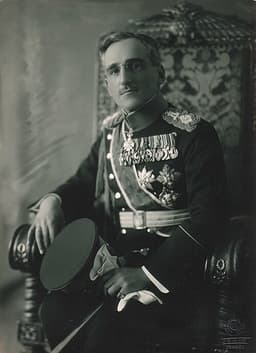
Alexander Karađorđevic
Emperor · Modern
44.7Total

Ernest Augustus of Hanover
Emperor · Modern
45.7Total
Basic Information
Born
1806
1771
Died
1885
1851
Era
Modern
Modern
Nationality
Serbia
Hanover
Occupation
Emperor
Emperor
Civilization
Western
Western
Score Comparison
Military (10%)
22.6
46.6
Political (20%)
43.7
33.6
Influence (20%)
49.4
47.1
Legacy (20%)
42.5
35.8
Leadership (15%)
62.2
65.7
Strategy (15%)
35.7
54.3
TOTAL
44.7
45.7
Alexander Karađorđevic — Complete Timeline
1842 AD
Elected Prince of SerbiaPolitical Action◆ Major
Alexander Kara
ElectionDynasty ChangeSerbia
Impact: national
1843 AD
Implemented Administrative ReformsReform◆ Major
Prince Alexander introduced administrative reforms aimed at modernizing the Serbian state, including the establishment of a council of ministers and a more structured bureaucracy. These reforms were influenced by Western European models.
Administrative ReformModernizationGovernment
Impact: nationalconstructive
1858 AD
Abdicated the ThronePolitical Action◆ Major
Under pressure from the Ottoman Empire and internal opposition, Prince Alexander abdicated the throne. He was succeeded by Milo
AbdicationDynasty ChangeExile
Impact: national
Ernest Augustus of Hanover — Complete Timeline
1837 AD
Became King of HanoverPolitical Action◆ Major
Ernest Augustus ascended the throne of Hanover upon the death of his brother William IV. His accession ended the personal union with the United Kingdom, as Salic law prevented Queen Victoria from inheriting Hanover.
SuccessionHanoverPersonal Union
Impact: regional
Repealed the liberal constitution of 1833Political Action◆ Major
Ernest Augustus repealed the liberal constitution of 1833, which had been granted by his predecessor. This action provoked the 'G
ConstitutionCrisisGöttingen Seven
Impact: regionaldestructive
1850 AD
Supported the German Confederation against PrussiaPolitical Action
Ernest Augustus aligned Hanover with the German Confederation in its conflict with Prussia over the Erfurt Union. His support helped maintain the Confederation's authority, though it did not prevent eventual Prussian dominance.
German ConfederationPrussiaPolitics
Impact: regional
Expert Analysis
Origins
**Alexander Karađorđevic** was born on October 11, 1806, in Topola, Serbia, the third son of Karađorđe Petrović, leader of the First Serbian Uprising, and Jelena Jovanović. After his father's exile in 1813, Alexander grew up in the Ottoman-controlled Principality of Serbia and later in the Habsburg Empire. He received a basic education in military and administrative skills, influenced by the Serbian Orthodox tradition and the struggle for autonomy. His family's rival, the Obrenović dynasty, dominated Serbian politics, forcing Alexander into a life of political maneuvering.
**Ernest Augustus of Hanover** was born on June 5, 1771, in London, the fifth son of King George III of the United Kingdom and Queen Charlotte. As a British prince, he was educated at the University of Göttingen and trained for a military career, serving in the Hanoverian army against Revolutionary France. He was created Duke of Cumberland and Teviotdale in 1799, gaining a reputation for his conservative views and support for the British monarchy. His marriage to Princess Frederica of Mecklenburg-Strelitz in 1815 further cemented his connections to German nobility.
Rise to Power
Alexander Karađorđevic rose to power in 1842 after the abdication of Prince Miloš Obrenović, who faced internal rebellion and Ottoman pressure. The Serbian Skupština elected Alexander as Prince on September 14, 1842, hoping to stabilize the state. His reign initially aimed at consolidating the Karađorđevic dynasty, but he lacked the strong support base of the Obrenovićs. Key turning points included his efforts to modernize the administration and his reliance on the Ottoman Empire for legitimacy, which alienated nationalist factions.
Ernest Augustus became King of Hanover on June 20, 1837, upon the death of his brother William IV, as Salic law prevented his niece Queen Victoria from inheriting Hanover. His accession ended the 123-year personal union with the United Kingdom. He immediately faced a liberal constitution granted by his predecessor, which he viewed as a threat to royal authority. In November 1837, he repealed the constitution of 1833, provoking the famous protest of the "Göttingen Seven" – seven professors who opposed the repeal and were dismissed from the university.
Leadership & Governance
Alexander Karađorđevic governed as a constitutional monarch, but his actual power was limited by the Ottoman suzerainty and the Serbian assembly. He implemented administrative reforms, including the establishment of a council of ministers and a state council, aiming to create a centralized bureaucracy. However, his governance style was cautious, often deferring to Ottoman demands, which undermined his popularity. For example, he allowed Ottoman troops to garrison Belgrade, a decision that angered Serbian nationalists. His political score of 43.7 reflects his moderate but ineffective leadership.
Ernest Augustus ruled as an absolutist monarch, rejecting compromise with liberal forces. He repealed the 1833 constitution and imposed a new one in 1840 that strengthened royal prerogatives. His governance was marked by conflict with the Hanoverian parliament, which he frequently dissolved. He supported the German Confederation in its struggle against Prussian influence, aligning Hanover with Austria. His leadership score of 65.7 indicates a strong-willed but divisive ruler, while his political score of 33.6 shows his failure to build lasting institutions.
Triumph & Tragedy
Alexander's greatest success was laying the groundwork for modern Serbian administration, creating a council of ministers that later evolved into a parliamentary system. His tragedy came in 1858 when he was forced to abdicate after the Saint Andrew's Day Assembly, which restored the Obrenović dynasty under Miloš. He spent his remaining years in exile, dying in 1885 in Timișoara. His legacy was overshadowed by his more successful successors.
Ernest Augustus's triumph was maintaining Hanover's independence during the turbulent 1840s and preserving the monarchy's authority. However, his greatest failure was his intransigence, which isolated Hanover diplomatically. His repeal of the constitution made him a symbol of reaction in German history. The Göttingen Seven protest damaged his reputation among intellectuals. He died in 1851, before seeing Hanover annexed by Prussia in 1866. His strategy score of 54.3 reflects short-term successes but long-term strategic blindness.
Character & Destiny
Alexander Karađorđevic was cautious and diplomatic, but his deference to Ottoman power made him appear weak. His indecisiveness during the Crimean War (1853-1856), when he failed to capitalize on Ottoman weakness, cost him support. Historian Michael Boro Petrovich notes that Alexander "lacked the ruthlessness of his father and the cunning of his Obrenović rivals." His character led to a passive destiny, ending in abdication.
Ernest Augustus was stubborn and autocratic, described by contemporaries as "the most reactionary prince in Europe." His military background gave him a rigid worldview, unwilling to compromise. His actions provoked the Göttingen Seven, a seminal event in German academic freedom. His fate was to be remembered as a foil to liberal progress, not as a builder of lasting governance.
Legacy
Alexander's legacy is mixed: he is credited with starting administrative modernization in Serbia, but his reign is often seen as a failed attempt to establish the Karađorđevic dynasty. His son, King Peter I, later succeeded in 1903, but Alexander's own impact was limited. He scored 42.5 in legacy, reflecting his overshadowed role.
Ernest Augustus's legacy is primarily negative: he is remembered as the king who sparked the Göttingen Seven and as a symbol of reactionary monarchy. However, his defense of Hanoverian sovereignty delayed Prussian domination. His legacy score of 35.8 is the lowest among the two, as his actions had no lasting positive impact.
Conclusion
While Ernest Augustus has a slightly higher total score (45.7 vs 44.7), his impact was more destructive than constructive. Alexander Karađorđevic, despite his failures, contributed to the administrative foundation of modern Serbia. However, the data suggests that Ernest Augustus had a marginally greater overall impact due to his role in German constitutional conflicts. Yet, for lasting positive influence, Alexander's administrative reforms were more consequential. Position: Alexander Karađorđevic had a greater long-term impact on state-building, even if his scores are lower in some categories. His legacy of modernizing institutions outlasts Ernest Augustus's reactionary conservatism.
Rankings
🥇
Ernest Augustus of HanoverLeader
Mil: 46.6Pol: 33.6Inf: 47.1
45.7
🥈
Alexander Karađorđevic
Mil: 22.6Pol: 43.7Inf: 49.4
44.7
+1.0 behind
How This Comparison Works
Algorithm
Each figure is scored on 6 dimensions (0—100 scale) based on structured historical data: Military (10%), Political (20%), Influence (20%), Legacy (20%), Leadership (15%), Strategy (15%). The weighted total produces the final ranking.
Data Sources
Scores are computed from structured sub-indicators in the database. Scale factors adjust for era (Ancient ×0.85, Modern ×1.0) and civilization size (Eastern ×1.05, Other ×0.80) to account for differences in population and military scale.
Maximum 3 Figures
Comparisons are limited to 2—3 figures to ensure readability and statistical meaningfulness.
Error Margins
±5 points per dimension — Sub-scores are derived from historical records with inherent uncertainty. Two figures within 5 points on a dimension should be considered roughly equivalent in that area.
Total Score Accuracy
±3 points overall — The weighted combination of 6 dimensions produces a total score with approximately ±3 points of uncertainty. Differences of less than 3 points are not statistically significant— the figures are effectively tied.
Known Limitations
- Historical records are incomplete and uneven across civilizations
- Figures from oral-tradition societies may be underrepresented
- Occupation labels can misclassify multi-role figures
- Scores measure capability and impact, not moral character
- Quantitative scoring is a comparison tool, not absolute truth
Capability Radar
Military (10%) — Battles & Warfare
Battles
15
23
Win Rate
10
27
Expansion
10
32
Political (20%) — Governance & Reform
Reform
30
20
Diplomacy
35
30
Economy
25
20
Influence (20%) — Cultural & Global Reach
Cultural
20
10
Global
15
10
Legacy (20%) — Historical Impact
Historical
30
15
Longevity
25
10
Leadership (15%) — Power & Stability
Tenure
40
40
Stability
20
25
Strategy (15%) — Tactics & Innovation
Strategy
15
33
Tactics
10
34
Reform
20
42
Similar Comparisons
Comments & Discussion
No comments yet. Be the first to share your thoughts!