Loading...
Analysis will be generated on first visit.
Scores and timeline are available below. The page will refresh automatically when ready.
Alexander Kerensky vs Julius Caesar
Julius Caesar leads by 21.8 pts · 2 figures compared
…

Alexander Kerensky
Politician · Modern
61.5Total
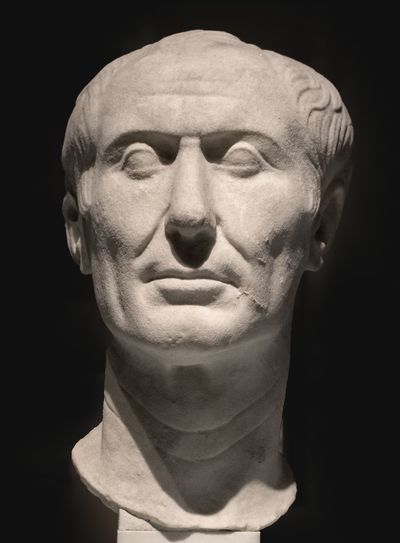
Julius Caesar
General · Ancient
83.3Total
Basic Information
Born
1881
-100
Died
1970
-44
Era
Modern
Ancient
Nationality
Russia
Roman Republic
Occupation
Politician
General
Civilization
Western
Western
Score Comparison
Military (10%)
37.5
88.0
Political (20%)
72.0
78.0
Influence (20%)
72.6
85.0
Legacy (20%)
61.8
82.0
Leadership (15%)
74.6
82.0
Strategy (15%)
35.3
88.0
TOTAL
61.5
83.3
Rankings
🥇
Julius CaesarLeader
Mil: 88.0Pol: 78.0Inf: 85.0
83.3
🥈
Alexander Kerensky
Mil: 37.5Pol: 72.0Inf: 72.6
61.5
+21.8 behind
How This Comparison Works
Algorithm
Each figure is scored on 6 dimensions (0—100 scale) based on structured historical data: Military (10%), Political (20%), Influence (20%), Legacy (20%), Leadership (15%), Strategy (15%). The weighted total produces the final ranking.
Data Sources
Scores are computed from structured sub-indicators in the database. Scale factors adjust for era (Ancient ×0.85, Modern ×1.0) and civilization size (Eastern ×1.05, Other ×0.80) to account for differences in population and military scale.
Maximum 3 Figures
Comparisons are limited to 2—3 figures to ensure readability and statistical meaningfulness.
Error Margins
±5 points per dimension — Sub-scores are derived from historical records with inherent uncertainty. Two figures within 5 points on a dimension should be considered roughly equivalent in that area.
Total Score Accuracy
±3 points overall — The weighted combination of 6 dimensions produces a total score with approximately ±3 points of uncertainty. Differences of less than 3 points are not statistically significant— the figures are effectively tied.
Known Limitations
- Historical records are incomplete and uneven across civilizations
- Figures from oral-tradition societies may be underrepresented
- Occupation labels can misclassify multi-role figures
- Scores measure capability and impact, not moral character
- Quantitative scoring is a comparison tool, not absolute truth
Capability Radar
Military (10%) — Battles & Warfare
Battles
32
95
Win Rate
34
92
Expansion
32
97
Political (20%) — Governance & Reform
Reform
40
90
Diplomacy
20
85
Economy
15
82
Influence (20%) — Cultural & Global Reach
Cultural
15
88
Global
30
94
Legacy (20%) — Historical Impact
Historical
40
95
Longevity
20
96
Leadership (15%) — Power & Stability
Tenure
10
75
Stability
5
60
Strategy (15%) — Tactics & Innovation
Strategy
38
94
Tactics
40
96
Reform
45
88
Analysis will be generated on first visit.
Scores and timeline are available below. The page will refresh automatically when ready.
Alexander Kerensky — Complete Timeline
1917 AD
Appointment as Minister of JusticePolitical Action◆ Major
After the February Revolution, Kerensky was appointed Minister of Justice in the Provisional Government. He was the only socialist in the cabinet and became a key figure in the government, advocating for continued war effort and gradual reforms.
Provisional GovernmentMinister of JusticeFebruary Revolution
Impact: national
Kornilov AffairPolitical Action
Kerensky, as Prime Minister, accused General Lavr Kornilov of attempting a coup and dismissed him. Kornilov then marched troops toward Petrograd. Kerensky armed the Bolshevik Red Guards to defend the city, which strengthened the Bolsheviks' position and undermined the Provisional Government.
Kornilov AffairCoup AttemptProvisional Government
Impact: nationaldestructive
Overthrow by the BolsheviksPolitical Action
During the October Revolution, Bolshevik forces led by Lenin seized key points in Petrograd and stormed the Winter Palace. Kerensky fled the city in a car provided by the American embassy, leaving the Provisional Government to collapse. He later went into exile.
October RevolutionBolsheviksProvisional Government
Impact: globaltragic
1918 AD
Exile and Anti-Bolshevik ActivitiesPolitical Action
After fleeing Russia, Kerensky settled in Paris and later the United States. He wrote memoirs and continued to advocate for democratic socialism, but failed to gain significant support. He remained a controversial figure, blamed by both the left and right for the failure of the Provisional Government.
ExileAnti-BolshevikMemoirs
Impact: national
Similar Comparisons
Comments & Discussion
No comments yet. Be the first to share your thoughts!