Loading...
This comparison has not been analyzed yet.
One-time AI generation (~1 minute). Scores and timeline are already available below.
Alexander Van der Bellen vs Carlos Veiga
Alexander Van der Bellen leads by 3.8 pts · 2 figures compared
…
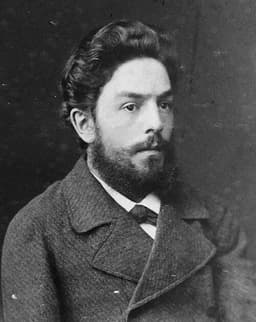
Alexander Van der Bellen
Politician · Modern
54.1Total

Carlos Veiga
Politician · Modern
50.3Total
Basic Information
Born
1944
1949
Died
—
—
Era
Modern
Modern
Nationality
Austria
Cape Verde
Occupation
Politician
Politician
Civilization
Western
Other
Score Comparison
Military (10%)
49.1
50.0
Political (20%)
62.7
45.0
Influence (20%)
53.3
53.3
Legacy (20%)
45.8
44.2
Leadership (15%)
72.0
66.0
Strategy (15%)
42.5
42.3
TOTAL
54.1
50.3
Alexander Van der Bellen — Complete Timeline
2016 AD
Elected President of AustriaPolitical Action◆ Major
Alexander Van der Bellen was elected President of Austria on December 4, 2016, in a runoff election against Norbert Hofer of the Freedom Party. He won 53.8% of the vote, becoming the first president from the Green Party.
Presidential ElectionGreen Party Victory
Impact: nationalconstructive
2017 AD
Swearing in of Sebastian Kurz as ChancellorPolitical Action
As president, Van der Bellen swore in Sebastian Kurz as Chancellor on December 18, 2017, despite concerns about the coalition with the Freedom Party. He emphasized the importance of democratic values and European integration.
Swearing-in CeremonyCoalition Government
Impact: national
2022 AD
Re-elected President of AustriaPolitical Action◆ Major
Van der Bellen was re-elected for a second term on October 9, 2022, winning 56.7% of the vote in the first round. His victory was seen as a reaffirmation of centrist and pro-European values against far-right challengers.
Re-electionPresidential Term
Impact: nationalconstructive
Carlos Veiga — Complete Timeline
1991 AD
First Democratically Elected Prime MinisterPolitical Action
Carlos Veiga became the first democratically elected Prime Minister of Cape Verde after the Movement for Democracy (MpD) won the legislative elections. This marked the end of one-party rule and the beginning of multi-party democracy.
DemocratizationElectionCape Verde
Impact: nationalconstructive
Prime Minister of Cape VerdePolitical Action◆ Major
Veiga served as Prime Minister from 1991 to 2000, leading economic reforms and privatization. His government focused on liberalization and integration into the global economy, contributing to Cape Verde's stability.
Prime MinisterEconomic ReformCape Verde
Impact: nationalconstructive
This comparison has not been analyzed yet.
One-time AI generation (~1 minute). Scores and timeline are already available below.
Rankings
🥇
Alexander Van der BellenLeader
Mil: 49.1Pol: 62.7Inf: 53.3
54.1
🥈
Carlos Veiga
Mil: 50.0Pol: 45.0Inf: 53.3
50.3
+3.8 behind
How This Comparison Works
Algorithm
Each figure is scored on 6 dimensions (0—100 scale) based on structured historical data: Military (10%), Political (20%), Influence (20%), Legacy (20%), Leadership (15%), Strategy (15%). The weighted total produces the final ranking.
Data Sources
Scores are computed from structured sub-indicators in the database. Scale factors adjust for era (Ancient ×0.85, Modern ×1.0) and civilization size (Eastern ×1.05, Other ×0.80) to account for differences in population and military scale.
Maximum 3 Figures
Comparisons are limited to 2—3 figures to ensure readability and statistical meaningfulness.
Error Margins
±5 points per dimension — Sub-scores are derived from historical records with inherent uncertainty. Two figures within 5 points on a dimension should be considered roughly equivalent in that area.
Total Score Accuracy
±3 points overall — The weighted combination of 6 dimensions produces a total score with approximately ±3 points of uncertainty. Differences of less than 3 points are not statistically significant— the figures are effectively tied.
Known Limitations
- Historical records are incomplete and uneven across civilizations
- Figures from oral-tradition societies may be underrepresented
- Occupation labels can misclassify multi-role figures
- Scores measure capability and impact, not moral character
- Quantitative scoring is a comparison tool, not absolute truth
Capability Radar
Military (10%) — Battles & Warfare
Battles
29
23
Win Rate
33
24
Expansion
35
29
Political (20%) — Governance & Reform
Reform
55
65
Diplomacy
65
60
Economy
50
55
Influence (20%) — Cultural & Global Reach
Cultural
30
30
Global
30
30
Legacy (20%) — Historical Impact
Historical
35
35
Longevity
40
30
Leadership (15%) — Power & Stability
Tenure
60
55
Stability
60
60
Strategy (15%) — Tactics & Innovation
Strategy
37
30
Tactics
39
33
Reform
47
38
Similar Comparisons
Comments & Discussion
No comments yet. Be the first to share your thoughts!