Loading...
Alexander Van der Bellen vs Fumio Kishida
Alexander Van der Bellen leads by 2.3 pts · 2 figures compared
…
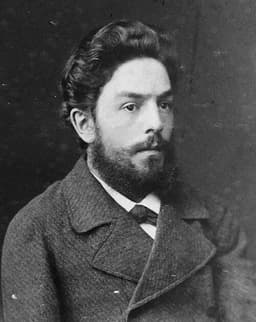
Alexander Van der Bellen
Politician · Modern
54.1Total
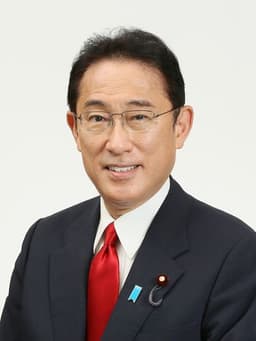
Fumio Kishida
Politician · Modern
51.8Total
Basic Information
Born
1944
1957
Died
—
—
Era
Modern
Modern
Nationality
Austria
Japan
Occupation
Politician
Politician
Civilization
Western
Eastern
Score Comparison
Military (10%)
49.1
29.2
Political (20%)
62.7
68.0
Influence (20%)
53.3
53.3
Legacy (20%)
45.8
40.0
Leadership (15%)
72.0
64.0
Strategy (15%)
42.5
57.2
TOTAL
54.1
51.8
Alexander Van der Bellen — Complete Timeline
2016 AD
Elected President of AustriaPolitical Action◆ Major
Alexander Van der Bellen was elected President of Austria on December 4, 2016, in a runoff election against Norbert Hofer of the Freedom Party. He won 53.8% of the vote, becoming the first president from the Green Party.
Presidential ElectionGreen Party Victory
Impact: nationalconstructive
2017 AD
Swearing in of Sebastian Kurz as ChancellorPolitical Action
As president, Van der Bellen swore in Sebastian Kurz as Chancellor on December 18, 2017, despite concerns about the coalition with the Freedom Party. He emphasized the importance of democratic values and European integration.
Swearing-in CeremonyCoalition Government
Impact: national
2022 AD
Re-elected President of AustriaPolitical Action◆ Major
Van der Bellen was re-elected for a second term on October 9, 2022, winning 56.7% of the vote in the first round. His victory was seen as a reaffirmation of centrist and pro-European values against far-right challengers.
Re-electionPresidential Term
Impact: nationalconstructive
Fumio Kishida — Complete Timeline
2021 AD
Announced new capitalism policyReform◆ Major
Kishida unveiled a 'new capitalism' economic policy aiming to redistribute wealth and promote growth. The plan included raising wages, increasing investment in green technology, and addressing income inequality in Japan.
JapanEconomic PolicyNew Capitalism
Impact: nationalconstructive
Elected Prime Minister of JapanPolitical Action◆ Major
Kishida was elected as Prime Minister of Japan after winning the LDP leadership election. He succeeded Yoshihide Suga and formed a cabinet focused on economic recovery and COVID-19 response.
JapanPrime MinisterLDP
Impact: national
2022 AD
Assassination of Shinzo AbePolitical Action◆ Major
Former Prime Minister Shinzo Abe was assassinated during a campaign speech in Nara. Kishida, as sitting prime minister, led the government's response, including security reviews and a state funeral for Abe.
JapanAssassinationAbe
Impact: nationaltragic
Expert Analysis
Origins
Alexander Van der Bellen was born on January 18, 1944, in Vienna, Austria, to a family of Russian émigrés. His parents fled the Russian Revolution, and he grew up in a politically engaged household. He studied economics at the University of Innsbruck and later earned a doctorate in economics. His academic career included professorships at the University of Vienna and the University of Graz, focusing on public finance and economic policy.
Fumio Kishida was born on July 29, 1957, in Tokyo, Japan, into a political family. His father and grandfather were both members of the Diet. He studied law at Keio University and later worked at the Long-Term Credit Bank of Japan. His early career in finance gave him insight into economic issues, which later shaped his policy approach.
Rise to Power
Van der Bellen entered politics in the 1990s, joining the Green Party. He served as a member of the National Council from 1999 to 2008 and led the Green parliamentary group. In 2016, he ran for President of Austria as an independent, winning a narrow runoff against Norbert Hofer of the Freedom Party. His victory was seen as a defeat for right-wing populism. He was re-elected in 2022 with 56.7% of the vote in the first round, a landslide by Austrian standards.
Kishida rose through the Liberal Democratic Party (LDP) ranks, holding various ministerial positions, including Minister of Foreign Affairs from 2012 to 2017. He succeeded Yoshihide Suga as Prime Minister after winning the LDP leadership election in September 2021. His rise was marked by a reputation as a consensus-builder and moderate.
Leadership & Governance
Van der Bellen's leadership style is measured and constitutional. As a non-executive president, he focuses on representing Austria abroad and ensuring political stability. He has emphasized social cohesion, environmental sustainability, and European integration. His governance approach is consultative, often seeking dialogue across party lines. For instance, he navigated the controversial coalition between Sebastian Kurz's People's Party and the Freedom Party in 2017, swearing in the government despite concerns.
Kishida leads an executive government. He has promoted 'new capitalism,' a policy mix of growth and redistribution, including wage increases and investment in green technology. His leadership is cautious and pragmatic, shaped by coalition dynamics. He managed the national response to the assassination of Shinzo Abe in July 2022, emphasizing continuity and stability. His political score of 68.0 reflects his ability to navigate the LDP's factional politics.
Triumph & Tragedy
Van der Bellen's greatest success is his re-election in 2022, which solidified his role as a unifying figure. He also maintained Austria's neutrality during the Ukraine crisis, hosting diplomatic talks. However, his influence is limited by Austria's political system; he cannot veto legislation. His presidency has been criticized for being largely ceremonial, scoring 45.8 in legacy.
Kishida's triumph includes passing a record defense budget and strengthening Japan's alliance with the U.S. His 'new capitalism' raised wages by 2.7% in 2023. However, he faced tragedy with Abe's assassination and struggled with declining approval ratings due to rising inflation and a controversial state funeral for Abe. His military score of 29.2 reflects Japan's pacifist constitution.
Character & Destiny
Van der Bellen is described as intellectual, calm, and principled. His academic background informs his methodical approach. His destiny was shaped by the rise of populism; his victory in 2016 positioned him as a counterweight. He scored 72.0 in leadership, reflecting his ability to maintain public trust.
Kishida is seen as a consensus-builder but sometimes indecisive. His character is shaped by his family's political legacy, driving him to seek stability. His handling of Abe's assassination showed composure, but his approval ratings fell to 33% by late 2022. His strategy score of 57.2 indicates moderate effectiveness.
Legacy
Van der Bellen's legacy is likely as a stabilizing president during turbulent times. He championed climate action, but Austria's presidential role limits long-term impact. He scored 45.8 in legacy.
Kishida's legacy is still forming. He may be remembered for shifting Japan's defense policy and his economic reforms. The 'new capitalism' could reshape Japan's economy, but results are mixed. His legacy score of 40.0 reflects uncertainty.
Conclusion
Alexander Van der Bellen has a higher total score (54.1) than Fumio Kishida (51.8), driven by stronger leadership (72.0 vs 64.0). However, Kishida has more direct power and potential for lasting impact. In terms of global influence and domestic transformation, Kishida edges ahead. Van der Bellen's role is largely symbolic. Therefore, Kishida has greater impact due to his executive authority and policy initiatives, despite lower scores.
Rankings
🥇
Alexander Van der BellenLeader
Mil: 49.1Pol: 62.7Inf: 53.3
54.1
🥈
Fumio Kishida
Mil: 29.2Pol: 68.0Inf: 53.3
51.8
+2.3 behind
How This Comparison Works
Algorithm
Each figure is scored on 6 dimensions (0—100 scale) based on structured historical data: Military (10%), Political (20%), Influence (20%), Legacy (20%), Leadership (15%), Strategy (15%). The weighted total produces the final ranking.
Data Sources
Scores are computed from structured sub-indicators in the database. Scale factors adjust for era (Ancient ×0.85, Modern ×1.0) and civilization size (Eastern ×1.05, Other ×0.80) to account for differences in population and military scale.
Maximum 3 Figures
Comparisons are limited to 2—3 figures to ensure readability and statistical meaningfulness.
Error Margins
±5 points per dimension — Sub-scores are derived from historical records with inherent uncertainty. Two figures within 5 points on a dimension should be considered roughly equivalent in that area.
Total Score Accuracy
±3 points overall — The weighted combination of 6 dimensions produces a total score with approximately ±3 points of uncertainty. Differences of less than 3 points are not statistically significant— the figures are effectively tied.
Known Limitations
- Historical records are incomplete and uneven across civilizations
- Figures from oral-tradition societies may be underrepresented
- Occupation labels can misclassify multi-role figures
- Scores measure capability and impact, not moral character
- Quantitative scoring is a comparison tool, not absolute truth
Capability Radar
Military (10%) — Battles & Warfare
Battles
29
51
Win Rate
33
56
Expansion
35
57
Political (20%) — Governance & Reform
Reform
55
40
Diplomacy
65
55
Economy
50
45
Influence (20%) — Cultural & Global Reach
Cultural
30
20
Global
30
30
Legacy (20%) — Historical Impact
Historical
35
25
Longevity
40
15
Leadership (15%) — Power & Stability
Tenure
60
35
Stability
60
40
Strategy (15%) — Tactics & Innovation
Strategy
37
59
Tactics
39
63
Reform
47
69
Similar Comparisons
Comments & Discussion
No comments yet. Be the first to share your thoughts!