Loading...
Alexei Kosygin vs Le Duan
Alexei Kosygin leads by 3.3 pts · 2 figures compared
…

Alexei Kosygin
Politician · Modern
58.1Total
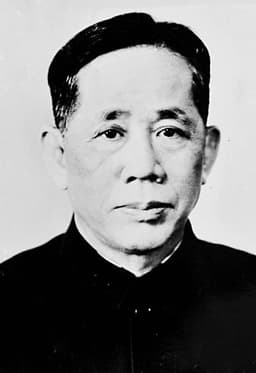
Le Duan
Politician · Modern
54.8Total
Basic Information
Born
1904
1907
Died
1980
1986
Era
Modern
Modern
Nationality
Russia
Vietnam
Occupation
Politician
Politician
Civilization
Western
Eastern
Score Comparison
Military (10%)
50.0
25.9
Political (20%)
62.7
65.0
Influence (20%)
58.0
58.3
Legacy (20%)
48.3
52.0
Leadership (15%)
85.0
72.0
Strategy (15%)
43.4
41.0
TOTAL
58.1
54.8
Alexei Kosygin — Complete Timeline
1964 AD
Appointment as Premier of the Soviet UnionPolitical Action◆ Major
Kosygin became Chairman of the Council of Ministers (Premier) in October 1964 after Khrushchev's ouster. He served as head of government for 16 years, overseeing the Soviet economy and foreign policy during the Brezhnev era.
Soviet LeadershipAppointmentBrezhnev Era
Impact: national
1965 AD
Introduction of the Kosygin ReformsReform◆ Major
Kosygin launched economic reforms in September 1965 aimed at decentralizing the Soviet economy. The reforms gave enterprises more autonomy, reduced central planning, and introduced profit incentives, but were largely abandoned by the early 1970s due to bureaucratic resistance.
Economic ReformDecentralizationSoviet Economy
Impact: nationalprogressive
1968 AD
Role in the Soviet Invasion of CzechoslovakiaPolitical Action◆ Major
Kosygin supported the Warsaw Pact invasion of Czechoslovakia in August 1968, which crushed the Prague Spring reforms. He participated in negotiations with Czechoslovak leaders, justifying the intervention as necessary to preserve socialism in the Eastern Bloc.
Cold WarPrague SpringIntervention
Impact: regionaldestructive
1980 AD
Resignation as PremierPolitical Action◆ Major
Kosygin resigned as Premier in October 1980 due to declining health. He was replaced by Nikolai Tikhonov, ending his 16-year tenure as head of the Soviet government. He died two months later, on December 18, 1980.
Soviet LeadershipResignationEnd of Era
Impact: national
Le Duan — Complete Timeline
1960 AD
Elected to PolitburoPolitical Action◆ Major
Le Duan was elected to the Politburo of the Communist Party of Vietnam, becoming a top leader. He was a key figure in directing the Vietnam War against the United States and South Vietnam.
PolitburoCommunist PartyVietnam War
Impact: national
General Secretary of the Communist PartyPolitical Action◆ Major
Le Duan became General Secretary of the Communist Party of Vietnam, succeeding Ho Chi Minh as the top leader. He oversaw the unification of Vietnam after the war and implemented socialist policies.
General SecretaryLeadershipUnification
Impact: nationalconstructive
1968 AD
Tet Offensive planningWar◆ Major
Le Duan was a key architect of the Tet Offensive, a massive military campaign against South Vietnam and US forces. Although a tactical defeat, the offensive shifted US public opinion against the war.
Tet OffensiveVietnam WarMilitary strategy
Impact: global
1976 AD
Reunification of VietnamPolitical Action◆ Major
Le Duan oversaw the formal reunification of North and South Vietnam into the Socialist Republic of Vietnam. He implemented a Soviet-style command economy and collectivization in the south.
ReunificationSocialist RepublicCollectivization
Impact: nationalconstructive
1978 AD
Invasion of CambodiaWar◆ Major
Le Duan ordered the Vietnamese invasion of Cambodia, overthrowing the Khmer Rouge regime. The invasion led to a decade-long occupation and international isolation for Vietnam.
CambodiaInvasionKhmer Rouge
Impact: regionaldestructive
Expert Analysis
Origins
Alexei Kosygin was born on February 20, 1904, in Saint Petersburg, Russia, into a working-class family. His father was a lathe operator. Kosygin joined the Red Army in 1919 and later studied at the Leningrad Cooperative Technical School. He worked in textile factories and rose through the Communist Party ranks, becoming mayor of Leningrad in 1938 at age 34. His early career was shaped by the Stalinist system, but he developed expertise in economic management.
Le Duan was born on April 7, 1907, in Quang Tri Province, French Indochina (now Vietnam), into a peasant family. He attended the Quoc Hoc school in Hue but was expelled for political activities. He joined the Revolutionary Youth League in 1928 and later became a founding member of the Indochinese Communist Party in 1930. He spent years in French prisons, which hardened his revolutionary resolve. His early experiences were shaped by colonial oppression and Marxist ideology.
Rise to Power
Kosygin's rise was gradual within the Soviet bureaucracy. He became a full member of the Politburo in 1948 and served as Minister of Finance and later Chairman of the State Planning Committee (Gosplan). His key turning point came in October 1964 when he, along with Leonid Brezhnev, orchestrated the ouster of Nikita Khrushchev. Kosygin became Premier (head of government) while Brezhnev took the party leadership. Kosygin's rise was based on his technocratic competence and alliance with Brezhnev, though he lacked a personal power base.
Le Duan's rise was more clandestine and revolutionary. He was elected to the Politburo of the Vietnamese Workers' Party in 1951 and became its General Secretary in 1960, succeeding Ho Chi Minh as the top leader. He was a key strategist of the Vietnam War, directing the insurgency in the South. The Tet Offensive in 1968, which he helped plan, was a turning point that shifted American public opinion against the war. After the fall of Saigon in 1975, he oversaw the unification of Vietnam and became the paramount leader until his death in 1986.
Leadership & Governance
Kosygin's leadership style was pragmatic and technocratic. He launched the Kosygin Reforms in 1965, which aimed to decentralize the Soviet economy by giving enterprises more autonomy, reducing central planning targets, and introducing profit incentives. However, these reforms were gradually reversed by the Brezhnev faction, which feared loss of control. Kosygin scored 62.7 in political skill, reflecting his ability to navigate the Soviet system but also his ultimate subordination to Brezhnev. His governance focused on economic efficiency, but he lacked the political power to implement lasting change.
Le Duan's leadership was ideologically rigid and authoritarian. After unification, he imposed a Soviet-style command economy on Vietnam, collectivizing agriculture and nationalizing industry. This led to economic stagnation and a humanitarian crisis, with many Vietnamese fleeing as boat people. He also ordered the invasion of Cambodia in 1978, overthrowing the Khmer Rouge but leading to a costly occupation. His political score of 65.0 reflects his dominance within the party, but his economic policies scored poorly. Le Duan's leadership was shaped by wartime mentality and Marxist orthodoxy.
Triumph & Tragedy
Kosygin's greatest success was his economic reform program, which briefly improved Soviet industrial efficiency. His score of 50.0 in military reflects his limited role in defense, but he successfully negotiated arms control agreements, including the Strategic Arms Limitation Talks (SALT I) signed in 1972. His tragedy was the failure of his reforms due to resistance from the party apparatus and Brezhnev's conservatism. The Soviet economy continued to stagnate, and Kosygin's legacy as a reformer was overshadowed by Brezhnev's era of stagnation. He resigned in 1980 due to ill health, marginalized and frustrated.
Le Duan's triumph was the unification of Vietnam after decades of war. He oversaw the final victory in 1975 and the formal reunification in 1976. His political score of 65.0 reflects his success in maintaining party unity. However, his tragedy was the post-war economic collapse and the exodus of refugees. The invasion of Cambodia isolated Vietnam internationally and drained resources. His military score of 25.9 reflects his lack of direct military command, but he was a key strategist. Le Duan's hardline policies led to Vietnam becoming one of the poorest countries in the world by the 1980s.
Character & Destiny
Kosygin was known for his diligence, modesty, and technocratic mindset. He was a workaholic who often clashed with Brezhnev over economic policy. His character was shaped by his background as an engineer and manager, leading him to favor gradual reform over radical change. This ultimately limited his impact, as he lacked the ruthlessness to outmaneuver his rivals. Historians describe him as a competent administrator but not a visionary leader. His destiny was to be a reformer in a system that resisted change.
Le Duan was characterized by his ideological zeal and authoritarianism. He was a staunch Marxist who believed in central planning and party control. His character was forged in prison and war, making him uncompromising and suspicious of dissent. He centralized power and purged rivals, including former colleagues like Vo Nguyen Giap. His destiny was to lead Vietnam to victory but then to mismanage the peace. His legacy is mixed: he is celebrated as a unifier but criticized for his economic failures.
Legacy
Kosygin's legacy is primarily as a symbol of attempted reform within the Soviet system. The Kosygin Reforms are studied as an example of the limits of economic liberalization under communism. His score of 48.3 in legacy reflects his overshadowing by Brezhnev and Gorbachev. However, his ideas influenced later reformers like Mikhail Gorbachev, who implemented more radical perestroika. In Russia, Kosygin is remembered as a capable manager but not a transformative figure.
Le Duan's legacy is more profound in Vietnam. He is officially credited with leading the country through the final stages of the war and reunification. His score of 52.0 in legacy reflects his central role in Vietnamese history. However, his economic policies are now seen as a failure, and Vietnam's shift to market reforms under Doi Moi in 1986 implicitly repudiated his approach. Internationally, he is remembered for the Cambodia invasion, which damaged Vietnam's reputation. Le Duan's legacy is contested: a unifier but also a dogmatist.
Conclusion
Comparing Kosygin and Le Duan reveals two leaders who operated within communist systems but with different scopes of impact. Kosygin, with a total score of 58.1, had higher scores in leadership (85.0) and strategy (43.4) than Le Duan's 72.0 and 41.0, respectively. However, Le Duan's influence (58.3) and legacy (52.0) are slightly higher than Kosygin's (58.0 and 48.3). Le Duan's impact on Vietnam was more direct and lasting: he led a country through war and unification, while Kosygin's reforms were largely undone. Despite his higher total score, Kosygin's achievements were more limited by the Soviet system. Le Duan, despite his economic failures, fundamentally shaped modern Vietnam. Therefore, Le Duan had a greater historical impact, though both are overshadowed by more prominent figures in their respective countries.
Rankings
🥇
Alexei KosyginLeader
Mil: 50.0Pol: 62.7Inf: 58.0
58.1
🥈
Le Duan
Mil: 25.9Pol: 65.0Inf: 58.3
54.8
+3.3 behind
How This Comparison Works
Algorithm
Each figure is scored on 6 dimensions (0—100 scale) based on structured historical data: Military (10%), Political (20%), Influence (20%), Legacy (20%), Leadership (15%), Strategy (15%). The weighted total produces the final ranking.
Data Sources
Scores are computed from structured sub-indicators in the database. Scale factors adjust for era (Ancient ×0.85, Modern ×1.0) and civilization size (Eastern ×1.05, Other ×0.80) to account for differences in population and military scale.
Maximum 3 Figures
Comparisons are limited to 2—3 figures to ensure readability and statistical meaningfulness.
Error Margins
±5 points per dimension — Sub-scores are derived from historical records with inherent uncertainty. Two figures within 5 points on a dimension should be considered roughly equivalent in that area.
Total Score Accuracy
±3 points overall — The weighted combination of 6 dimensions produces a total score with approximately ±3 points of uncertainty. Differences of less than 3 points are not statistically significant— the figures are effectively tied.
Known Limitations
- Historical records are incomplete and uneven across civilizations
- Figures from oral-tradition societies may be underrepresented
- Occupation labels can misclassify multi-role figures
- Scores measure capability and impact, not moral character
- Quantitative scoring is a comparison tool, not absolute truth
Capability Radar
Military (10%) — Battles & Warfare
Battles
29
20
Win Rate
32
20
Expansion
32
30
Political (20%) — Governance & Reform
Reform
70
70
Diplomacy
60
75
Economy
75
60
Influence (20%) — Cultural & Global Reach
Cultural
30
50
Global
50
60
Legacy (20%) — Historical Impact
Historical
50
70
Longevity
40
60
Leadership (15%) — Power & Stability
Tenure
65
85
Stability
55
65
Strategy (15%) — Tactics & Innovation
Strategy
37
30
Tactics
44
20
Reform
45
30
Similar Comparisons
Comments & Discussion
No comments yet. Be the first to share your thoughts!