Loading...
Alfonso I of Aragon vs Chongde Qaghan
Alfonso I of Aragon leads by 0.4 pts · 2 figures compared
…
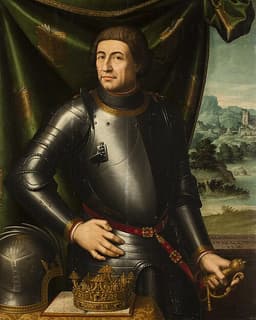
Alfonso I of Aragon
Emperor · Medieval
57.2Total

Chongde Qaghan
Emperor · Medieval
56.8Total
Basic Information
Born
1073
780
Died
1134
824
Era
Medieval
Medieval
Nationality
Aragon
Uyghur Khaganate
Occupation
Emperor
Emperor
Civilization
Western
Eastern
Score Comparison
Military (10%)
60.0
72.5
Political (20%)
48.0
45.0
Influence (20%)
55.7
59.0
Legacy (20%)
49.2
49.2
Leadership (15%)
74.0
72.0
Strategy (15%)
66.3
50.0
TOTAL
57.2
56.8
Alfonso I of Aragon — Complete Timeline
1109 AD
Marriage to Urraca of Leon and CastilePolitical Action◆ Major
Alfonso I married Queen Urraca of Leon and Castile, uniting the kingdoms of Aragon, Navarre, Leon, and Castile. The union was politically unstable, leading to conflict with Urraca and the Church, and was annulled by the Pope in 1114.
MarriagePolitical UnionConflict
Impact: regional
1118 AD
Conquest of ZaragozaWar◆ Major
Alfonso I led a coalition of Aragonese, Navarrese, and French crusaders to capture the city of Zaragoza from the Almoravid Moors. This victory made Zaragoza the capital of Aragon and significantly expanded Christian territory in the Ebro valley.
ReconquistaConquestAragon
Impact: regionalconstructive
1120 AD
Battle of CutandaWar◆ Major
Alfonso I defeated a large Almoravid army at Cutanda, near Calamocha. This victory consolidated Christian control over the Ebro valley and opened the way for further Aragonese advances into Moorish territory.
ReconquistaBattleAragon
Impact: regionalconstructive
1134 AD
Battle of FragaWar◆ Major
Alfonso I was defeated and killed by Almoravid forces near Fraga while attempting to besiege the town. His death without direct heirs led to a succession crisis in Aragon and Navarre, separating the two kingdoms.
ReconquistaBattleDeath
Impact: regionaltragic
Chongde Qaghan — Complete Timeline
821 AD
Accession as Chongde QaghanPolitical Action◆ Major
Chongde Qaghan ascended to the throne of the Uyghur Khaganate after the death of his father, Baoyi Qaghan. His reign marked the height of Uyghur power and influence.
SuccessionKhaganateLeadership
Impact: regionalconstructive
822 AD
Marriage to a Tang princessPolitical Action◆ Major
Chongde Qaghan married a Tang princess, Princess Taihe, to solidify the alliance with Tang China. This marriage ensured continued peace and favorable trade terms for the Uyghur Khaganate.
MarriageAllianceTang Dynasty
Impact: regionalconstructive
824 AD
Death and successionPolitical Action
Chongde Qaghan died in 824, succeeded by his brother. His death marked the beginning of a decline for the Uyghur Khaganate, which faced internal strife and external threats in subsequent years.
DeathSuccessionDecline
Impact: regional
825 AD
Peak of Uyghur powerPolitical Action
Under Chongde Qaghan, the Uyghur Khaganate reached its territorial and economic peak. The khaganate controlled the Silk Road trade routes, extracting tribute from Tang China and dominating Central Asia.
PeakPowerSilk Road
Impact: regionalconstructive
Expert Analysis
Origins
Alfonso I of Aragon was born in 1073, the second son of King Sancho Ramírez of Aragon and Navarre. As a younger son, he was not initially destined for the throne; he was raised for a military career, fighting in the Reconquista against the Moors. His early experiences in border skirmishes and castle warfare shaped his aggressive, hands-on leadership style. Chongde Qaghan, born around 790, was the son of Baoyi Qaghan of the Uyghur Khaganate. The Uyghurs were a Turkic steppe empire that had risen to power by overthrowing the Göktürks. Chongde grew up in a nomadic, horseriding culture, where political power was tied to control of trade routes and tribute from settled neighbors. Both men inherited traditions of warfare, but Alfonso's was Christian and feudal, while Chongde's was Tengrist and nomadic.
Rise to Power
Alfonso became king of Aragon and Navarre in 1104 after the death of his older brother, Peter I. He immediately pursued expansion southward, capitalizing on the fragmentation of the Almoravid Empire. His major turning point came in 1118 when he captured Zaragoza, a key city, with a coalition of Aragonese, Navarrese, and French crusaders. This victory earned him the nickname "the Battler" and opened the Ebro valley to Christian control. In 1109, he married Queen Urraca of León and Castile, creating a personal union of four kingdoms. However, the marriage was politically unstable, leading to civil war. Chongde Qaghan ascended to the throne in 808 after his father's death. He inherited a stable khaganate that controlled the Silk Road. His key achievement was maintaining and expanding Uyghur power through diplomacy and trade, rather than conquest. In 821, he married a Tang princess, Princess Taihe, cementing an alliance that brought wealth and security. Both leaders rose by leveraging existing structures: Alfonso through military conquest and marriage, Chongde through inheritance and diplomacy.
Leadership & Governance
Alfonso I was a warrior king, leading troops personally in battle. His governance was focused on war: he granted fueros (charters) to conquered towns to secure loyalty and repopulate lands. He was less interested in administration, often leaving governance to nobles. His marriage to Urraca failed because he insisted on ruling León and Castile directly, leading to conflict with her supporters. Chongde Qaghan ruled as a typical steppe khagan, relying on tribal confederation and tribute. He maintained peace with Tang China through the marriage alliance, which brought silk and other goods. He also managed the Uyghur economy by controlling the Silk Road trade, extracting taxes from merchants. Alfonso scored 74.0 in leadership, reflecting his ability to inspire troops and win battles, but his political score of 48.0 shows his weakness in statecraft. Chongde's leadership score of 72.0 is similar, but his political score of 45.0 indicates he was also challenged by internal tribal politics.
Triumph & Tragedy
Alfonso's greatest triumph was the conquest of Zaragoza in 1118, a major victory in the Reconquista. He also won the Battle of Cutanda in 1120, crushing an Almoravid army and securing the Ebro valley. His tragedy came at the Battle of Fraga in 1134, where he was defeated and killed by Almoravid forces. His death without direct heirs led to a succession crisis, splitting his kingdoms. Chongde's triumph was the peak of Uyghur power during his reign, with control over the Silk Road and a strong alliance with Tang China. His tragedy was that his death in 824 marked the beginning of decline: internal strife and later attacks from the Kyrgyz would destroy the khaganate within a few decades. Both leaders achieved greatness but left fragile legacies.
Character & Destiny
Alfonso I was known for his personal bravery and stubbornness. He was a pious crusader, but also politically inflexible, which doomed his marriage and led to conflict. His character drove him to constant warfare, ultimately causing his death. Chongde Qaghan was more pragmatic, focusing on diplomacy and trade. His character was suited to maintaining power rather than expanding it. Historians note that Alfonso's destiny was shaped by his aggressive ambition, while Chongde's destiny was to preside over a golden age that he could not sustain. Alfonso's military score of 60.0 and strategy of 66.3 reflect his tactical skill, while Chongde's military score of 72.5 shows the Uyghur army's strength, but his strategy of 50.0 suggests less innovation.
Legacy
Alfonso I's legacy is mixed: he expanded Aragon and Navarre significantly, but his death without heirs caused instability. He is remembered as a crusader king, and his conquests paved the way for later Christian kingdoms. Chongde Qaghan's legacy is the height of Uyghur power; after his death, the khaganate collapsed. The Uyghurs are remembered as a major Silk Road power, but their empire did not endure. Alfonso's influence score of 55.7 and legacy of 49.2 compare to Chongde's influence of 59.0 and legacy of 49.2. Both left limited long-term impact because their achievements were not institutionalized.
Conclusion
Alfonso I of Aragon had a slightly higher total score (57.2 vs 56.8) and a more direct impact on European history through the Reconquista. Chongde Qaghan's reign was impressive but ephemeral. While both were significant in their regions, Alfonso's conquests had lasting demographic and cultural effects, whereas the Uyghur Khaganate faded. Therefore, Alfonso I of Aragon had greater impact.
Rankings
🥇
Alfonso I of AragonLeader
Mil: 60.0Pol: 48.0Inf: 55.7
57.2
🥈
Chongde Qaghan
Mil: 72.5Pol: 45.0Inf: 59.0
56.8
+0.4 behind
How This Comparison Works
Algorithm
Each figure is scored on 6 dimensions (0—100 scale) based on structured historical data: Military (10%), Political (20%), Influence (20%), Legacy (20%), Leadership (15%), Strategy (15%). The weighted total produces the final ranking.
Data Sources
Scores are computed from structured sub-indicators in the database. Scale factors adjust for era (Ancient ×0.85, Modern ×1.0) and civilization size (Eastern ×1.05, Other ×0.80) to account for differences in population and military scale.
Maximum 3 Figures
Comparisons are limited to 2—3 figures to ensure readability and statistical meaningfulness.
Error Margins
±5 points per dimension — Sub-scores are derived from historical records with inherent uncertainty. Two figures within 5 points on a dimension should be considered roughly equivalent in that area.
Total Score Accuracy
±3 points overall — The weighted combination of 6 dimensions produces a total score with approximately ±3 points of uncertainty. Differences of less than 3 points are not statistically significant— the figures are effectively tied.
Known Limitations
- Historical records are incomplete and uneven across civilizations
- Figures from oral-tradition societies may be underrepresented
- Occupation labels can misclassify multi-role figures
- Scores measure capability and impact, not moral character
- Quantitative scoring is a comparison tool, not absolute truth
Capability Radar
Military (10%) — Battles & Warfare
Battles
70
60
Win Rate
75
65
Expansion
65
55
Political (20%) — Governance & Reform
Reform
45
55
Diplomacy
50
75
Economy
40
65
Influence (20%) — Cultural & Global Reach
Cultural
40
50
Global
35
45
Legacy (20%) — Historical Impact
Historical
55
55
Longevity
40
40
Leadership (15%) — Power & Stability
Tenure
60
70
Stability
45
60
Strategy (15%) — Tactics & Innovation
Strategy
70
60
Tactics
65
55
Reform
40
50
Similar Comparisons
Comments & Discussion
No comments yet. Be the first to share your thoughts!