Loading...
Alfonso XI of Castile vs Mongke Temur
Alfonso XI of Castile leads by 7.7 pts · 2 figures compared
…
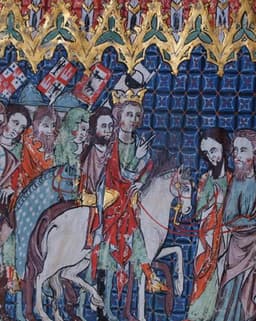
Alfonso XI of Castile
Emperor · Medieval
61.3Total

Mongke Temur
Emperor · Medieval
53.6Total
Basic Information
Born
1311
1245
Died
1350
1280
Era
Medieval
Medieval
Nationality
Castile
Golden Horde
Occupation
Emperor
Emperor
Civilization
Western
Eastern
Score Comparison
Military (10%)
82.0
52.5
Political (20%)
62.7
68.0
Influence (20%)
58.0
57.2
Legacy (20%)
50.0
48.3
Leadership (15%)
68.0
40.0
Strategy (15%)
65.4
57.5
TOTAL
61.3
53.6
Alfonso XI of Castile — Complete Timeline
1340 AD
Battle of the Salado RiverWar◆ Major
Alfonso XI led a Castilian-Portuguese coalition to a decisive victory over the Marinid Sultanate of Morocco and the Emirate of Granada at the Battle of the Salado River. This victory ended the last major North African invasion of Iberia.
ReconquistaBattleVictory
Impact: regionalconstructive
1344 AD
Siege of AlgecirasWar◆ Major
Alfonso XI besieged and captured the port city of Algeciras from the Marinids after a two-year siege. The conquest cut off the main supply route from North Africa to Granada and was a major step in the Reconquista.
ReconquistaSiegeAlgeciras
Impact: regionalconstructive
1348 AD
Promulgation of the Ordenamiento de AlcaláReform◆ Major
Alfonso XI issued the Ordenamiento de Alcal
LawLegal CodeReform
Impact: nationalconstructive
1350 AD
Death from the Black DeathOther◆ Major
Alfonso XI died of the Black Death during the Siege of Gibraltar. His death left his young son Peter I as king and led to a period of political instability and civil war in Castile.
DeathPlagueSuccession
Impact: nationaltragic
Mongke Temur — Complete Timeline
1269 AD
Assertion of Independence from the Mongol EmpirePolitical Action
Mongke Temur, as Khan of the Golden Horde, refused to attend the kurultai called by Kublai Khan and ceased sending tribute to the Mongol Yuan dynasty. This act effectively declared the Golden Horde's independence from the central Mongol Empire.
Golden HordeMongol EmpireIndependenceKublai Khan
Impact: global
1270 AD
War with the IlkhanateWar◆ Major
Mongke Temur launched a military campaign against the Ilkhanate, the Mongol state in Persia, over control of the Caucasus region. The war resulted in a stalemate but solidified the Golden Horde's position as a rival power.
Golden HordeIlkhanateWarCaucasus
Impact: regional
1272 AD
Alliance with the Byzantine EmpirePolitical Action
Mongke Temur formed an alliance with Byzantine Emperor Michael VIII Palaiologos, sealed by a marriage between a Mongol princess and a Byzantine noble. This alliance strengthened trade and diplomatic ties between the Golden Horde and the Byzantine Empire.
Golden HordeByzantine EmpireAllianceDiplomacy
Impact: regionalconstructive
Expert Analysis
Origins
Alfonso XI of Castile was born on August 13, 1311, in Salamanca, son of King Ferdinand IV and Constance of Portugal. His father died when Alfonso was only one year old, plunging Castile into a regency marked by noble infighting. He was raised amid turmoil, with his grandmother María de Molina acting as a stabilizing influence. His education emphasized knightly skills and legal governance, preparing him for the challenges of kingship.
Mongke Temur was born around 1235, likely in the Volga region, as the son of Toqoqan and grandson of Batu Khan, founder of the Golden Horde. Little is known of his early life, but he was groomed for leadership within the Mongol tradition. He ascended as khan after the death of his uncle Berke in 1266, inheriting a khanate that was part of the larger Mongol Empire but increasingly independent.
Rise to Power
Alfonso XI was declared king at age one, but effective power rested with regents and nobles until 1325 when he took control at 14. He immediately moved to consolidate authority, executing his uncle Philip of Castile and other rebellious magnates. By 1327, he had secured his position through military campaigns against the nobility and the Muslim Emirate of Granada. His decisive victory at the Battle of the Salado River in 1340, where he led a coalition of Castilian and Portuguese forces against the Marinids and Granadans, cemented his reputation as a warrior king.
Mongke Temur became khan of the Golden Horde in 1266 after Berke's death. His rise was marked by a shift away from the central Mongol authority. In 1267, he refused to attend the kurultai called by Kublai Khan, effectively asserting the Golden Horde's independence. He also stopped sending tribute to the Yuan dynasty, a move that solidified his autonomy. His reign focused on consolidating power in the western Mongol territories, engaging in conflicts with the Ilkhanate over the Caucasus.
Leadership & Governance
Alfonso XI ruled with a strong hand, centralizing royal authority. He issued the Ordenamiento de Alcalá in 1348, a comprehensive legal code that established the primacy of royal law over local and feudal customs. This reform strengthened the monarchy and provided a unified legal framework for Castile. He also reorganized the royal council and curbed the power of the nobility, using military force when necessary. His leadership style was direct and personal; he led troops in battle and managed diplomacy personally.
Mongke Temur governed the Golden Horde with a focus on maintaining independence and managing relations with neighboring states. He forged an alliance with the Byzantine Empire, sealed by a marriage between a Mongol princess and a Byzantine noble, which facilitated trade and military cooperation. His political score of 68.0 reflects his ability to navigate the complex Mongol politics, but his military score of 52.5 indicates limited expansion. He lacked the aggressive expansionism of earlier khans, focusing instead on consolidation.
Triumph & Tragedy
Alfonso XI's greatest triumph was the victory at the Salado River in 1340, which ended Marinid threats to the Iberian Peninsula and allowed Castile to capture Algeciras in 1344 after a two-year siege. This conquest cut off Granada's main supply route from North Africa. His legal reforms in the Ordenamiento de Alcalá were a lasting achievement. However, his tragedy came in 1350 during the Siege of Gibraltar, when he died of the Black Death at age 38. His sudden death left his young son Peter I as king, leading to a period of civil war and instability that undid much of Alfonso's centralization.
Mongke Temur's triumph was asserting the Golden Horde's independence from the Mongol Empire, a move that shaped the khanate's future as a separate state. His alliance with Byzantium also boosted trade and influence. However, his war with the Ilkhanate (1266-1270) was indecisive, draining resources without territorial gains. He failed to expand the Golden Horde's borders significantly, and his reign saw no major conquests. His death in 1280 led to succession disputes that weakened the Horde.
Character & Destiny
Alfonso XI was determined and decisive, acting ruthlessly to secure his throne. He was also pragmatic, using both military force and legal reforms to strengthen his rule. His early death from plague cut short a promising reign, but his character had already shaped Castile into a more centralized state. Historians note his energy and focus, but also his harshness toward opponents.
Mongke Temur was cautious and diplomatic, prioritizing independence over expansion. He avoided direct confrontation with the Ilkhanate after initial campaigns, preferring negotiation. His leadership score of 40.0 suggests he was not a charismatic or forceful leader, but his political acumen allowed him to navigate the complex Mongol world. His destiny was to preside over a period of consolidation rather than glory.
Legacy
Alfonso XI left a mixed legacy. His military victories and legal reforms laid groundwork for later Spanish unification, but his early death and the subsequent chaos diminished his impact. The Ordenamiento de Alcalá remained influential in Spanish law for centuries. His legacy score of 50.0 reflects this incomplete impact. He is remembered as the last great king of the House of Ivrea before the Trastamara dynasty.
Mongke Temur's legacy is the assertion of Golden Horde independence, which set the stage for the khanate's later evolution. However, his reign lacked major achievements, and his legacy score of 48.3 is slightly lower. He is often overshadowed by his predecessors like Batu and his successors like Tokhta.
Conclusion
Alfonso XI of Castile had a greater impact than Mongke Temur, as reflected in his higher total score of 61.3 versus 53.6. Alfonso's military victories, particularly the Salado River, reshaped Iberian geopolitics, and his legal reforms had lasting institutional effects. Mongke Temur's assertion of independence was significant but did not lead to major changes beyond the Golden Horde's autonomy. While both faced challenges, Alfonso's achievements in governance and warfare were more transformative for his region. Therefore, Alfonso XI of Castile is the more historically significant figure.
Rankings
🥇
Alfonso XI of CastileLeader
Mil: 82.0Pol: 62.7Inf: 58.0
61.3
🥈
Mongke Temur
Mil: 52.5Pol: 68.0Inf: 57.2
53.6
+7.7 behind
How This Comparison Works
Algorithm
Each figure is scored on 6 dimensions (0—100 scale) based on structured historical data: Military (10%), Political (20%), Influence (20%), Legacy (20%), Leadership (15%), Strategy (15%). The weighted total produces the final ranking.
Data Sources
Scores are computed from structured sub-indicators in the database. Scale factors adjust for era (Ancient ×0.85, Modern ×1.0) and civilization size (Eastern ×1.05, Other ×0.80) to account for differences in population and military scale.
Maximum 3 Figures
Comparisons are limited to 2—3 figures to ensure readability and statistical meaningfulness.
Error Margins
±5 points per dimension — Sub-scores are derived from historical records with inherent uncertainty. Two figures within 5 points on a dimension should be considered roughly equivalent in that area.
Total Score Accuracy
±3 points overall — The weighted combination of 6 dimensions produces a total score with approximately ±3 points of uncertainty. Differences of less than 3 points are not statistically significant— the figures are effectively tied.
Known Limitations
- Historical records are incomplete and uneven across civilizations
- Figures from oral-tradition societies may be underrepresented
- Occupation labels can misclassify multi-role figures
- Scores measure capability and impact, not moral character
- Quantitative scoring is a comparison tool, not absolute truth
Capability Radar
Military (10%) — Battles & Warfare
Battles
75
55
Win Rate
80
60
Expansion
70
50
Political (20%) — Governance & Reform
Reform
60
45
Diplomacy
65
65
Economy
60
50
Influence (20%) — Cultural & Global Reach
Cultural
50
40
Global
30
45
Legacy (20%) — Historical Impact
Historical
60
50
Longevity
40
40
Leadership (15%) — Power & Stability
Tenure
70
60
Stability
55
55
Strategy (15%) — Tactics & Innovation
Strategy
75
55
Tactics
70
50
Reform
65
40
Similar Comparisons
Comments & Discussion
No comments yet. Be the first to share your thoughts!