Loading...
Alfonso XI of Castile vs Napoleon Bonaparte
Napoleon Bonaparte leads by 9.6 pts · 2 figures compared
…
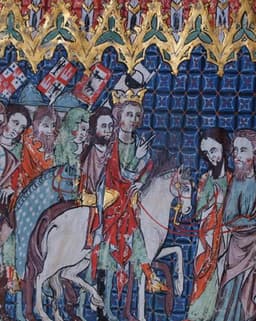
Alfonso XI of Castile
Emperor · Medieval
61.3Total

Napoleon Bonaparte
General · Modern
70.9Total
Basic Information
Born
1311
1769
Died
1350
1821
Era
Medieval
Modern
Nationality
Castile
France
Occupation
Emperor
General
Civilization
Western
Western
Score Comparison
Military (10%)
82.0
94.0
Political (20%)
62.7
72.0
Influence (20%)
58.0
40.0
Legacy (20%)
50.0
80.0
Leadership (15%)
68.0
78.0
Strategy (15%)
65.4
90.0
TOTAL
61.3
70.9
Alfonso XI of Castile — Complete Timeline
1340 AD
Battle of the Salado RiverWar◆ Major
Alfonso XI led a Castilian-Portuguese coalition to a decisive victory over the Marinid Sultanate of Morocco and the Emirate of Granada at the Battle of the Salado River. This victory ended the last major North African invasion of Iberia.
ReconquistaBattleVictory
Impact: regionalconstructive
1344 AD
Siege of AlgecirasWar◆ Major
Alfonso XI besieged and captured the port city of Algeciras from the Marinids after a two-year siege. The conquest cut off the main supply route from North Africa to Granada and was a major step in the Reconquista.
ReconquistaSiegeAlgeciras
Impact: regionalconstructive
1348 AD
Promulgation of the Ordenamiento de AlcaláReform◆ Major
Alfonso XI issued the Ordenamiento de Alcal
LawLegal CodeReform
Impact: nationalconstructive
1350 AD
Death from the Black DeathOther◆ Major
Alfonso XI died of the Black Death during the Siege of Gibraltar. His death left his young son Peter I as king and led to a period of political instability and civil war in Castile.
DeathPlagueSuccession
Impact: nationaltragic
Napoleon Bonaparte — Complete Timeline
1799 AD
Coup of 18 BrumaireOther◆ Major
Napoleon Bonaparte, with support from his brother Lucien and key political figures, overthrew the Directory in a bloodless coup. He established the Consulate with himself as First Consul, effectively becoming the ruler of France. This event ended the French Revolution's most unstable period.
French RevolutionCoupRise to Power
Impact: regional
1804 AD
Promulgation of the Napoleonic CodeOther◆ Major
Napoleon enacted the Civil Code of the French, known as the Napoleonic Code, a comprehensive set of laws that replaced the fragmented feudal legal systems. The code established legal equality, protected property rights, and secularized law. It became the basis for legal systems in many European and world countries.
Legal ReformNapoleonic CodeCivil Law
Impact: globalconstructive
1805 AD
Battle of AusterlitzWar◆ Major
Napoleon's Grande Arm
Napoleonic WarsBattleDecisive Victory
Impact: global
1812 AD
Invasion of RussiaWar◆ Major
Napoleon led the Grande Arm
Napoleonic WarsInvasionDisaster
Impact: globaldestructive
1815 AD
Battle of WaterlooWar◆ Major
Napoleon's French army was defeated by the combined forces of the Duke of Wellington's Anglo-Allied army and Gebhard Leberecht von Bl
Napoleonic WarsBattleFinal Defeat
Impact: globaldestructive
Expert Analysis
alfonso-xi-of-castile-vs-napoleon-bonaparte
# The Emperor and the King
On a spring morning in 1340, Alfonso XI of Castile watched from a hilltop as his cavalry crashed into the Marinid lines near the Salado River. The sun glinted off Christian and Muslim armor alike, and the dust of thousands of hooves rose like smoke from an altar. Five centuries later, on a rainy June evening in 1815, Napoleon Bonaparte stood near a farmhouse at Waterloo, watching his Imperial Guard march into the maw of British artillery. Both men were warriors. Both sought to shape their world through conquest. But one died a king, felled by plague, while the other died an emperor, imprisoned on a volcanic rock in the South Atlantic. Why did their paths diverge so sharply? The answer lies not only in their talents but in the centuries that separated them—and in the limits of what a single ruler could achieve.
Origins
Napoleon was born in 1769 on Corsica, a Mediterranean island that had passed from Italian to French control just a year before his birth. His family was minor nobility, poor and ambitious. He spoke French with an accent, and his schoolmates mocked him for it. This outsider’s hunger would define him. He devoured history and military theory, dreaming of Alexander and Caesar.
Alfonso XI came into the world in 1311, a different universe entirely. He was a king from birth, inheriting a Castile fractured by civil war, noble rebellion, and the endless Christian crusade against Muslim Granada and its Marinid allies from North Africa. His father died when Alfonso was an infant, and for years his uncles and nobles tore the kingdom apart. He learned to rule by surviving—by watching treachery and waiting.
Both men were shaped by their eras. Napoleon lived in the dawn of modern Europe, where nationalism, mass armies, and revolutionary ideas were reshaping politics. Alfonso lived in the late Middle Ages, where loyalty was personal, war was seasonal, and God’s will was written in victory or plague.
Rise to Power
Napoleon rose through talent and gunpowder. At 24, he cleared the streets of Paris with a “whiff of grapeshot,” saving the revolutionary government. At 26, he conquered Italy. By 30, he was First Consul, and by 35, Emperor of the French. Each step was a gamble, and each gamble paid—until it didn’t.
Alfonso XI’s rise was slower and bloodier. He became king at age one, but real power came only after he turned 14 and began to crush the rebellious nobles who had ruled in his name. He did not conquer Paris; he reconquered his own kingdom. His first great victory was not a foreign campaign but a civil war—the Battle of Teba in 1330, where he proved he could lead men in battle.
Leadership & Governance
Napoleon was a military genius—his strategic score of 93 places him among history’s finest. He revolutionized warfare: rapid marches, decisive battles, the destruction of enemy armies rather than the capture of cities. His political score of 75 reflects his brilliance and his blindness. He reformed France’s laws with the Napoleonic Code, centralized administration, and built a modern state. But he could not stop conquering. He made peace only to break it.
Alfonso XI was a far more cautious commander—military score 60.7, strategy 58.2. He fought no Austerlitz, no Jena. But he understood the limits of his power. At the Battle of the Salado River in 1340, he led a Castilian-Portuguese coalition that crushed the Marinid invasion. It was not a Napoleonic masterpiece; it was a grinding, bloody victory that secured the Iberian frontier for a generation. He then besieged Algeciras for two years—1342 to 1344—and took it not by brilliant maneuver but by patience and supply.
His greatest political achievement came in 1348 with the Ordenamiento de Alcalá, a legal code that unified Castilian law, limited noble power, and strengthened the crown. It was the Napoleonic Code of its day—less famous, but just as transformative for the people who lived under it.
Triumph & Tragedy
Napoleon’s greatest moment was Austerlitz in 1805, where he crushed the Russian and Austrian emperors in a single day. His worst was the invasion of Russia in 1812, where 600,000 men marched east and fewer than 100,000 returned. He was exiled to Elba, escaped, raised another army, and lost again at Waterloo. His ambition was his tragedy.
Alfonso XI’s triumph was the Salado River, a victory that broke Marinid power in Iberia and ensured that the Reconquista would continue. His tragedy came in 1350, during the Siege of Gibraltar. The Black Death swept through his camp. He refused to flee, staying with his men, and died at age 39. He left a young son, Peter, whose reign collapsed into civil war. Alfonso’s work was undone not by an enemy army, but by a microbe.
Character & Destiny
Napoleon believed he was destiny’s favorite. “I am the state,” he said, and for a time, he was. His ambition was boundless, his energy superhuman, his ruthlessness absolute. But he could not stop. Victory fed his appetite, and defeat only sharpened it.
Alfonso XI was more pragmatic. He knew that a king’s first duty was survival—his own and his kingdom’s. He did not dream of conquering the world. He dreamed of holding what he had, and slowly, painfully, expanding it. He was a builder, not a meteor.
Legacy
Napoleon’s legacy is immense. The Napoleonic Code still shapes law across Europe and the Americas. His wars killed millions, but they also spread nationalism, secularism, and the idea that a man could rise by merit alone. Today, he is remembered as a titan—admired and reviled, never forgotten.
Alfonso XI is remembered, if at all, by historians of medieval Spain. His Ordenamiento de Alcalá influenced Spanish law for centuries. His victories kept the Reconquista alive. But he died before he could finish his work, and his dynasty collapsed. His legacy score of 66.3 reflects a king who did great things in a small world.
Conclusion
Napoleon and Alfonso XI were both warriors, both rulers, both men of their time. But their times were not the same. Napoleon lived in an age of revolution, where a single man could reshape continents. Alfonso lived in an age of faith and plague, where even a king could be killed by a flea. Napoleon tried to conquer the world and failed. Alfonso tried to save his kingdom and succeeded—until death took him.
Perhaps the deepest difference is this: Napoleon died alone, abandoned by his allies, a prisoner of the British. Alfonso died surrounded by his men, in a camp, fighting for a fortress. One was defeated by the world. The other was taken by it. Which is the greater tragedy, and which the greater triumph, is a question that history leaves for each reader to answer.
Rankings
🥇
Napoleon BonaparteLeader
Mil: 94.0Pol: 72.0Inf: 40.0
70.9
🥈
Alfonso XI of Castile
Mil: 82.0Pol: 62.7Inf: 58.0
61.3
+9.6 behind
How This Comparison Works
Algorithm
Each figure is scored on 6 dimensions (0—100 scale) based on structured historical data: Military (10%), Political (20%), Influence (20%), Legacy (20%), Leadership (15%), Strategy (15%). The weighted total produces the final ranking.
Data Sources
Scores are computed from structured sub-indicators in the database. Scale factors adjust for era (Ancient ×0.85, Modern ×1.0) and civilization size (Eastern ×1.05, Other ×0.80) to account for differences in population and military scale.
Maximum 3 Figures
Comparisons are limited to 2—3 figures to ensure readability and statistical meaningfulness.
Error Margins
±5 points per dimension — Sub-scores are derived from historical records with inherent uncertainty. Two figures within 5 points on a dimension should be considered roughly equivalent in that area.
Total Score Accuracy
±3 points overall — The weighted combination of 6 dimensions produces a total score with approximately ±3 points of uncertainty. Differences of less than 3 points are not statistically significant— the figures are effectively tied.
Known Limitations
- Historical records are incomplete and uneven across civilizations
- Figures from oral-tradition societies may be underrepresented
- Occupation labels can misclassify multi-role figures
- Scores measure capability and impact, not moral character
- Quantitative scoring is a comparison tool, not absolute truth
Capability Radar
Military (10%) — Battles & Warfare
Battles
75
95
Win Rate
80
90
Expansion
70
95
Political (20%) — Governance & Reform
Reform
60
95
Diplomacy
65
80
Economy
60
85
Influence (20%) — Cultural & Global Reach
Cultural
50
85
Global
30
90
Legacy (20%) — Historical Impact
Historical
60
95
Longevity
40
90
Leadership (15%) — Power & Stability
Tenure
70
85
Stability
55
70
Strategy (15%) — Tactics & Innovation
Strategy
75
95
Tactics
70
98
Reform
65
92
Similar Comparisons
Comments & Discussion
CANNONFODDER’S GHOST6/17/2026
Let’s be real: comparing Alfonso XI’s medieval cavalry charge to Napoleon’s artillery at Waterloo is like comparing a garden hoe to a nuclear reactor. One fought in an era of chivalric honor, the other in an age of mass production and strategy. The Salado River victory was tactical brilliance, sure, but Waterloo was a systemic failure of allies and logistics. Blaming Napoleon’s exile on his ego ignores the industrial-scale warfare he mastered.
草原闪电6/17/2026
说阿方索十一世和拿破仑比?前者靠封建骑士收割,后者用炮兵碾碎欧洲。但1340年的萨拉多河大捷不过是一次性爽文,拿破仑却改变了整个欧洲的战争规则。别吹什么君王悲剧,阿方索死于黑死病是自然淘汰,拿破仑被放逐圣赫勒拿是自找的。两个时代,两种宿命:一个玩中世纪领主游戏,一个玩现代帝国博弈。老实说,拿破仑的遗产更血腥也更深刻。
IRON CROSS ENTHUSIAST6/17/2026
Alfonso XI was a medieval king playing chess, Napoleon was a revolutionary playing 4D checkers. One unified Castile through dynastic luck and religious crusade; the other remade Europe through meritocracy and code. But the real difference? Alfonso died in his bed (sort of) while Napoleon ended up on a rock—because the 19th century didn’t tolerate absolute power as easily as the 14th. Napoleon was too big for his sandbox.
冷眼旁观者6/17/2026
历史书上总把拿破仑写成孤胆英雄,阿方索十一世写成中世纪猛男。可实际呢?拿破仑的军事天才建立在近现代国家机器和启蒙思想之上,阿方索十一世不过是靠封建领主和宗教狂热打仗。冷兵器对火炮,骑士对帝国卫队,根本是不同次元的玩法。别拿瘟疫当借口,拿破仑的失败是战略上的自大,阿方索的胜利是战术上的幸运。两个人都没真正改变历史,只是被历史改变了。