Loading...
Alfonso XII of Spain vs Gwanghaegun of Joseon
Gwanghaegun of Joseon leads by 5.3 pts · 2 figures compared
…
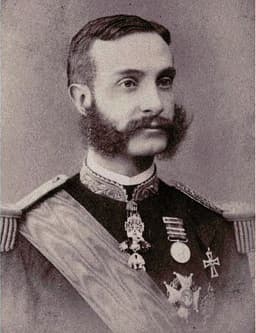
Alfonso XII of Spain
Emperor · Modern
49.2Total

Gwanghaegun of Joseon
Emperor · Modern
54.5Total
Basic Information
Born
1857
1575
Died
1885
1641
Era
Modern
Modern
Nationality
Spain
Korea
Occupation
Emperor
Emperor
Civilization
Western
Eastern
Score Comparison
Military (10%)
25.9
50.0
Political (20%)
60.0
68.0
Influence (20%)
53.3
52.5
Legacy (20%)
44.2
45.0
Leadership (15%)
68.0
74.0
Strategy (15%)
30.3
38.3
TOTAL
49.2
54.5
Alfonso XII of Spain — Complete Timeline
1874 AD
Restoration of the Bourbon monarchyPolitical Action
Alfonso XII was proclaimed king after a military coup led by General Mart
RestorationBourbonMonarchy
Impact: nationalconstructive
1876 AD
End of the Third Carlist WarWar◆ Major
Alfonso XII's forces defeated the Carlist rebels, ending the Third Carlist War. This victory consolidated his rule and eliminated the Carlist challenge to the Bourbon monarchy, bringing peace to Spain after years of civil conflict.
Carlist WarVictoryPeace
Impact: nationalconstructive
Signing of the Constitution of 1876Reform◆ Major
Alfonso XII oversaw the adoption of a new constitution that established a constitutional monarchy with a bicameral parliament. The constitution provided a framework for political stability and alternation between two main parties, the Conservatives and Liberals.
ConstitutionReformStability
Impact: nationalconstructive
1879 AD
Marriage to Maria Christina of AustriaPolitical Action
Alfonso XII married Maria Christina of Austria, his second wife. This marriage produced the future Alfonso XIII and helped secure the Bourbon succession, ensuring the dynasty's continuity after the king's early death.
MarriageSuccessionDynasty
Impact: national
1885 AD
Death of Alfonso XIIOther◆ Major
Alfonso XII died of tuberculosis at the age of 27, leaving his pregnant wife as regent. His death created a succession crisis, but his posthumous son Alfonso XIII was born later that year, ensuring the continuation of the Bourbon monarchy.
DeathSuccessionRegency
Impact: nationaltragic
Gwanghaegun of Joseon — Complete Timeline
1608 AD
Accession to the thronePolitical Action◆ Major
Gwanghaegun became king of Joseon following the death of his father, Seonjo. His reign was marked by pragmatic diplomacy and efforts to rebuild the country after the Imjin War.
SuccessionJoseon Dynasty
Impact: national
1618 AD
Pragmatic diplomacy with Ming and Later JinPolitical Action
Gwanghaegun pursued a policy of neutrality between Ming China and the rising Later Jin (Manchu) dynasty. He refused to send troops to aid Ming against the Manchus, prioritizing Joseon's security.
DiplomacyNeutralityJoseon Dynasty
Impact: regional
1623 AD
Deposition by the Westerner factionPolitical Action
Gwanghaegun was overthrown in a coup led by the Westerner (Seoin) faction, who opposed his diplomatic policies and accused him of tyranny. He was deposed and exiled to Jeju Island.
CoupDepositionJoseon Dynasty
Impact: nationaldestructive
Exile to Jeju IslandPolitical Action◆ Major
After his deposition, Gwanghaegun was exiled to Jeju Island, where he lived under house arrest until his death in 1641. His exile marked the end of his pragmatic but controversial reign.
ExileJoseon DynastyDeposition
Impact: nationaltragic
Expert Analysis
Origins
Alfonso XII of Spain was born on November 28, 1857, in Madrid, the son of Queen Isabella II and her husband, Francis of Assisi. His early life was marked by political turmoil: his mother was forced into exile in 1868 following the Glorious Revolution, and Alfonso spent his formative years in Paris and Vienna, receiving a military education at the Theresian Military Academy. He was proclaimed king in 1874 after a military coup restored the Bourbon dynasty, but his upbringing was shaped by exile and the instability of the First Spanish Republic.
Gwanghaegun of Joseon was born in 1575 as the second son of King Seonjo. His early life was overshadowed by the Imjin War (1592–1598), during which Japanese invasions devastated Korea. He served as crown prince during the war, leading military efforts and managing the royal court in exile. His father's death in 1608 elevated him to the throne, but his legitimacy was always questioned due to his non-royal mother and the factional politics of Joseon.
Rise to Power
Alfonso XII's rise was catalyzed by General Arsenio Martínez Campos's pronunciamiento in Sagunto on December 29, 1874, which declared Alfonso king and effectively ended the First Spanish Republic. The new king returned to Spain in January 1875, and his rule was consolidated through the Constitution of 1876, which established a constitutional monarchy with a bicameral parliament. Alfonso's military leadership during the Third Carlist War (1872–1876) further solidified his position; his forces defeated the Carlist pretender Charles VII in February 1876, ending the war and eliminating the main challenge to his throne.
Gwanghaegun's accession in 1608 was less dramatic but no less contested. As crown prince, he had proven his capabilities during the Imjin War, but his father's preference for his younger brother led to tensions. After Seonjo's death, Gwanghaegun was crowned, but his rule was immediately challenged by factional strife between the Easterners and Westerners. He sought to strengthen his position by centralizing power and promoting loyal officials, but his diplomatic decisions would ultimately alienate key factions.
Leadership & Governance
Alfonso XII governed as a constitutional monarch, working within the framework of the 1876 constitution. He practiced a policy of "caciquismo," relying on local political bosses to maintain stability. His leadership was characterized by moderation and a desire to heal divisions after the Carlist Wars and the republic. He promoted economic recovery, infrastructure projects, and education, but his short reign (11 years) limited long-term reforms. His political score of 60.0 reflects his ability to stabilize the monarchy but not to transform Spain.
Gwanghaegun's governance was more pragmatic and centralized. He implemented land reforms to rebuild after the Imjin War, reorganized the military, and promoted Confucian scholarship. His most controversial policy was his diplomatic neutrality between Ming China and the rising Later Jin (Manchu) dynasty. He refused to send troops to aid Ming against the Manchus, a decision that angered the pro-Ming Westerner faction. His leadership score of 74.0 indicates a strong but divisive ruler; his policies were effective in preserving Joseon's security but politically costly.
Triumph & Tragedy
Alfonso XII's greatest triumph was restoring the Bourbon monarchy and ending the Carlist Wars, which had plagued Spain for decades. He also oversaw the adoption of a stable constitution that lasted until 1923. However, his tragedy was his early death from tuberculosis at age 27 in 1885, leaving a pregnant queen as regent. This created a succession crisis, though his posthumous son, Alfonso XIII, eventually inherited the throne. His military score of 25.9 reflects his limited direct military involvement, but his political acumen (60.0) helped stabilize Spain.
Gwanghaegun's triumph was his successful neutrality policy, which spared Joseon from a costly war with the Manchus and allowed the kingdom to recover from the Imjin War. He also rebuilt the economy and strengthened royal authority. His tragedy was his deposition in 1623 by the Westerner faction, who accused him of tyranny and incompetence. He was exiled to Jeju Island, where he died in 1641. His political score of 68.0 and leadership of 74.0 suggest he was a capable ruler undone by factional politics, not incompetence.
Character & Destiny
Alfonso XII was known for his charisma, moderation, and sense of duty. He actively participated in military campaigns, earning the nickname "the Peacemaker." His character helped reconcile different political factions, but his early death cut short his potential. Historians often view him as a stabilizing force who laid the groundwork for Spain's later political development.
Gwanghaegun was pragmatic and cautious, but also secretive and suspicious. He distrusted the faction-ridden court and relied on a small circle of advisors. His isolation from the Westerner faction proved fatal; his deposition was driven as much by personal animosity as by policy disagreements. His legacy is mixed: some scholars praise his foresight in avoiding war with the Manchus, while others criticize his authoritarian tendencies.
Legacy
Alfonso XII's legacy is the Bourbon Restoration, which provided political stability for Spain until the 1931 republic. The 1876 constitution endured for decades, and his reign marked the end of the Carlist threat. However, his early death meant he did not fully shape Spain's trajectory. His legacy score of 44.2 reflects a moderate but not transformative impact.
Gwanghaegun's legacy is more complex. His diplomatic neutrality is often cited as a wise policy that preserved Joseon's independence, but his deposition tarnished his reputation. He is remembered as a tragic figure who was ahead of his time. His legacy score of 45.0 is similar to Alfonso's, but his political and leadership scores are higher (68.0 and 74.0 vs. 60.0 and 68.0), indicating a stronger individual impact.
Conclusion
While Alfonso XII successfully restored the Bourbon monarchy and ended a civil war, his reign was short and his achievements were largely institutional. Gwanghaegun, despite his deposition, demonstrated greater political skill and strategic foresight in navigating Korea's treacherous diplomatic landscape. His total score of 54.5 exceeds Alfonso's 49.2, and his leadership and political scores are higher. Gwanghaegun had a greater impact on his kingdom's survival, even if his deposition cut short his reign. Therefore, Gwanghaegun of Joseon emerges as the more consequential ruler.
Rankings
🥇
Gwanghaegun of JoseonLeader
Mil: 50.0Pol: 68.0Inf: 52.5
54.5
🥈
Alfonso XII of Spain
Mil: 25.9Pol: 60.0Inf: 53.3
49.2
+5.3 behind
How This Comparison Works
Algorithm
Each figure is scored on 6 dimensions (0—100 scale) based on structured historical data: Military (10%), Political (20%), Influence (20%), Legacy (20%), Leadership (15%), Strategy (15%). The weighted total produces the final ranking.
Data Sources
Scores are computed from structured sub-indicators in the database. Scale factors adjust for era (Ancient ×0.85, Modern ×1.0) and civilization size (Eastern ×1.05, Other ×0.80) to account for differences in population and military scale.
Maximum 3 Figures
Comparisons are limited to 2—3 figures to ensure readability and statistical meaningfulness.
Error Margins
±5 points per dimension — Sub-scores are derived from historical records with inherent uncertainty. Two figures within 5 points on a dimension should be considered roughly equivalent in that area.
Total Score Accuracy
±3 points overall — The weighted combination of 6 dimensions produces a total score with approximately ±3 points of uncertainty. Differences of less than 3 points are not statistically significant— the figures are effectively tied.
Known Limitations
- Historical records are incomplete and uneven across civilizations
- Figures from oral-tradition societies may be underrepresented
- Occupation labels can misclassify multi-role figures
- Scores measure capability and impact, not moral character
- Quantitative scoring is a comparison tool, not absolute truth
Capability Radar
Military (10%) — Battles & Warfare
Battles
15
20
Win Rate
20
25
Expansion
5
10
Political (20%) — Governance & Reform
Reform
60
40
Diplomacy
70
75
Economy
50
50
Influence (20%) — Cultural & Global Reach
Cultural
30
30
Global
30
25
Legacy (20%) — Historical Impact
Historical
40
45
Longevity
35
35
Leadership (15%) — Power & Stability
Tenure
40
55
Stability
65
30
Strategy (15%) — Tactics & Innovation
Strategy
15
35
Tactics
10
30
Reform
30
15
Similar Comparisons
Comments & Discussion
No comments yet. Be the first to share your thoughts!