Loading...
Alfred the Great vs Emperor Go-Daigo
Alfred the Great leads by 12.3 pts · 2 figures compared
…
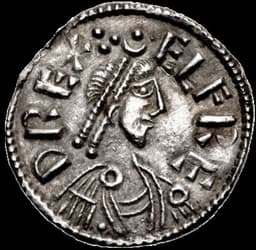
Alfred the Great
Emperor · Medieval
68.7Total
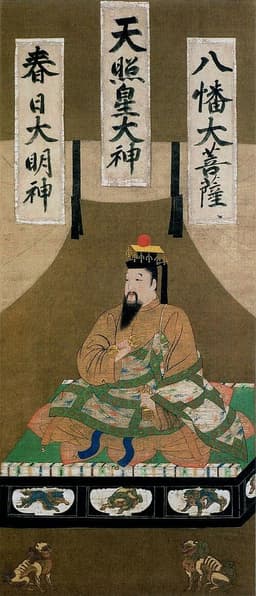
Emperor Go-Daigo
Emperor · Medieval
56.4Total
Basic Information
Born
849
1288
Died
899
1339
Era
Medieval
Medieval
Nationality
England
Japan
Occupation
Emperor
Emperor
Civilization
Western
Eastern
Score Comparison
Military (10%)
52.5
35.0
Political (20%)
70.0
68.0
Influence (20%)
65.0
58.0
Legacy (20%)
80.0
56.0
Leadership (15%)
66.0
65.7
Strategy (15%)
68.1
43.3
TOTAL
68.7
56.4
Alfred the Great — Complete Timeline
878 AD
Battle of EdingtonWar
Alfred defeated the Viking Great Heathen Army led by Guthrum at Edington. The victory forced Guthrum to accept baptism and the Treaty of Wedmore, establishing a boundary between Wessex and the Danelaw.
VikingsDanelawGuthrumWessex
Impact: regionalconstructive
880 AD
Establishment of the Burghal SystemReform◆ Major
Alfred created a network of fortified towns (burhs) across Wessex, each with a garrison and tax system for maintenance. This defensive system protected against Viking attacks and promoted urban development.
FortificationsDefenseUrbanization
Impact: nationalconstructive
890 AD
Translation of Latin Works into Old EnglishCultural◆ Major
Alfred commissioned translations of key Latin texts, including Boethius's Consolation of Philosophy and Gregory the Great's Pastoral Care, into Old English. He also initiated the Anglo-Saxon Chronicle, promoting literacy and education.
TranslationEducationAnglo-Saxon Chronicle
Impact: nationalconstructive
Emperor Go-Daigo — Complete Timeline
1331 AD
Exile to Oki IslandPolitical Action◆ Major
The Kamakura shogunate exiled Go-Daigo to Oki Island after his first attempt to overthrow them failed. He escaped two years later, rallying support from disaffected samurai and monks to renew his rebellion.
ExileRebellionKamakura Shogunate
Impact: nationaltragic
1333 AD
Kenmu RestorationPolitical Action
Go-Daigo overthrew the Kamakura shogunate and restored direct imperial rule. He issued the Kenmu Code, attempting to reassert imperial authority, but his policies alienated the samurai class, leading to rebellion.
RestorationImperial RuleJapan
Impact: national
1336 AD
Establishment of the Southern CourtPolitical Action
After Ashikaga Takauji turned against him, Go-Daigo fled to Yoshino and established the Southern Court. This created a split in the imperial line, leading to the Nanboku-cho period of rival courts lasting until 1392.
Civil WarImperial SplitNanboku-cho
Impact: national
Expert Analysis
Origins
Alfred the Great (born 849) was the fifth son of King Aethelwulf of Wessex. Educated in Latin and Christian texts, he was not expected to rule. His formative years included a trip to Rome and exposure to Frankish courts. He became king in 871 after his brother Aethelred died fighting Vikings.
Emperor Go-Daigo (born 1288) was the second son of Emperor Go-Uda, part of the Daikakuji line. He received a classical Confucian education and ascended the throne in 1318, at age 30. His early reign was overshadowed by the Kamakura shogunate, which controlled succession.
Rise to Power
Alfred rose during the Viking invasions. After the Battle of Ashdown (871), he fought nine engagements. His turning point came at the Battle of Edington (878), where he defeated Guthrum's Great Heathen Army. This victory led to the Treaty of Wedmore, establishing a boundary between Wessex and the Danelaw. Alfred's political score of 70.0 reflects his ability to consolidate power.
Go-Daigo's rise involved plotting against the Kamakura shogunate. In 1331, his first rebellion failed, leading to exile on Oki Island. He escaped in 1333 and rallied supporters, including the warlord Ashikaga Takauji. Together they overthrew the shogunate. Go-Daigo's political score of 68.0 is similar to Alfred's, but his military score of 35.0 is far lower.
Leadership & Governance
Alfred's governance focused on defense and education. He established the Burghal System, a network of 30 fortified towns with garrisons, each supported by local taxes. This system protected Wessex and allowed economic growth. He also translated Latin works into Old English, including Boethius's Consolation of Philosophy, to revive learning. His leadership score of 66.0 reflects his pragmatic reforms.
Go-Daigo's Kenmu Restoration (1333-1336) aimed to restore imperial rule. He issued the Kenmu Code, which prioritized court nobles over samurai. This alienated Ashikaga Takauji, who turned against him. Go-Daigo fled to Yoshino, establishing the Southern Court, while Takauji installed a rival emperor in Kyoto. His strategy score of 43.3 is low, indicating flawed execution.
Triumph & Tragedy
Alfred's greatest success was defeating the Vikings and securing Wessex. His Burghal System and navy reforms (building ships) laid foundations for English unification. His tragedies include the loss of his brother and early defeats. He never unified all England, but his successors did.
Go-Daigo's triumph was overthrowing the Kamakura shogunate, ending 140 years of shogunal rule. His tragedy was the failure of the Kenmu Restoration, leading to the Nanboku-cho period (1336-1392) of divided courts. This weakened imperial authority for centuries. His legacy score of 56.0 is lower than Alfred's 80.0.
Character & Destiny
Alfred was described as devout, scholarly, and resilient. He suffered from chronic illness (possibly Crohn's disease) but remained active. His character fostered loyalty and administrative reforms. His destiny was to be remembered as 'the Great' for his cultural and military contributions.
Go-Daigo was ambitious and stubborn, refusing to compromise with the samurai class. His insistence on direct rule alienated key allies. His destiny was to die in exile in Yoshino, with his court surviving until 1392. Historians assess him as a tragic figure who overreached.
Legacy
Alfred's legacy is profound: he is the only English monarch called 'the Great.' His Burghal System evolved into shire administration. His translation program started a vernacular literary tradition. He is credited with founding the English navy. His total score of 68.7 reflects his enduring impact.
Go-Daigo's legacy includes the Southern Court, which legitimized future imperial claims. The Kenmu Restoration influenced later Meiji reformers. However, his reign demonstrated the weakness of imperial power without military support. His total score of 56.4 is lower, reflecting a more limited and divisive impact.
Conclusion
Alfred the Great had a greater impact than Emperor Go-Daigo. Alfred's military and administrative reforms secured England against Vikings and created a unified kingdom. His cultural initiatives revived learning. Go-Daigo's attempt to restore imperial rule failed, leading to a civil war that weakened the throne. With a total score of 68.7 to 56.4, Alfred's achievements were more lasting and constructive. While Go-Daigo's ideals inspired later movements, Alfred's practical successes changed the course of English history.
Rankings
🥇
Alfred the GreatLeader
Mil: 52.5Pol: 70.0Inf: 65.0
68.7
🥈
Emperor Go-Daigo
Mil: 35.0Pol: 68.0Inf: 58.0
56.4
+12.3 behind
How This Comparison Works
Algorithm
Each figure is scored on 6 dimensions (0—100 scale) based on structured historical data: Military (10%), Political (20%), Influence (20%), Legacy (20%), Leadership (15%), Strategy (15%). The weighted total produces the final ranking.
Data Sources
Scores are computed from structured sub-indicators in the database. Scale factors adjust for era (Ancient ×0.85, Modern ×1.0) and civilization size (Eastern ×1.05, Other ×0.80) to account for differences in population and military scale.
Maximum 3 Figures
Comparisons are limited to 2—3 figures to ensure readability and statistical meaningfulness.
Error Margins
±5 points per dimension — Sub-scores are derived from historical records with inherent uncertainty. Two figures within 5 points on a dimension should be considered roughly equivalent in that area.
Total Score Accuracy
±3 points overall — The weighted combination of 6 dimensions produces a total score with approximately ±3 points of uncertainty. Differences of less than 3 points are not statistically significant— the figures are effectively tied.
Known Limitations
- Historical records are incomplete and uneven across civilizations
- Figures from oral-tradition societies may be underrepresented
- Occupation labels can misclassify multi-role figures
- Scores measure capability and impact, not moral character
- Quantitative scoring is a comparison tool, not absolute truth
Capability Radar
Military (10%) — Battles & Warfare
Battles
55
35
Win Rate
60
30
Expansion
50
15
Political (20%) — Governance & Reform
Reform
85
70
Diplomacy
75
55
Economy
70
30
Influence (20%) — Cultural & Global Reach
Cultural
75
50
Global
60
30
Legacy (20%) — Historical Impact
Historical
80
65
Longevity
85
55
Leadership (15%) — Power & Stability
Tenure
70
60
Stability
65
25
Strategy (15%) — Tactics & Innovation
Strategy
75
45
Tactics
70
40
Reform
80
20
Similar Comparisons
Comments & Discussion
No comments yet. Be the first to share your thoughts!