Loading...
Alfred the Great vs John II of Portugal
Alfred the Great leads by 5.0 pts · 2 figures compared
…
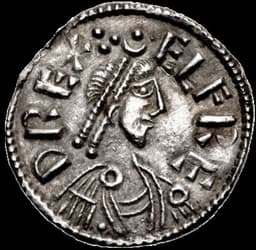
Alfred the Great
Emperor · Medieval
68.7Total
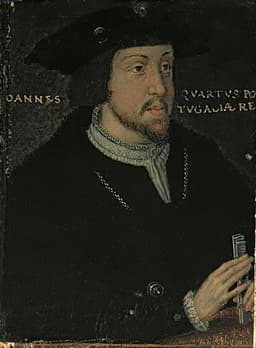
John II of Portugal
Emperor · Medieval
63.7Total
Basic Information
Born
849
1455
Died
899
1495
Era
Medieval
Medieval
Nationality
England
Portugal
Occupation
Emperor
Emperor
Civilization
Western
Western
Score Comparison
Military (10%)
52.5
50.0
Political (20%)
70.0
72.0
Influence (20%)
65.0
65.0
Legacy (20%)
80.0
65.0
Leadership (15%)
66.0
66.0
Strategy (15%)
68.1
55.0
TOTAL
68.7
63.7
Alfred the Great — Complete Timeline
878 AD
Battle of EdingtonWar
Alfred defeated the Viking Great Heathen Army led by Guthrum at Edington. The victory forced Guthrum to accept baptism and the Treaty of Wedmore, establishing a boundary between Wessex and the Danelaw.
VikingsDanelawGuthrumWessex
Impact: regionalconstructive
880 AD
Establishment of the Burghal SystemReform◆ Major
Alfred created a network of fortified towns (burhs) across Wessex, each with a garrison and tax system for maintenance. This defensive system protected against Viking attacks and promoted urban development.
FortificationsDefenseUrbanization
Impact: nationalconstructive
890 AD
Translation of Latin Works into Old EnglishCultural◆ Major
Alfred commissioned translations of key Latin texts, including Boethius's Consolation of Philosophy and Gregory the Great's Pastoral Care, into Old English. He also initiated the Anglo-Saxon Chronicle, promoting literacy and education.
TranslationEducationAnglo-Saxon Chronicle
Impact: nationalconstructive
John II of Portugal — Complete Timeline
1483 AD
Suppression of the Portuguese nobilityPolitical Action◆ Major
John II executed the Duke of Braganza for conspiracy and later personally stabbed the Duke of Viseu to death. These actions crushed the power of the high nobility, centralizing royal authority and eliminating internal opposition to his policies.
Nobility PurgeCentralizationPolitical Violence
Impact: nationaldestructive
1484 AD
Rejection of Columbus's proposalPolitical Action
John II's committee of experts rejected Christopher Columbus's proposal for a westward voyage to Asia, judging the distance estimates to be inaccurate. This decision led Columbus to seek sponsorship from Spain, resulting in the Spanish discovery of the Americas.
Age of DiscoveryColumbusNavigation
Impact: global
1488 AD
Discovery of the Cape of Good HopeInvention
John II sponsored Bartolomeu Dias's expedition that rounded the southern tip of Africa, naming it the Cape of Good Hope. This proved that a sea route to the Indian Ocean was possible, opening the way for future voyages to India.
Age of DiscoveryNavigationExploration
Impact: globalconstructive
1494 AD
Treaty of TordesillasPolitical Action
John II negotiated the Treaty of Tordesillas with Spain, dividing the non-European world along a meridian 370 leagues west of the Cape Verde islands. This agreement secured Portuguese control over the route to India and later Brazil, shaping colonial boundaries for centuries.
TreatyColonial DivisionAge of Discovery
Impact: globalconstructive
1495 AD
Establishment of the Portuguese India ArmadaPolitical Action◆ Major
John II commissioned the construction of a fleet and the preparation of a voyage to India under Vasco da Gama, though he died before the expedition departed. His planning and support for exploration laid the foundation for Portugal's maritime empire in Asia.
Age of DiscoveryNavigationExploration
Impact: globalconstructive
Expert Analysis
Origins
Alfred the Great was born in 849 in Wantage, Berkshire, the youngest son of King Athelwulf of Wessex. His mother, Osburh, instilled in him a love of learning. Alfred traveled to Rome twice as a child, where he was confirmed by Pope Leo IV. He was not expected to rule, but the deaths of his three older brothers placed him on the throne in 871 at age 22. John II of Portugal was born in 1455 in Lisbon, the son of King Afonso V and Isabella of Coimbra. He was educated in military and administrative affairs, accompanying his father on campaigns in North Africa. John was groomed for kingship from an early age, assuming responsibilities as a teenager.
Rise to Power
Alfred became King of Wessex in 871 after his brother Athelred died. Wessex was under constant attack from Viking armies. In 878, after a surprise Viking attack forced him to flee to the marshes of Athelney, Alfred regrouped and defeated the Great Heathen Army at the Battle of Edington. This victory led to the Treaty of Wedmore, dividing England and forcing Viking leader Guthrum to convert to Christianity. John II of Portugal ascended the throne in 1481 after his father Afonso V retired. He immediately moved to curb the power of the nobility. In 1483, he executed the Duke of Braganza for conspiracy, and in 1484, he personally stabbed the Duke of Viseu to death. These actions crushed aristocratic opposition and centralized royal authority. John also rejected Columbus's proposal in 1484, but sponsored Bartolomeu Dias's voyage that rounded the Cape of Good Hope in 1488.
Leadership & Governance
Alfred's leadership was defensive and organizational. He established the Burghal System, a network of fortified towns that protected Wessex and later became economic centers. He reformed the military, creating a standing army of fyrd that could rotate service. He also promoted education, translating Latin works such as Boethius's Consolation of Philosophy into Old English. John II was a centralizing monarch who broke the power of the high nobility. He reorganized the royal council, improved tax collection, and negotiated the Treaty of Tordesillas in 1494, which divided the non-European world between Spain and Portugal. John's governance was focused on overseas expansion, establishing the Portuguese India Armada and sponsoring voyages that laid the groundwork for Vasco da Gama's journey to India.
Triumph & Tragedy
Alfred's greatest triumph was the Battle of Edington, which saved Wessex and allowed for the eventual unification of England. His Burghal System and legal reforms created stability. His greatest failure was his inability to completely expel the Vikings; the Danelaw remained in place. He also struggled with illness throughout his life. John II's triumphs include the discovery of the Cape of Good Hope, which proved a sea route to Asia was possible, and the Treaty of Tordesillas, which secured Portuguese interests in the East. His tragedies include the rejection of Columbus's proposal, which led to Spain's discovery of the Americas, and his controversial suppression of the nobility, which created a legacy of fear. John died in 1495, possibly poisoned, before seeing da Gama's voyage succeed.
Character & Destiny
Alfred was pious, scholarly, and resilient. He saw his role as a Christian king to protect his people and promote learning. His character shaped his destiny: his patience and strategic thinking allowed him to survive the Viking onslaught. Historians like Asser praised his wisdom. John II was calculating, ruthless, and decisive. His nickname "the Perfect Prince" reflects his political acumen, but his brutality alienated many. His character led to a strong centralized monarchy but also to a court of fear. Both men were determined, but Alfred's approach was more inclusive, while John's was authoritarian.
Legacy
Alfred's legacy is foundational: he is the only English king called "the Great". His military reforms, legal code, and promotion of English literacy shaped English identity. The Burghal System influenced urban development. His educational efforts revived learning in England. John II's legacy is as the architect of Portugal's Age of Discovery. His sponsorship of Dias and negotiation of Tordesillas set the stage for Portugal's empire. However, his rejection of Columbus allowed Spain to dominate the Americas. John's suppression of the nobility ended feudal challenges but created a precedent for absolutism.
Conclusion
Alfred the Great (total score 68.7) had a greater and more enduring impact than John II of Portugal (63.7). Alfred's contributions to English unity, law, and education are still visible today. John II's achievements, while significant, were more limited in scope—Portugal's empire eventually faded, and his domestic policies did not outlast the monarchy. Alfred's score of 80.0 in Legacy versus John's 65.0 reflects this. While John was a skilled administrator and navigator, Alfred's work laid the foundation for a nation that would become a global power. Therefore, Alfred the Great stands as the more consequential figure.
Rankings
🥇
Alfred the GreatLeader
Mil: 52.5Pol: 70.0Inf: 65.0
68.7
🥈
John II of Portugal
Mil: 50.0Pol: 72.0Inf: 65.0
63.7
+5.0 behind
How This Comparison Works
Algorithm
Each figure is scored on 6 dimensions (0—100 scale) based on structured historical data: Military (10%), Political (20%), Influence (20%), Legacy (20%), Leadership (15%), Strategy (15%). The weighted total produces the final ranking.
Data Sources
Scores are computed from structured sub-indicators in the database. Scale factors adjust for era (Ancient ×0.85, Modern ×1.0) and civilization size (Eastern ×1.05, Other ×0.80) to account for differences in population and military scale.
Maximum 3 Figures
Comparisons are limited to 2—3 figures to ensure readability and statistical meaningfulness.
Error Margins
±5 points per dimension — Sub-scores are derived from historical records with inherent uncertainty. Two figures within 5 points on a dimension should be considered roughly equivalent in that area.
Total Score Accuracy
±3 points overall — The weighted combination of 6 dimensions produces a total score with approximately ±3 points of uncertainty. Differences of less than 3 points are not statistically significant— the figures are effectively tied.
Known Limitations
- Historical records are incomplete and uneven across civilizations
- Figures from oral-tradition societies may be underrepresented
- Occupation labels can misclassify multi-role figures
- Scores measure capability and impact, not moral character
- Quantitative scoring is a comparison tool, not absolute truth
Capability Radar
Military (10%) — Battles & Warfare
Battles
55
45
Win Rate
60
50
Expansion
50
65
Political (20%) — Governance & Reform
Reform
85
75
Diplomacy
75
80
Economy
70
85
Influence (20%) — Cultural & Global Reach
Cultural
75
70
Global
60
75
Legacy (20%) — Historical Impact
Historical
80
85
Longevity
85
80
Leadership (15%) — Power & Stability
Tenure
70
70
Stability
65
65
Strategy (15%) — Tactics & Innovation
Strategy
75
70
Tactics
70
55
Reform
80
60
Similar Comparisons
Comments & Discussion
No comments yet. Be the first to share your thoughts!