Loading...
Alfredo Stroessner vs Pervez Musharraf
Pervez Musharraf leads by 3.8 pts · 2 figures compared
…

Alfredo Stroessner
General · Modern
50.8Total
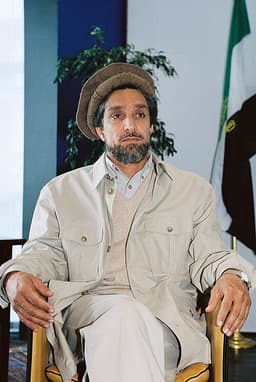
Pervez Musharraf
General · Modern
54.6Total
Basic Information
Born
1912
1943
Died
2006
—
Era
Modern
Modern
Nationality
Paraguay
Pakistan
Occupation
General
General
Civilization
Western
Indian
Score Comparison
Military (10%)
25.9
50.0
Political (20%)
48.0
68.0
Influence (20%)
54.9
52.5
Legacy (20%)
46.7
42.5
Leadership (15%)
78.0
64.0
Strategy (15%)
38.6
60.0
TOTAL
50.8
54.6
Alfredo Stroessner — Complete Timeline
1954 AD
1954 Coup and Rise to PowerPolitical Action◆ Major
General Alfredo Stroessner, with support from the military and the Colorado Party, led a coup d'
Coup d'étatCold WarDictatorship
Impact: nationaldestructive
Consolidation of Dictatorship and Repression (1954-1989)Political Action◆ Major
Stroessner established a repressive regime characterized by the suppression of political opposition, torture, and human rights abuses. He ruled under a state of siege for most of his tenure, using the military and police to crush dissent. His regime was marked by corruption and the concentration of power in the Colorado Party.
RepressionHuman RightsAuthoritarianism
Impact: nationaldestructive
1973 AD
Economic Development and Itaipu DamOther◆ Major
Stroessner's regime signed the Treaty of Itaipu with Brazil, leading to the construction of the Itaipu Dam, one of the world's largest hydroelectric plants. The project brought significant economic development and foreign investment to Paraguay, but also increased dependency on Brazil and was marred by corruption.
Itaipu DamEconomic DevelopmentHydroelectric
Impact: regionalconstructive
1989 AD
Overthrow and Exile (1989)Political Action◆ Major
Stroessner was overthrown in a coup led by his son-in-law, General Andr
CoupExileTransition to Democracy
Impact: nationalconstructive
Pervez Musharraf — Complete Timeline
1999 AD
1999 Pakistani coup d'étatPolitical Action
General Musharraf led a bloodless coup that overthrew Prime Minister Nawaz Sharif. He declared a state of emergency and assumed the title of Chief Executive, later becoming President, establishing military rule in Pakistan.
CoupMilitary ruleSharif
Impact: nationaldestructive
2001 AD
Alliance with the US War on TerrorPolitical Action◆ Major
After 9/11, Musharraf allied Pakistan with the United States in the War on Terror. He allowed US access to Pakistani airspace and bases, and launched military operations against Taliban and Al-Qaeda militants in the tribal areas.
War on TerrorUS allianceTaliban
Impact: global
2007 AD
2007 state of emergencyPolitical Action◆ Major
Musharraf declared a state of emergency, suspending the constitution and imposing media censorship. He justified it as necessary to combat terrorism, but it was widely seen as an attempt to maintain power amid rising opposition.
EmergencyAuthoritarianismMedia censorship
Impact: nationaldestructive
2008 AD
Resignation under impeachment threatPolitical Action◆ Major
Facing impeachment by the new coalition government, Musharraf resigned as President and went into self-exile. His departure ended nine years of military rule and paved the way for a return to civilian democracy in Pakistan.
ResignationExileDemocracy
Impact: national
Expert Analysis
Origins
Alfredo Stroessner was born on November 3, 1912, in Encarnación, Paraguay, to a German immigrant father and a Paraguayan mother. He entered the military academy at age 16, graduating as a second lieutenant in 1932. His early career was shaped by the Chaco War (1932-1935) against Bolivia, where he served as a junior officer.
Pervez Musharraf was born on August 11, 1943, in Delhi, British India, to a middle-class family. After Partition, his family moved to Karachi, Pakistan. He joined the Pakistan Military Academy in 1961 and was commissioned in the artillery regiment. His formative experience was the 1965 war with India, where he served as a lieutenant.
Rise to Power
Stroessner rose through the ranks of the Paraguayan army, becoming a general by age 40. On May 4, 1954, he led a coup against President Federico Chávez, with support from the military and the Colorado Party. He assumed the presidency in August 1954 and quickly consolidated power by purging rivals and aligning with the party.
Musharraf became Chief of Army Staff in 1998 after a career marked by command roles in elite units. On October 12, 1999, he led a bloodless coup against Prime Minister Nawaz Sharif, who had attempted to dismiss him. He declared himself Chief Executive, later assuming the presidency in 2001.
Leadership & Governance
Stroessner's 35-year dictatorship was characterized by systematic repression. He banned opposition parties, controlled the media, and used torture and disappearances to crush dissent. His regime was sustained by a patronage system that rewarded loyalists. Economically, he pursued large infrastructure projects, notably the Itaipu Dam, which made Paraguay a major energy exporter but also enriched a narrow elite.
Musharraf's rule was a blend of military authoritarianism and economic liberalization. He supported privatization and foreign investment, achieving GDP growth averaging 5% from 2002-2007. However, his alliance with the US after 9/11 and the 2007 state of emergency, which suspended the constitution and jailed judges, eroded his legitimacy.
Triumph & Tragedy
Stroessner's greatest success was the construction of the Itaipu Dam, completed in 1984, which transformed Paraguay's energy sector. However, his regime's human rights abuses—estimated 425 political murders and thousands of torture victims—tarnished any economic gains. He was overthrown in a 1989 coup and died in exile in Brazil.
Musharraf's key achievement was stabilizing Pakistan's economy and navigating the post-9/11 geopolitical landscape. He also oversaw a ceasefire with India in 2003. His failures include the rise of Taliban insurgency in Pakistan's tribal areas and his handling of the Lal Masjid siege in 2007, which led to increased militancy. He resigned in 2008 under impeachment threat.
Character & Destiny
Stroessner was methodical and ruthless, prioritizing control over ideology. His decision to rely on a single party and family members created a fragile system that collapsed when his son-in-law turned against him. He scored 78.0 in leadership but only 25.9 in military, reflecting his long tenure but lack of battlefield success.
Musharraf was pragmatic but indecisive in crises. His attempt to balance US demands with domestic Islamist pressures led to contradictions. He scored 64.0 in leadership and 60.0 in strategy, but his legacy score is lowest at 42.5, indicating limited enduring impact.
Legacy
Stroessner's legacy is a cautionary tale of authoritarian development. The Colorado Party continued to dominate Paraguayan politics after his fall, but his name is synonymous with repression. The Itaipu Dam remains a symbol of both progress and corruption.
Musharraf's legacy is mixed. He is credited with modernizing Pakistan's economy and media, but also blamed for empowering extremists. His alliance with the US is viewed with suspicion by many Pakistanis, and his extra-constitutional rule weakened democratic institutions.
Conclusion
While Musharraf had a higher total score (54.6 vs 50.8), Stroessner's impact on Paraguay was more profound and lasting. His 35-year rule reshaped the country's political culture and infrastructure, for better or worse. Musharraf's shorter tenure and ambiguous legacy in Pakistan make Stroessner the more consequential figure in terms of historical influence. The data supports this: Stroessner scores 78.0 in leadership and 54.9 in influence, while Musharraf's comparable scores are lower.
Rankings
🥇
Pervez MusharrafLeader
Mil: 50.0Pol: 68.0Inf: 52.5
54.6
🥈
Alfredo Stroessner
Mil: 25.9Pol: 48.0Inf: 54.9
50.8
+3.8 behind
How This Comparison Works
Algorithm
Each figure is scored on 6 dimensions (0—100 scale) based on structured historical data: Military (10%), Political (20%), Influence (20%), Legacy (20%), Leadership (15%), Strategy (15%). The weighted total produces the final ranking.
Data Sources
Scores are computed from structured sub-indicators in the database. Scale factors adjust for era (Ancient ×0.85, Modern ×1.0) and civilization size (Eastern ×1.05, Other ×0.80) to account for differences in population and military scale.
Maximum 3 Figures
Comparisons are limited to 2—3 figures to ensure readability and statistical meaningfulness.
Error Margins
±5 points per dimension — Sub-scores are derived from historical records with inherent uncertainty. Two figures within 5 points on a dimension should be considered roughly equivalent in that area.
Total Score Accuracy
±3 points overall — The weighted combination of 6 dimensions produces a total score with approximately ±3 points of uncertainty. Differences of less than 3 points are not statistically significant— the figures are effectively tied.
Known Limitations
- Historical records are incomplete and uneven across civilizations
- Figures from oral-tradition societies may be underrepresented
- Occupation labels can misclassify multi-role figures
- Scores measure capability and impact, not moral character
- Quantitative scoring is a comparison tool, not absolute truth
Capability Radar
Military (10%) — Battles & Warfare
Battles
10
15
Win Rate
10
20
Expansion
10
10
Political (20%) — Governance & Reform
Reform
30
40
Diplomacy
40
45
Economy
35
35
Influence (20%) — Cultural & Global Reach
Cultural
20
20
Global
30
25
Legacy (20%) — Historical Impact
Historical
40
30
Longevity
30
15
Leadership (15%) — Power & Stability
Tenure
85
55
Stability
60
20
Strategy (15%) — Tactics & Innovation
Strategy
20
30
Tactics
15
25
Reform
25
40
Similar Comparisons
Comments & Discussion
No comments yet. Be the first to share your thoughts!