Loading...
Oswaldo Lopez Arellano vs Pervez Musharraf
Pervez Musharraf leads by 7.7 pts · 2 figures compared
…

Oswaldo Lopez Arellano
General · Modern
46.9Total
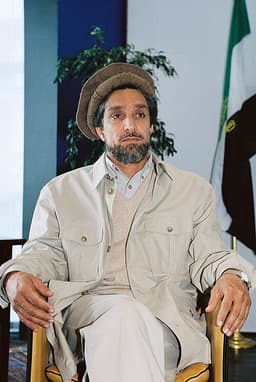
Pervez Musharraf
General · Modern
54.6Total
Basic Information
Born
1921
1943
Died
—
—
Era
Modern
Modern
Nationality
Honduras
Pakistan
Occupation
General
General
Civilization
Western
Indian
Score Comparison
Military (10%)
50.0
50.0
Political (20%)
43.7
68.0
Influence (20%)
49.4
52.5
Legacy (20%)
39.2
42.5
Leadership (15%)
62.2
64.0
Strategy (15%)
38.6
60.0
TOTAL
46.9
54.6
Oswaldo Lopez Arellano — Complete Timeline
1963 AD
First coup: Overthrow of Villeda MoralesPolitical Action◆ Major
López Arellano led a military coup that overthrew President Ramón Villeda Morales, suspending the constitution and banning political parties. He established a military junta, beginning a period of direct military rule in Honduras.
CoupMilitary JuntaAuthoritarianism
Impact: nationaldestructive
1972 AD
Second coup: Overthrow of Ramón Ernesto CruzPolitical Action◆ Major
López Arellano staged a second coup, overthrowing President Ramón Ernesto Cruz, who had been elected in 1971. He justified the coup by citing corruption and inefficiency, and then implemented land reform and economic nationalism policies.
CoupLand ReformEconomic Nationalism
Impact: nationaldestructive
1975 AD
Nationalization of the banana industryPolitical Action◆ Major
López Arellano's government nationalized the banana industry, creating the Honduran Banana Corporation (COHBANA) to compete with foreign companies like United Fruit. This move was popular domestically but led to tensions with the U.S. and multinational corporations.
NationalizationBanana IndustryEconomic Sovereignty
Impact: nationalconstructive
Pervez Musharraf — Complete Timeline
1999 AD
1999 Pakistani coup d'étatPolitical Action
General Musharraf led a bloodless coup that overthrew Prime Minister Nawaz Sharif. He declared a state of emergency and assumed the title of Chief Executive, later becoming President, establishing military rule in Pakistan.
CoupMilitary ruleSharif
Impact: nationaldestructive
2001 AD
Alliance with the US War on TerrorPolitical Action◆ Major
After 9/11, Musharraf allied Pakistan with the United States in the War on Terror. He allowed US access to Pakistani airspace and bases, and launched military operations against Taliban and Al-Qaeda militants in the tribal areas.
War on TerrorUS allianceTaliban
Impact: global
2007 AD
2007 state of emergencyPolitical Action◆ Major
Musharraf declared a state of emergency, suspending the constitution and imposing media censorship. He justified it as necessary to combat terrorism, but it was widely seen as an attempt to maintain power amid rising opposition.
EmergencyAuthoritarianismMedia censorship
Impact: nationaldestructive
2008 AD
Resignation under impeachment threatPolitical Action◆ Major
Facing impeachment by the new coalition government, Musharraf resigned as President and went into self-exile. His departure ended nine years of military rule and paved the way for a return to civilian democracy in Pakistan.
ResignationExileDemocracy
Impact: national
Expert Analysis
Origins
Oswaldo Lopez Arellano was born on June 30, 1921, in Danlí, Honduras, into a middle-class family. He attended the Honduran Military Academy, graduating in 1941. His early career was shaped by the military's growing role in politics. Pervez Musharraf was born on August 11, 1943, in Delhi, British India, to a middle-class family that migrated to Pakistan after partition. He studied at Forman Christian College and later joined the Pakistan Military Academy, graduating in 1964. Both rose through military ranks, but Lopez Arellano's path was rooted in Central American caudillo traditions, while Musharraf's was shaped by the British colonial military legacy and Pakistan's strategic position.
Rise to Power
Lopez Arellano first seized power on October 3, 1963, leading a coup that overthrew President Ramón Villeda Morales, citing corruption and communist influence. He ruled until 1965, then handed power to an elected civilian, only to stage a second coup on December 4, 1972, overthrowing President Ramón Ernesto Cruz. Musharraf came to power on October 12, 1999, through a bloodless coup that ousted Prime Minister Nawaz Sharif after the Kargil War fiasco. Musharraf declared a state of emergency and assumed the title of Chief Executive. Both men justified their coups as necessary to restore stability, but Lopez Arellano's coups were more frequent, while Musharraf's coup was a single decisive event.
Leadership & Governance
Lopez Arellano's governance was marked by nationalist economic policies, notably the nationalization of the banana industry in 1975, creating the Honduran Banana Corporation (COHBANA). He also implemented land reform and infrastructure projects. However, his rule was authoritarian, with political parties banned after the first coup. Musharraf pursued a liberal economic agenda, privatizing state-owned enterprises and encouraging foreign investment. He also introduced social reforms, such as the Women's Protection Bill in 2006. But his rule saw the erosion of democratic institutions; he amended the constitution to concentrate power and dismissed the Chief Justice in 2007. In military scores, Musharraf scored 50.0 and Lopez Arellano 50.0, but Musharraf's political score of 68.0 far exceeded Lopez Arellano's 43.7, reflecting his broader engagement with global politics.
Triumph & Tragedy
Lopez Arellano's greatest success was the nationalization of the banana industry, which increased state revenue and reduced foreign control. His failure was the 1969 Soccer War with El Salvador, a brief conflict that killed thousands and damaged the economy. Musharraf's triumph was his alliance with the U.S. after 9/11, which brought billions in aid and legitimized his rule internationally. However, his support for the War on Terror fueled domestic terrorism and alienated many Pakistanis. His declaration of a state of emergency in 2007 was a tragic miscalculation, leading to his resignation under impeachment threat in 2008. Musharraf's strategy score of 60.0 versus Lopez Arellano's 38.6 highlights his more calculated approach, though both made grave errors.
Character & Destiny
Lopez Arellano was pragmatic and opportunistic, shifting alliances to maintain power. He was cautious, avoiding direct confrontation with the U.S. despite nationalist policies. His character led to two coups but also to eventual exile after the 1975 coup failed. Musharraf was ambitious and risk-taking, believing himself a savior of Pakistan. He ignored warnings about the backlash from his U.S. alliance. Both men's fates were tied to their inability to transition to democracy smoothly. Musharraf's leadership score of 64.0 is slightly above Lopez Arellano's 62.2, but both were ultimately ousted.
Legacy
Lopez Arellano's legacy is mixed: he is remembered for economic nationalism but also for authoritarianism and the Soccer War. His nationalization set a precedent but did not transform Honduras. Musharraf's legacy is more complex: he modernized Pakistan's economy and empowered women, but his U.S. alliance and authoritarianism damaged democracy. His influence score of 52.5 is marginally higher than Lopez Arellano's 49.4. However, Musharraf's actions had global repercussions, while Lopez Arellano's impact was regional. Musharraf's legacy score of 42.5 is slightly above Lopez Arellano's 39.2, though both are often criticized in their countries.
Conclusion
Pervez Musharraf had a greater impact than Oswaldo Lopez Arellano. While both were military rulers who seized power, Musharraf's decisions affected global geopolitics, particularly the War on Terror. His total score of 54.6 versus Lopez Arellano's 46.9 reflects this. Musharraf's political maneuvering and economic reforms had lasting effects on Pakistan, whereas Lopez Arellano's influence was limited to Honduras. Despite his failures, Musharraf's legacy is more significant on the world stage.
Rankings
🥇
Pervez MusharrafLeader
Mil: 50.0Pol: 68.0Inf: 52.5
54.6
🥈
Oswaldo Lopez Arellano
Mil: 50.0Pol: 43.7Inf: 49.4
46.9
+7.7 behind
How This Comparison Works
Algorithm
Each figure is scored on 6 dimensions (0—100 scale) based on structured historical data: Military (10%), Political (20%), Influence (20%), Legacy (20%), Leadership (15%), Strategy (15%). The weighted total produces the final ranking.
Data Sources
Scores are computed from structured sub-indicators in the database. Scale factors adjust for era (Ancient ×0.85, Modern ×1.0) and civilization size (Eastern ×1.05, Other ×0.80) to account for differences in population and military scale.
Maximum 3 Figures
Comparisons are limited to 2—3 figures to ensure readability and statistical meaningfulness.
Error Margins
±5 points per dimension — Sub-scores are derived from historical records with inherent uncertainty. Two figures within 5 points on a dimension should be considered roughly equivalent in that area.
Total Score Accuracy
±3 points overall — The weighted combination of 6 dimensions produces a total score with approximately ±3 points of uncertainty. Differences of less than 3 points are not statistically significant— the figures are effectively tied.
Known Limitations
- Historical records are incomplete and uneven across civilizations
- Figures from oral-tradition societies may be underrepresented
- Occupation labels can misclassify multi-role figures
- Scores measure capability and impact, not moral character
- Quantitative scoring is a comparison tool, not absolute truth
Capability Radar
Military (10%) — Battles & Warfare
Battles
15
15
Win Rate
20
20
Expansion
10
10
Political (20%) — Governance & Reform
Reform
30
40
Diplomacy
35
45
Economy
25
35
Influence (20%) — Cultural & Global Reach
Cultural
15
20
Global
10
25
Legacy (20%) — Historical Impact
Historical
20
30
Longevity
15
15
Leadership (15%) — Power & Stability
Tenure
40
55
Stability
20
20
Strategy (15%) — Tactics & Innovation
Strategy
20
30
Tactics
15
25
Reform
25
40
Similar Comparisons
Comments & Discussion
No comments yet. Be the first to share your thoughts!