Loading...
Alfredo Stroessner vs Sepp Dietrich
Alfredo Stroessner leads by 8.6 pts · 2 figures compared
…
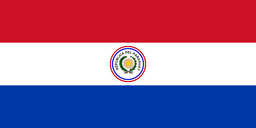
Alfredo Stroessner
General · Modern
50.8Total

Sepp Dietrich
General · Modern
42.2Total
Basic Information
Born
1912
1892
Died
2006
1966
Era
Modern
Modern
Nationality
Paraguay
Germany
Occupation
General
General
Civilization
Western
Western
Score Comparison
Military (10%)
25.9
50.0
Political (20%)
48.0
26.4
Influence (20%)
54.9
48.6
Legacy (20%)
46.7
40.0
Leadership (15%)
78.0
47.3
Strategy (15%)
38.6
39.6
TOTAL
50.8
42.2
Alfredo Stroessner — Complete Timeline
1954 AD
1954 Coup and Rise to PowerPolitical Action◆ Major
General Alfredo Stroessner, with support from the military and the Colorado Party, led a coup d'
Coup d'étatCold WarDictatorship
Impact: nationaldestructive
Consolidation of Dictatorship and Repression (1954-1989)Political Action◆ Major
Stroessner established a repressive regime characterized by the suppression of political opposition, torture, and human rights abuses. He ruled under a state of siege for most of his tenure, using the military and police to crush dissent. His regime was marked by corruption and the concentration of power in the Colorado Party.
RepressionHuman RightsAuthoritarianism
Impact: nationaldestructive
1973 AD
Economic Development and Itaipu DamOther◆ Major
Stroessner's regime signed the Treaty of Itaipu with Brazil, leading to the construction of the Itaipu Dam, one of the world's largest hydroelectric plants. The project brought significant economic development and foreign investment to Paraguay, but also increased dependency on Brazil and was marred by corruption.
Itaipu DamEconomic DevelopmentHydroelectric
Impact: regionalconstructive
1989 AD
Overthrow and Exile (1989)Political Action◆ Major
Stroessner was overthrown in a coup led by his son-in-law, General Andr
CoupExileTransition to Democracy
Impact: nationalconstructive
Sepp Dietrich — Complete Timeline
1928 AD
Appointment as Hitler's Bodyguard CommanderPolitical Action◆ Major
Dietrich became commander of Hitler's personal bodyguard unit, the SS-Stabswache Berlin. This role gave him direct access to Hitler and helped him rise in the SS hierarchy.
Nazi GermanySSHitler
Impact: national
1933 AD
Command of the Leibstandarte SS Adolf HitlerPolitical Action◆ Major
Dietrich commanded the Leibstandarte SS Adolf Hitler, which grew from a bodyguard unit into a full division. He led it in the invasions of Poland, France, and the Balkans.
World War IIWaffen-SSLeibstandarte
Impact: regional
1946 AD
Malmedy Massacre Trial ConvictionPolitical Action◆ Major
Dietrich was tried at the Dachau trials for the Malmedy Massacre and other war crimes. He was sentenced to life imprisonment, but was released in 1955.
War Crimes TrialPost-War Justice
Impact: national
Expert Analysis
Origins
**Alfredo Stroessner** was born on November 3, 1912, in Encarnación, Paraguay, to a German immigrant father and a Paraguayan mother. He entered the military academy at age 16 and graduated as an artillery officer. His early career was marked by participation in the Chaco War (1932-1935) against Bolivia, where he gained combat experience and rose through the ranks. By 1948, he had become a general, thanks in part to his political connections within the Colorado Party.
**Sepp Dietrich** was born on May 28, 1892, in Hawangen, Bavaria, to a peasant family. He left school at 14 and worked as a butcher's apprentice, earning the nickname "Butcher Boy." He served in World War I, earning the Iron Cross, and later joined the Freikorps. In 1928, he joined the Nazi Party and the SS, quickly becoming a loyal follower of Hitler. His early background was rough and uneducated, contrasting sharply with Stroessner's military academy training.
Rise to Power
Stroessner rose to power through a military coup on May 4, 1954, overthrowing President Federico Chávez. He had the backing of the military and the Colorado Party, which he skillfully manipulated. Within months, he was elected president in a single-candidate election, beginning a 35-year dictatorship. His rise was swift and efficient, relying on institutional support and political maneuvering.
Dietrich's rise was more personal, based on his loyalty to Hitler. In 1933, he was appointed commander of Hitler's bodyguard unit, the SS-Stabswache Berlin, which later became the Leibstandarte SS Adolf Hitler (LSSAH). He led this unit through the invasions of Poland, France, and the Balkans, earning promotions and decorations. By 1944, he commanded the 6th Panzer Army during the Battle of the Bulge. His rise was tied to his proximity to Hitler and the expansion of the SS.
Leadership & Governance
Stroessner ruled Paraguay with an iron fist, combining military repression with political co-optation. He suppressed all opposition through torture, imprisonment, and exile, maintaining control through the Colorado Party and the military. His economic policies focused on infrastructure, notably the Itaipu Dam project with Brazil, which brought electricity and revenue. However, corruption was rampant, and wealth inequality grew. His leadership score of 78.0 reflects his ability to maintain power, but his strategy score of 38.6 indicates poor long-term planning beyond personal rule.
Dietrich was a frontline commander, not a governor. He led troops in battle, relying on aggression and personal bravery rather than strategic brilliance. His military score of 50.0 is modest, reflecting mixed results. He was involved in war crimes, including the Malmedy Massacre in 1944, where his troops killed American prisoners of war. His leadership was characterized by brutality and loyalty to Hitler, but his political score of 26.4 shows he lacked independent political acumen.
Triumph & Tragedy
Stroessner's greatest triumph was his longevity: 35 years in power, the longest in Latin America. He also oversaw the construction of Itaipu Dam, a massive engineering feat that transformed Paraguay's energy sector. However, his legacy is marred by human rights abuses: thousands were tortured, killed, or exiled. His regime was a classic dictatorship that stifled democracy and development. His total score of 50.8 reflects a mixed legacy.
Dietrich's triumphs include his role in building the LSSAH into an elite unit and his personal bravery in battle. However, his greatest tragedy was his conviction for the Malmedy Massacre, which tarnished his military reputation. He was sentenced to life imprisonment but released in 1955 after serving only 10 years. His influence was tied to the Nazi regime, which ultimately led to his downfall. His total score of 42.2 is lower, reflecting his limited independent impact.
Character & Destiny
Stroessner was calculating and ruthless, able to balance factions within the Colorado Party and military. He was patient and methodical, avoiding direct confrontation with powerful neighbors. His character was suited to a long-term dictatorship, but his inability to transition to democracy led to his overthrow in 1989 by his own son-in-law. He died in exile in Brazil in 2006.
Dietrich was a loyal thug, driven by personal loyalty to Hitler rather than ideology. He was known for his coarse manner and drinking. His lack of strategic thinking limited his effectiveness as a commander. He was captured by US forces in 1945 and tried for war crimes. His destiny was shaped by his association with Hitler and the Nazi regime, leading to imprisonment and historical infamy.
Legacy
Stroessner's legacy in Paraguay is complex: he is remembered for stability and economic projects but also for repression. The Colorado Party remained dominant after his fall, and his policies influenced decades of governance. His influence score of 54.9 suggests moderate impact beyond his country.
Dietrich's legacy is largely negative, tied to Nazi war crimes. The LSSAH is infamous for its brutality, and Dietrich's name is synonymous with SS fanaticism. His legacy score of 40.0 reflects his limited positive impact. He is a footnote in military history, remembered more for his crimes than his achievements.
Conclusion
Alfredo Stroessner had a greater impact than Sepp Dietrich, as reflected in his higher total score of 50.8 compared to Dietrich's 42.2. Stroessner's 35-year rule shaped an entire nation, for better or worse, while Dietrich was a cog in a larger machine. Stroessner's leadership score (78.0) far exceeds Dietrich's (47.3), demonstrating his effectiveness in maintaining power. Although both were authoritarian figures, Stroessner's influence was more lasting and independent. Thus, Stroessner stands as the more significant historical figure.
Rankings
🥇
Alfredo StroessnerLeader
Mil: 25.9Pol: 48.0Inf: 54.9
50.8
🥈
Sepp Dietrich
Mil: 50.0Pol: 26.4Inf: 48.6
42.2
+8.6 behind
How This Comparison Works
Algorithm
Each figure is scored on 6 dimensions (0—100 scale) based on structured historical data: Military (10%), Political (20%), Influence (20%), Legacy (20%), Leadership (15%), Strategy (15%). The weighted total produces the final ranking.
Data Sources
Scores are computed from structured sub-indicators in the database. Scale factors adjust for era (Ancient ×0.85, Modern ×1.0) and civilization size (Eastern ×1.05, Other ×0.80) to account for differences in population and military scale.
Maximum 3 Figures
Comparisons are limited to 2—3 figures to ensure readability and statistical meaningfulness.
Error Margins
±5 points per dimension — Sub-scores are derived from historical records with inherent uncertainty. Two figures within 5 points on a dimension should be considered roughly equivalent in that area.
Total Score Accuracy
±3 points overall — The weighted combination of 6 dimensions produces a total score with approximately ±3 points of uncertainty. Differences of less than 3 points are not statistically significant— the figures are effectively tied.
Known Limitations
- Historical records are incomplete and uneven across civilizations
- Figures from oral-tradition societies may be underrepresented
- Occupation labels can misclassify multi-role figures
- Scores measure capability and impact, not moral character
- Quantitative scoring is a comparison tool, not absolute truth
Capability Radar
Military (10%) — Battles & Warfare
Battles
10
20
Win Rate
10
15
Expansion
10
5
Political (20%) — Governance & Reform
Reform
30
5
Diplomacy
40
10
Economy
35
5
Influence (20%) — Cultural & Global Reach
Cultural
20
10
Global
30
10
Legacy (20%) — Historical Impact
Historical
40
20
Longevity
30
10
Leadership (15%) — Power & Stability
Tenure
85
40
Stability
60
5
Strategy (15%) — Tactics & Innovation
Strategy
20
10
Tactics
15
10
Reform
25
5
Similar Comparisons
Comments & Discussion
No comments yet. Be the first to share your thoughts!