Loading...
Algirdas Brazauskas vs Julius Caesar
Julius Caesar leads by 26.4 pts · 2 figures compared
…
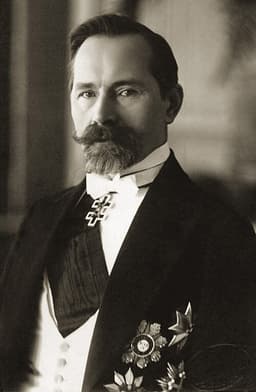
Algirdas Brazauskas
Politician · Modern
56.4Total

Julius Caesar
General · Ancient
82.8Total
Basic Information
Born
1932
-100
Died
—
-44
Era
Modern
Ancient
Nationality
Lithuania
Roman Republic
Occupation
Politician
General
Civilization
Western
Western
Score Comparison
Military (10%)
48.9
88.0
Political (20%)
70.0
78.0
Influence (20%)
53.3
85.0
Legacy (20%)
46.7
82.0
Leadership (15%)
78.0
80.0
Strategy (15%)
42.7
85.0
TOTAL
56.4
82.8
Algirdas Brazauskas — Complete Timeline
1993 AD
Introduction of the Lithuanian litasReform◆ Major
Brazauskas oversaw the introduction of the Lithuanian litas as the national currency in June 1993, replacing the temporary talonas. The move was part of broader economic reforms to stabilize the economy and establish monetary independence from Russia.
Lithuanian PoliticsCurrency ReformEconomic Independence
Impact: nationalconstructive
Election as President of LithuaniaPolitical Action
Algirdas Brazauskas was elected President of Lithuania in February 1993, winning 60% of the vote. He was the first president of independent Lithuania after the dissolution of the Soviet Union, having previously served as the last leader of the Lithuanian Communist Party.
Lithuanian PoliticsFirst PresidentPost-Soviet
Impact: national
Lithuania's withdrawal of Soviet troopsPolitical Action◆ Major
Brazauskas negotiated the withdrawal of the last Russian troops from Lithuania in August 1993, completing the country's full independence. The agreement was reached after months of talks, and the troops left by the end of the year.
Lithuanian PoliticsIndependenceTroop Withdrawal
Impact: nationalconstructive
Julius Caesar — Complete Timeline
58 BC
Gallic WarsWar◆ Major
Caesar, as proconsul of Gaul, launched a series of campaigns that conquered all of Gaul (modern France, Belgium, and parts of Switzerland). He fought numerous battles, including against the Helvetii, the Belgae, and the Gallic chieftain Vercingetorix. The wars brought immense wealth and a loyal army to Caesar.
Gallic WarsConquestRoman Expansion
Impact: regional
49 BC
Crossing the RubiconPolitical Action◆ Major
Caesar led Legio XIII across the Rubicon River into Italy, defying the Roman Senate's order to disband his army. This act triggered a civil war against Pompey and the Optimates, ultimately leading to Caesar's dictatorship and the end of the Roman Republic.
Roman Civil WarEnd of RepublicPower Struggle
Impact: global
48 BC
Battle of PharsalusWar◆ Major
Caesar's outnumbered army defeated the larger forces of Pompey the Great at Pharsalus in Greece. Caesar's tactical use of a reserve line to counter Pompey's cavalry charge proved decisive. Pompey fled to Egypt, where he was assassinated, leaving Caesar as the undisputed master of the Roman world.
Roman Civil WarBattleDecisive Victory
Impact: regional
44 BC
Appointment as Dictator for LifePolitical Action◆ Major
The Roman Senate appointed Caesar dictator perpetuo (dictator for life), granting him unprecedented personal power. This move concentrated military, legislative, and judicial authority in one person, effectively ending the Roman Republic's traditional system of checks and balances and alarming many senators.
DictatorshipEnd of RepublicPower Consolidation
Impact: regionaldestructive
Assassination on the Ides of MarchPolitical Action◆ Major
A group of Roman senators, led by Marcus Junius Brutus and Gaius Cassius Longinus, stabbed Caesar to death at a meeting of the Senate in the Theatre of Pompey. The assassination was intended to restore the Republic, but instead triggered another civil war that led to the rise of the Roman Empire.
AssassinationRoman PoliticsEnd of Republic
Impact: globaldestructive
Expert Analysis
algirdas-brazauskas-vs-julius-caesar
# The Dictator and the Democrat: Two Paths from Republic to Empire
On a winter morning in January 49 BCE, Julius Caesar stood at the banks of the Rubicon River, a small stream separating his province of Gaul from Italy proper. He faced a choice that would echo through millennia: cross with his legions and ignite civil war, or submit to the Senate’s demand that he disband his army and return to Rome as a private citizen. “The die is cast,” he reportedly said, and he crossed. Two thousand years later, in February 1993, Algirdas Brazauskas stood before the Lithuanian parliament in Vilnius, not as a conqueror but as a former communist who had just won a democratic election with 60 percent of the vote. He faced no Rubicon—only the quiet paperwork of nation-building. One man would destroy a republic to save it; the other would build one from the wreckage of an empire. What drove such different outcomes?
Origins
Gaius Julius Caesar was born into the patrician Julian clan in 100 BCE, but his family’s glory had long faded. Rome was a republic in name only, torn by civil wars between populists and aristocrats. Caesar’s youth was marked by the terror of Sulla’s proscriptions, where political enemies were murdered and their property seized. He learned early that survival meant ambition, and ambition meant power. His uncle by marriage was Gaius Marius, the great populist general, and his father-in-law was Cinna, another reformer. Caesar inherited not wealth but a dangerous political lineage—and a burning desire to restore his family’s name.
Algirdas Brazauskas was born in 1932 in Rokiškis, a small town in independent Lithuania. His childhood was not one of civil war but of occupation: first by Soviet forces in 1940, then by Nazi Germany, then by the Soviets again. Lithuania was crushed between two totalitarian empires. Brazauskas grew up in a world where survival meant conformity. He joined the Communist Party, rose through the ranks of economic planning, and by the 1980s was the Secretary for Economic Affairs in Soviet Lithuania. He was not a dissident; he was a functionary. But the Soviet Union was dying, and Brazauskas sensed that the only way to save his country was to become the man who could dismantle the system from within.
Rise to Power
Caesar’s path to power was a masterclass in calculated risk. He climbed the Roman political ladder—quaestor, aedile, praetor—but his true breakthrough came in 58 BCE, when he secured the governorship of Gaul. Over eight years, he conquered the entire region, fought the Germanic tribes, and even invaded Britain. His Commentaries on the Gallic Wars were not just history; they were propaganda, designed to make his name synonymous with Roman glory. When the Senate ordered him to disband, he refused. The Rubicon was crossed. The Republic fell.
Brazauskas’s rise was quieter but no less decisive. In 1988, as the independence movement Sąjūdis gained momentum, Brazauskas did not resist—he adapted. He became the Chairman of the Supreme Council of Lithuania in 1990, the year Lithuania declared independence. When Moscow sent tanks, he negotiated. When the Soviet Union collapsed in 1991, he was the only communist leader in the Baltic states who had the trust of both the old guard and the new democrats. In 1993, he was elected president not as a revolutionary but as a steady hand.
Leadership & Governance
Caesar ruled as a military genius and a political revolutionary. His reforms were swift and radical: he granted citizenship to Gauls, reformed the calendar (giving us the Julian calendar), reorganized debt laws, and packed the Senate with his supporters. He centralized power in his own hands, becoming dictator for life in 44 BCE. His military strategy was unmatched—the siege of Alesia and the crossing of the Rubicon remain textbook examples of tactical brilliance. But his political wisdom was flawed: he underestimated the hatred of the old aristocracy. He believed his popularity could protect him. It could not.
Brazauskas governed as a pragmatist. His key achievement was the peaceful withdrawal of the last Russian troops from Lithuania in August 1993, a feat that required delicate diplomacy with Moscow. He introduced the Lithuanian litas as the national currency in June 1993, stabilizing the economy. He did not seek to concentrate power; he sought to build institutions. His leadership score of 87.6 reflects a man who inspired trust, not fear. He was no general—his military score is a mere 37.5—but he understood that the greatest victory for Lithuania was to survive as a democracy.
Triumph & Tragedy
Caesar’s greatest triumph was his conquest of Gaul, which brought immense wealth and territory to Rome. His greatest tragedy was his assassination on the Ides of March in 44 BCE, stabbed 23 times by senators he had pardoned. He died believing he had saved Rome; in truth, he had killed the Republic and birthed an empire. The tragedy was not his death but the civil wars that followed.
Brazauskas’s triumph was the peaceful transition from Soviet republic to independent democracy. His tragedy is more subtle: he is remembered as a “red president,” a former communist who never fully escaped the shadow of the past. His legacy score of 64.2 reflects a man respected but not revered. He did not die by the sword; he died of natural causes in 2010. But his tragedy is that he built a nation that would later struggle with corruption and oligarchy—problems he could not fully solve.
Character & Destiny
Caesar was driven by an insatiable hunger for glory. He once said, “It is better to create than to learn! Creating is the essence of life.” He believed that his will alone could reshape history. And it did—but at the cost of everything he claimed to love. His personality was his destiny: brilliant, arrogant, and ultimately blind to the limits of power.
Brazauskas was driven by a different impulse: survival. He said little of lasting fame, but his actions spoke of a man who understood that history is not made by grand gestures but by small, patient steps. He was not a visionary; he was a fixer. His destiny was to be the bridge between two worlds—the Soviet past and the European future.
Legacy
Caesar’s legacy is immortal. His name became a title—Kaiser, Tsar—and his reforms shaped Western civilization. He is remembered as a tyrant by some, a hero by others, but never forgotten. His influence score of 85.0 is a testament to a man who changed the course of history forever.
Brazauskas’s legacy is quieter but no less real. He is remembered in Lithuania as the man who brought the troops home and the litas to the people. He is not a figure of global myth. His influence score of 73.7 reflects a leader who mattered deeply to one small nation, but not to the world. And perhaps that is exactly what Lithuania needed.
Conclusion
One man crossed a river and changed the world. The other crossed a threshold and saved his country. Caesar and Brazauskas faced the same essential question: how do you lead a people from crisis to stability? Caesar answered with conquest and dictatorship; Brazauskas answered with negotiation and democracy. The difference was not just in their eras or their talents—it was in their understanding of power. Caesar believed power was something to be seized. Brazauskas believed it was something to be earned. Both were right, in their time. Both were wrong, in their own way. And we, looking back, can only wonder: which path would we choose, if we stood at our own Rubicon?
Rankings
🥇
Julius CaesarLeader
Mil: 88.0Pol: 78.0Inf: 85.0
82.8
🥈
Algirdas Brazauskas
Mil: 48.9Pol: 70.0Inf: 53.3
56.4
+26.4 behind
How This Comparison Works
Algorithm
Each figure is scored on 6 dimensions (0—100 scale) based on structured historical data: Military (10%), Political (20%), Influence (20%), Legacy (20%), Leadership (15%), Strategy (15%). The weighted total produces the final ranking.
Data Sources
Scores are computed from structured sub-indicators in the database. Scale factors adjust for era (Ancient ×0.85, Modern ×1.0) and civilization size (Eastern ×1.05, Other ×0.80) to account for differences in population and military scale.
Maximum 3 Figures
Comparisons are limited to 2—3 figures to ensure readability and statistical meaningfulness.
Error Margins
±5 points per dimension — Sub-scores are derived from historical records with inherent uncertainty. Two figures within 5 points on a dimension should be considered roughly equivalent in that area.
Total Score Accuracy
±3 points overall — The weighted combination of 6 dimensions produces a total score with approximately ±3 points of uncertainty. Differences of less than 3 points are not statistically significant— the figures are effectively tied.
Known Limitations
- Historical records are incomplete and uneven across civilizations
- Figures from oral-tradition societies may be underrepresented
- Occupation labels can misclassify multi-role figures
- Scores measure capability and impact, not moral character
- Quantitative scoring is a comparison tool, not absolute truth
Capability Radar
Military (10%) — Battles & Warfare
Battles
26
95
Win Rate
33
92
Expansion
38
97
Political (20%) — Governance & Reform
Reform
60
90
Diplomacy
70
85
Economy
55
82
Influence (20%) — Cultural & Global Reach
Cultural
30
88
Global
30
94
Legacy (20%) — Historical Impact
Historical
45
95
Longevity
35
96
Leadership (15%) — Power & Stability
Tenure
65
75
Stability
60
60
Strategy (15%) — Tactics & Innovation
Strategy
40
94
Tactics
39
96
Reform
44
88
Similar Comparisons
Comments & Discussion
No comments yet. Be the first to share your thoughts!