Loading...
Alhaji Umaru Sanda vs Jahangir
Jahangir leads by 7.9 pts · 2 figures compared
…

Alhaji Umaru Sanda
Emperor · Modern
45.0Total
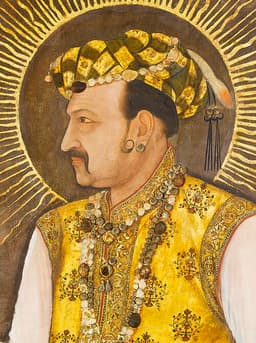
Jahangir
Emperor · Modern
52.9Total
Basic Information
Born
1905
1569
Died
1981
1627
Era
Modern
Modern
Nationality
Cameroon
Mughal Empire
Occupation
Emperor
Emperor
Civilization
Other
Indian
Score Comparison
Military (10%)
20.0
38.3
Political (20%)
40.8
43.7
Influence (20%)
49.4
59.0
Legacy (20%)
37.5
46.7
Leadership (15%)
65.0
74.0
Strategy (15%)
54.3
50.0
TOTAL
45.0
52.9
Alhaji Umaru Sanda — Complete Timeline
1942 AD
Appointed Lamido of NgaounderePolitical Action◆ Major
Alhaji Umaru Sanda was appointed as the Lamido (traditional ruler) of Ngaoundere in northern Cameroon. This position made him the paramount chief of the Fulbe people in the region, responsible for local administration and Islamic leadership under French colonial authority.
Traditional LeadershipColonial AdministrationCameroon
Impact: regional
1960 AD
Supported Cameroon's Independence TransitionPolitical Action◆ Major
As Lamido, Umaru Sanda supported the transition of Cameroon from French colonial rule to independence in 1960. He worked with the new government of Ahmadou Ahidjo to integrate the traditional Fulbe emirate system into the modern state structure.
IndependenceState-BuildingCameroon
Impact: nationalconstructive
1965 AD
Mediated Inter-Ethnic Conflicts in AdamawaOther
Lamido Umaru Sanda mediated conflicts between Fulbe herders and settled agricultural communities in the Adamawa region. His intervention prevented escalation of violence and maintained stability in northern Cameroon during the post-independence period.
Conflict ResolutionEthnic RelationsCameroon
Impact: regionalconstructive
Jahangir — Complete Timeline
1606 AD
Execution of Guru Arjan DevPolitical Action◆ Major
Jahangir ordered the execution of Guru Arjan Dev, the fifth Sikh guru, for supporting the rebellion of his son Khusrau. Guru Arjan Dev was tortured and died in Mughal custody. This event marked a turning point in Sikh-Mughal relations, leading to the militarization of the Sikh community.
ExecutionSikhismReligious Conflict
Impact: regionaldestructive
Rebellion of Prince KhusrauPolitical Action
Jahangir's eldest son, Prince Khusrau, rebelled against his father shortly after Jahangir's accession. Khusrau gathered an army and marched on Lahore. Jahangir's forces defeated the rebellion, and Khusrau was captured. He was later blinded and imprisoned, dying in 1622.
RebellionSuccessionKhusrau
Impact: nationaltragic
1611 AD
Marriage to Nur JahanPolitical Action◆ Major
Jahangir married Mehr-un-Nissa, who was given the title Nur Jahan. She became his most influential wife and effectively co-ruled the empire. Nur Jahan controlled court appointments, issued decrees, and managed the empire's finances. Her influence marked a period of significant female political power in the Mughal court.
MarriageNur JahanCourt Politics
Impact: national
1612 AD
Granting of Trade Rights to the English East India CompanyPolitical Action◆ Major
Jahangir granted the English East India Company permission to establish a trading post at Surat. This was the first formal English foothold in India. The company later expanded its influence, eventually becoming the dominant colonial power in the subcontinent.
TradeEast India CompanyColonialism
Impact: global
Expert Analysis
Origins
Alhaji Umaru Sanda was born in the early 20th century in the Adamawa region of northern Cameroon. As a member of the Fulbe aristocracy, he was groomed for leadership within the traditional emirate system. His education combined Islamic scholarship with practical governance under French colonial administration. In contrast, Jahangir was born in 1569 in Fatehpur Sikri, India, as the eldest surviving son of Emperor Akbar and a Rajput princess. He received a comprehensive education in statecraft, warfare, and culture, preparing him to rule the vast Mughal Empire.
Rise to Power
Alhaji Umaru Sanda rose to prominence through the traditional succession process of the Lamidate of Ngaoundere. His appointment as Lamido was confirmed by French colonial authorities, who sought to maintain indirect rule through local chiefs. He skillfully navigated the transition to independence, aligning with Ahmadou Ahidjo's government. Jahangir's path was more turbulent: he rebelled against his father Akbar in 1600 but was eventually forgiven. Upon Akbar's death in 1605, Jahangir ascended the throne, quickly facing a rebellion from his son Khusrau, which he suppressed.
Leadership & Governance
As Lamido, Alhaji Umaru Sanda governed with a focus on mediation and stability. He managed inter-ethnic tensions between Fulbe herders and farmers, using traditional councils. His leadership score of 65.0 reflects his effectiveness in local governance. Jahangir, with a leadership score of 74.0, ruled the Mughal Empire with a centralized administration. He delegated significant authority to his wife Nur Jahan, who co-ruled effectively. Jahangir's governance was marked by cultural patronage but also by harsh measures against dissent, such as the execution of Guru Arjan Dev.
Triumph & Tragedy
Alhaji Umaru Sanda's greatest success was facilitating a peaceful transition to independence and maintaining stability in Adamawa. His mediation prevented escalation of conflicts. However, his influence remained limited to the region, and his legacy is overshadowed by national figures. Jahangir's triumph includes the consolidation of Mughal power and the flourishing of art, particularly miniature painting. His tragedy includes the execution of Guru Arjan Dev, which alienated Sikhs and led to long-term conflict. The rebellion of his son Khusrau also plagued his reign.
Character & Destiny
Alhaji Umaru Sanda was a cautious, diplomatic leader who prioritized harmony. His character suited the role of a traditional ruler under a modern state. Jahangir was more complex: he was cultured and curious but also indecisive and prone to addiction. His dependence on Nur Jahan and his harshness toward threats shaped his destiny. Jahangir's total score of 52.9 versus Sanda's 45.0 indicates a broader impact, but his character flaws limited his effectiveness.
Legacy
Alhaji Umaru Sanda's legacy is localized: he is remembered as a wise Lamido who upheld traditions and mediated conflicts. His impact on Cameroon's history is modest. Jahangir's legacy is more significant: he expanded Mughal influence and left a cultural imprint through architecture and art. However, his granting of trade rights to the English East India Company in 1609 had unforeseen consequences, paving the way for British colonization. In terms of influence, Jahangir scored 59.0 against Sanda's 49.4.
Conclusion
While both leaders operated in their respective contexts, Jahangir had a greater impact on history. His rule affected millions and shaped the future of India. Alhaji Umaru Sanda's influence was confined to a region and a transitional period. Jahangir's total score of 52.9 exceeds Sanda's 45.0, and his political and cultural legacy endures globally. Therefore, Jahangir emerges as the more consequential figure.
Rankings
🥇
JahangirLeader
Mil: 38.3Pol: 43.7Inf: 59.0
52.9
🥈
Alhaji Umaru Sanda
Mil: 20.0Pol: 40.8Inf: 49.4
45.0
+7.9 behind
How This Comparison Works
Algorithm
Each figure is scored on 6 dimensions (0—100 scale) based on structured historical data: Military (10%), Political (20%), Influence (20%), Legacy (20%), Leadership (15%), Strategy (15%). The weighted total produces the final ranking.
Data Sources
Scores are computed from structured sub-indicators in the database. Scale factors adjust for era (Ancient ×0.85, Modern ×1.0) and civilization size (Eastern ×1.05, Other ×0.80) to account for differences in population and military scale.
Maximum 3 Figures
Comparisons are limited to 2—3 figures to ensure readability and statistical meaningfulness.
Error Margins
±5 points per dimension — Sub-scores are derived from historical records with inherent uncertainty. Two figures within 5 points on a dimension should be considered roughly equivalent in that area.
Total Score Accuracy
±3 points overall — The weighted combination of 6 dimensions produces a total score with approximately ±3 points of uncertainty. Differences of less than 3 points are not statistically significant— the figures are effectively tied.
Known Limitations
- Historical records are incomplete and uneven across civilizations
- Figures from oral-tradition societies may be underrepresented
- Occupation labels can misclassify multi-role figures
- Scores measure capability and impact, not moral character
- Quantitative scoring is a comparison tool, not absolute truth
Capability Radar
Military (10%) — Battles & Warfare
Battles
5
45
Win Rate
5
40
Expansion
5
25
Political (20%) — Governance & Reform
Reform
30
30
Diplomacy
35
40
Economy
30
35
Influence (20%) — Cultural & Global Reach
Cultural
25
60
Global
10
35
Legacy (20%) — Historical Impact
Historical
20
50
Longevity
15
40
Leadership (15%) — Power & Stability
Tenure
40
55
Stability
40
30
Strategy (15%) — Tactics & Innovation
Strategy
5
30
Tactics
5
35
Reform
5
20
Similar Comparisons
Comments & Discussion
No comments yet. Be the first to share your thoughts!