Loading...
Jahangir vs Napoleon Bonaparte
Napoleon Bonaparte leads by 18.0 pts · 2 figures compared
…
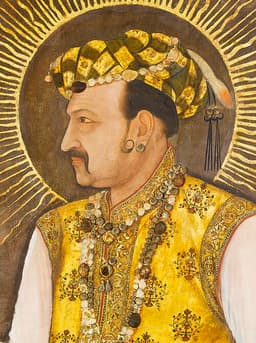
Jahangir
Emperor · Modern
52.9Total

Napoleon Bonaparte
General · Modern
70.9Total
Basic Information
Born
1569
1769
Died
1627
1821
Era
Modern
Modern
Nationality
Mughal Empire
France
Occupation
Emperor
General
Civilization
Indian
Western
Score Comparison
Military (10%)
38.3
94.0
Political (20%)
43.7
72.0
Influence (20%)
59.0
40.0
Legacy (20%)
46.7
80.0
Leadership (15%)
74.0
78.0
Strategy (15%)
50.0
90.0
TOTAL
52.9
70.9
Jahangir — Complete Timeline
1606 AD
Execution of Guru Arjan DevPolitical Action◆ Major
Jahangir ordered the execution of Guru Arjan Dev, the fifth Sikh guru, for supporting the rebellion of his son Khusrau. Guru Arjan Dev was tortured and died in Mughal custody. This event marked a turning point in Sikh-Mughal relations, leading to the militarization of the Sikh community.
ExecutionSikhismReligious Conflict
Impact: regionaldestructive
Rebellion of Prince KhusrauPolitical Action
Jahangir's eldest son, Prince Khusrau, rebelled against his father shortly after Jahangir's accession. Khusrau gathered an army and marched on Lahore. Jahangir's forces defeated the rebellion, and Khusrau was captured. He was later blinded and imprisoned, dying in 1622.
RebellionSuccessionKhusrau
Impact: nationaltragic
1611 AD
Marriage to Nur JahanPolitical Action◆ Major
Jahangir married Mehr-un-Nissa, who was given the title Nur Jahan. She became his most influential wife and effectively co-ruled the empire. Nur Jahan controlled court appointments, issued decrees, and managed the empire's finances. Her influence marked a period of significant female political power in the Mughal court.
MarriageNur JahanCourt Politics
Impact: national
1612 AD
Granting of Trade Rights to the English East India CompanyPolitical Action◆ Major
Jahangir granted the English East India Company permission to establish a trading post at Surat. This was the first formal English foothold in India. The company later expanded its influence, eventually becoming the dominant colonial power in the subcontinent.
TradeEast India CompanyColonialism
Impact: global
Napoleon Bonaparte — Complete Timeline
1799 AD
Coup of 18 BrumaireOther◆ Major
Napoleon Bonaparte, with support from his brother Lucien and key political figures, overthrew the Directory in a bloodless coup. He established the Consulate with himself as First Consul, effectively becoming the ruler of France. This event ended the French Revolution's most unstable period.
French RevolutionCoupRise to Power
Impact: regional
1804 AD
Promulgation of the Napoleonic CodeOther◆ Major
Napoleon enacted the Civil Code of the French, known as the Napoleonic Code, a comprehensive set of laws that replaced the fragmented feudal legal systems. The code established legal equality, protected property rights, and secularized law. It became the basis for legal systems in many European and world countries.
Legal ReformNapoleonic CodeCivil Law
Impact: globalconstructive
1805 AD
Battle of AusterlitzWar◆ Major
Napoleon's Grande Arm
Napoleonic WarsBattleDecisive Victory
Impact: global
1812 AD
Invasion of RussiaWar◆ Major
Napoleon led the Grande Arm
Napoleonic WarsInvasionDisaster
Impact: globaldestructive
1815 AD
Battle of WaterlooWar◆ Major
Napoleon's French army was defeated by the combined forces of the Duke of Wellington's Anglo-Allied army and Gebhard Leberecht von Bl
Napoleonic WarsBattleFinal Defeat
Impact: globaldestructive
Expert Analysis
Origins
Jahangir, born Nur-ud-din Muhammad Salim on August 31, 1569, was the eldest son of the great Mughal emperor Akbar and his wife Mariam-uz-Zamani. Raised in the lap of imperial luxury, he received a comprehensive education in Persian, Arabic, and statecraft, but also developed a taste for wine and opium that would plague his reign. His early years were marked by a tense relationship with his father, culminating in a rebellion in 1599 when Salim declared himself emperor in Allahabad. Akbar eventually forgave him, and upon Akbar's death in 1605, Salim ascended the throne as Jahangir.
Napoleon Bonaparte was born on August 15, 1769, in Ajaccio, Corsica, just months after the island was ceded to France. His father Carlo Buonaparte was a lawyer and diplomat, while his mother Letizia Ramolino instilled in him a fierce ambition. Napoleon attended military school in Brienne and later the École Militaire in Paris, graduating as a second lieutenant in artillery in 1785. The French Revolution provided the backdrop for his rise, offering opportunities for young, talented officers.
Rise to Power
Jahangir's rise was largely predetermined by birth, but he faced challenges from his own son Khusrau. In 1605, shortly after his accession, Khusrau rebelled, gathering an army of 12,000 and marching on Lahore. Jahangir's forces crushed the rebellion, and Khusrau was captured and imprisoned. Jahangir's marriage to Mehr-un-Nissa in 1611, who became Nur Jahan, solidified his power as she effectively co-ruled, managing the empire's administration and patronage. Her influence was a double-edged sword, creating factionalism at court.
Napoleon's rise was meteoric. After distinguishing himself at the Siege of Toulon in 1793, he became a brigadier general at age 24. His Italian campaign of 1796-1797 showcased his military genius, defeating the Austrian army and forcing peace. In 1799, he executed the Coup of 18 Brumaire, overthrowing the Directory and establishing the Consulate with himself as First Consul. By 1804, he crowned himself Emperor of the French, consolidating power through a mix of military success and political maneuvering.
Leadership & Governance
Jahangir's leadership style was decentralized and reliant on his wife and trusted nobles. He continued Akbar's policies of religious tolerance, but his execution of Guru Arjan Dev in 1606 alienated the Sikh community. His governance was marked by a love for justice, symbolized by the Chain of Justice—a golden chain with bells that petitioners could pull to summon the emperor. However, his addiction to opium and alcohol led to periods of neglect, allowing Nur Jahan to dominate court politics. In contrast, Napoleon centralized authority, creating a meritocratic bureaucracy and the Napoleonic Code, which reformed legal systems across Europe. His leadership was autocratic but efficient, with a focus on rational administration. While Jahangir scored 73.2 in political acumen, Napoleon scored 75.0, reflecting similar political skills but applied differently.
Triumph & Tragedy
Jahangir's greatest triumph was the consolidation of the Mughal Empire's cultural and economic prosperity. He patronized the arts, especially painting and architecture, and his reign saw the construction of the Shalimar Gardens in Kashmir. He also granted trading rights to the English East India Company in 1613, a decision that would have long-term consequences. His greatest failure was his inability to control his family: his son Khusrau's rebellion and his wife's dominance led to instability. The execution of Guru Arjan Dev turned the Sikhs into a hostile force, contributing to future conflicts.
Napoleon's triumphs include his military campaigns, with the Battle of Austerlitz in 1805 being his masterpiece, scoring 94.0 in military prowess. The Napoleonic Code remains a foundational legal system in many countries. His tragedies include the disastrous Invasion of Russia in 1812, where the Grande Armée of over 600,000 men was decimated by winter and scorched-earth tactics. His final defeat at Waterloo in 1815 ended his rule, and he died in exile on Saint Helena. Napoleon's political score of 75.0 reflects his ability to govern, but his overreach led to his downfall.
Character & Destiny
Jahangir was introspective and artistic, writing his memoirs, the Tuzuk-i-Jahangiri, which reveal a complex personality—capable of cruelty and justice. His addiction weakened his rule, and his reliance on Nur Jahan created a power vacuum. Historians note his indecisiveness, which contrasted with his father's decisive leadership. Napoleon was ambitious, disciplined, and charismatic, but his hubris grew with each victory. His character shaped his destiny: his military genius (scoring 93.0 in strategy) made him invincible for a decade, but his refusal to compromise led to his isolation. Both rulers were shaped by their environments: Jahangir by the opulence of the Mughal court, Napoleon by the revolutionary fervor of France.
Legacy
Jahangir's legacy is mixed. He is remembered for his patronage of the arts and his wife's influence, but also for the seeds of decline he sowed. The Mughal Empire reached its territorial peak under his son Shah Jahan, but the religious tensions and court intrigues he allowed weakened the empire. His granting of trade rights to the English laid the groundwork for British colonization. Napoleon's legacy is immense: the Napoleonic Code influenced civil law worldwide, and his military campaigns reshaped European borders. He scored 78.0 in influence and 82.0 in overall impact. However, his legacy is also tainted by the millions of deaths from his wars and the restoration of monarchy in France after his fall.
Conclusion
Napoleon Bonaparte had a greater impact on world history than Jahangir. His military innovations, legal reforms, and political restructuring of Europe left a lasting imprint that extends to modern governance and international relations. While Jahangir scored 67.1 overall against Napoleon's 82.4, the gap of 15.3 points reflects Napoleon's broader influence across continents and centuries. Jahangir's reign was significant for the Mughal Empire, but his legacy is largely confined to South Asia. Napoleon's actions shaped the course of Europe and the world, from the spread of nationalism to the codification of laws. Therefore, Napoleon stands as the more consequential figure.
Rankings
🥇
Napoleon BonaparteLeader
Mil: 94.0Pol: 72.0Inf: 40.0
70.9
🥈
Jahangir
Mil: 38.3Pol: 43.7Inf: 59.0
52.9
+18.0 behind
How This Comparison Works
Algorithm
Each figure is scored on 6 dimensions (0—100 scale) based on structured historical data: Military (10%), Political (20%), Influence (20%), Legacy (20%), Leadership (15%), Strategy (15%). The weighted total produces the final ranking.
Data Sources
Scores are computed from structured sub-indicators in the database. Scale factors adjust for era (Ancient ×0.85, Modern ×1.0) and civilization size (Eastern ×1.05, Other ×0.80) to account for differences in population and military scale.
Maximum 3 Figures
Comparisons are limited to 2—3 figures to ensure readability and statistical meaningfulness.
Error Margins
±5 points per dimension — Sub-scores are derived from historical records with inherent uncertainty. Two figures within 5 points on a dimension should be considered roughly equivalent in that area.
Total Score Accuracy
±3 points overall — The weighted combination of 6 dimensions produces a total score with approximately ±3 points of uncertainty. Differences of less than 3 points are not statistically significant— the figures are effectively tied.
Known Limitations
- Historical records are incomplete and uneven across civilizations
- Figures from oral-tradition societies may be underrepresented
- Occupation labels can misclassify multi-role figures
- Scores measure capability and impact, not moral character
- Quantitative scoring is a comparison tool, not absolute truth
Capability Radar
Military (10%) — Battles & Warfare
Battles
45
95
Win Rate
40
90
Expansion
25
95
Political (20%) — Governance & Reform
Reform
30
95
Diplomacy
40
80
Economy
35
85
Influence (20%) — Cultural & Global Reach
Cultural
60
85
Global
35
90
Legacy (20%) — Historical Impact
Historical
50
95
Longevity
40
90
Leadership (15%) — Power & Stability
Tenure
55
85
Stability
30
70
Strategy (15%) — Tactics & Innovation
Strategy
30
95
Tactics
35
98
Reform
20
92
Similar Comparisons
Comments & Discussion
No comments yet. Be the first to share your thoughts!