Loading...
Ali Amin Gandapur vs Janos Kadar
Janos Kadar leads by 21.2 pts · 2 figures compared
…

Ali Amin Gandapur
Politician · Modern
35.3Total
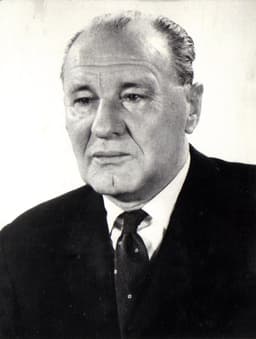
Janos Kadar
Politician · Modern
56.5Total
Basic Information
Born
1972
1912
Died
—
1989
Era
Modern
Modern
Nationality
Pakistan
Hungary
Occupation
Politician
Politician
Civilization
Indian
Western
Score Comparison
Military (10%)
22.6
49.8
Political (20%)
26.4
60.0
Influence (20%)
46.3
56.4
Legacy (20%)
35.0
49.2
Leadership (15%)
34.6
79.8
Strategy (15%)
35.8
41.7
TOTAL
35.3
56.5
Ali Amin Gandapur — Complete Timeline
2018 AD
Appointed Federal Minister for Kashmir AffairsPolitical Action
Ali Amin Gandapur was appointed as the Federal Minister for Kashmir Affairs and Gilgit-Baltistan in the PTI government. His tenure focused on development projects in the region, but he faced criticism for lack of progress.
Federal MinisterKashmirPTI
Impact: nationalconstructive
2023 AD
Arrested on Corruption ChargesPolitical Action◆ Major
Gandapur was arrested by the National Accountability Bureau on charges of corruption and assets beyond means. His arrest was part of a broader crackdown on PTI leaders following the party's protests.
ArrestCorruptionNAB
Impact: nationaltragic
Led Protests Against Federal GovernmentPolitical Action
Gandapur led PTI protests in Khyber Pakhtunkhwa against the federal government's policies, including demands for early elections. His fiery speeches and activism made him a prominent opposition figure.
ProtestsPTIOpposition
Impact: regionaldestructive
2024 AD
Elected Chief Minister of Khyber PakhtunkhwaPolitical Action◆ Major
Gandapur became the Chief Minister of Khyber Pakhtunkhwa after the PTI won the provincial elections. His election was seen as a continuation of PTI's influence in the province, despite the party's national setbacks.
Chief MinisterKhyber PakhtunkhwaPTI
Impact: regionalconstructive
Janos Kadar — Complete Timeline
1956 AD
Appointment as First Secretary of the Hungarian Socialist Workers' PartyPolitical Action◆ Major
Kadar was appointed First Secretary after the Soviet invasion crushed the Hungarian Revolution. He initially supported the revolution but then collaborated with the Soviets, a move that defined his controversial legacy.
Communist leadership1956 Revolution
Impact: national
1958 AD
Execution of Imre NagyPolitical Action◆ Major
Kadar's government tried and executed former Prime Minister Imre Nagy for his role in the 1956 Revolution. This act solidified Kadar's power but also made him a deeply unpopular figure among many Hungarians.
Political repression1956 Revolution
Impact: nationaltragic
1968 AD
Introduction of Goulash CommunismReform◆ Major
Kadar introduced the New Economic Mechanism, a series of market-oriented reforms that allowed limited private enterprise and consumer goods. This 'goulash communism' improved living standards and made Hungary the most liberal country in the Eastern Bloc.
Economic reformLiberalization
Impact: nationalconstructive
1988 AD
Resignation from PowerPolitical Action◆ Major
Facing economic stagnation and growing political opposition, Kadar was forced to resign as party leader. He was replaced by a reformist faction, marking the end of his 32-year rule.
Fall of communism
Impact: national
Expert Analysis
Origins
Ali Amin Gandapur was born in 1973 in Dera Ismail Khan, Pakistan, into a political family. He earned a law degree from Gomal University and initially worked as a lawyer before entering politics. His early career was shaped by local tribal dynamics and a populist approach.
Janos Kadar was born in 1912 in Fiume, Austria-Hungary (now Rijeka, Croatia), into a poor family. He became a metalworker and joined the Communist Party in 1931. His early life was marked by poverty and underground political activity during the Horthy regime.
Rise to Power
Gandapur rose to prominence within the Pakistan Tehreek-e-Insaf (PTI) party, leveraging his fiery oratory and grassroots activism. He was appointed Federal Minister for Kashmir Affairs in 2018, focusing on development in Gilgit-Baltistan. In 2024, after PTI's provincial election win, he became Chief Minister of Khyber Pakhtunkhwa (KPK). His rise was fueled by anti-establishment rhetoric and alignment with Imran Khan.
Kadar's rise was more tumultuous. He joined the Hungarian Communist Party and became a key figure in the post-WWII government. In 1956, during the Hungarian Revolution, he initially supported the reformist government of Imre Nagy but later betrayed him, collaborating with the Soviet invasion. The Soviets appointed him First Secretary of the Hungarian Socialist Workers' Party in November 1956, a position he held for over three decades.
Leadership & Governance
Gandapur's leadership is characterized by populist, confrontational style. As KPK CM, he focused on PTI's agenda, including anti-corruption drives and development projects. However, his tenure has been marred by allegations of corruption, leading to his arrest by the National Accountability Bureau (NAB) in 2023. His governance score of 34.6 reflects his polarizing impact.
Kadar, in contrast, implemented 'Goulash Communism'—a blend of communist orthodoxy and market reforms. His New Economic Mechanism (1968) introduced limited private enterprise, improved consumer goods availability, and raised living standards. Politically, he maintained strict control but allowed some cultural freedoms. His leadership score of 79.8 is among the highest, indicating effective, albeit authoritarian, governance.
Triumph & Tragedy
Gandapur's greatest triumph is becoming KPK CM and leading PTI's provincial campaigns. His tragedy lies in his arrest on corruption charges, which damaged his reputation and PTI's image. His political score of 26.4 reflects limited strategic success.
Kadar's triumph was stabilizing Hungary after 1956 and creating a relatively prosperous, stable society through economic reforms. His tragedy was the execution of Imre Nagy in 1958, which tarnished his legacy and highlighted his betrayal. Additionally, his later years saw economic stagnation and forced resignation in 1988.
Character & Destiny
Gandapur is a populist firebrand, known for emotional speeches and direct confrontation. His character—impulsive and loyal to PTI—led to his rise but also his legal troubles. His destiny is tied to PTI's fortunes, and his influence score of 46.3 suggests regional rather than national impact.
Kadar was pragmatic and ruthless. He prioritized stability and gradual reform, but his betrayal of Nagy defined his early rule. His character—cautious yet adaptable—allowed him to survive purges and maintain power for 32 years. His total score of 56.5 reflects a more substantial historical footprint.
Legacy
Gandapur's legacy is still forming. He is seen as a PTI loyalist and a symbol of KPK's provincial assertiveness. His long-term impact depends on PTI's future and his legal battles. His legacy score of 35.0 is moderate.
Kadar's legacy is more defined. He is remembered as the architect of Goulash Communism, which provided Hungarians with a relatively high standard of living under communism. However, his collaboration with the Soviets and execution of Nagy remain controversial. His legacy score of 49.2 is higher, reflecting a lasting impact on Hungarian political culture.
Conclusion
Janos Kadar had a greater historical impact than Ali Amin Gandapur. Kadar's total score of 56.5 versus Gandapur's 35.3 reflects his longer tenure, more significant policy reforms (New Economic Mechanism), and influence on Cold War Hungary. While Gandapur is a regional figure in Pakistan's volatile politics, Kadar shaped a nation's trajectory for decades. Kadar's leadership score of 79.8 and political score of 60.0 far exceed Gandapur's 34.6 and 26.4, demonstrating superior governance and strategic execution. Despite his moral compromises, Kadar's impact on Hungary's development and his role in the Soviet bloc are historically more consequential.
Rankings
🥇
Janos KadarLeader
Mil: 49.8Pol: 60.0Inf: 56.4
56.5
🥈
Ali Amin Gandapur
Mil: 22.6Pol: 26.4Inf: 46.3
35.3
+21.2 behind
How This Comparison Works
Algorithm
Each figure is scored on 6 dimensions (0—100 scale) based on structured historical data: Military (10%), Political (20%), Influence (20%), Legacy (20%), Leadership (15%), Strategy (15%). The weighted total produces the final ranking.
Data Sources
Scores are computed from structured sub-indicators in the database. Scale factors adjust for era (Ancient ×0.85, Modern ×1.0) and civilization size (Eastern ×1.05, Other ×0.80) to account for differences in population and military scale.
Maximum 3 Figures
Comparisons are limited to 2—3 figures to ensure readability and statistical meaningfulness.
Error Margins
±5 points per dimension — Sub-scores are derived from historical records with inherent uncertainty. Two figures within 5 points on a dimension should be considered roughly equivalent in that area.
Total Score Accuracy
±3 points overall — The weighted combination of 6 dimensions produces a total score with approximately ±3 points of uncertainty. Differences of less than 3 points are not statistically significant— the figures are effectively tied.
Known Limitations
- Historical records are incomplete and uneven across civilizations
- Figures from oral-tradition societies may be underrepresented
- Occupation labels can misclassify multi-role figures
- Scores measure capability and impact, not moral character
- Quantitative scoring is a comparison tool, not absolute truth
Capability Radar
Military (10%) — Battles & Warfare
Battles
25
29
Win Rate
29
32
Expansion
32
34
Political (20%) — Governance & Reform
Reform
20
65
Diplomacy
15
70
Economy
10
60
Influence (20%) — Cultural & Global Reach
Cultural
10
40
Global
5
40
Legacy (20%) — Historical Impact
Historical
5
50
Longevity
5
45
Leadership (15%) — Power & Stability
Tenure
15
75
Stability
5
55
Strategy (15%) — Tactics & Innovation
Strategy
33
36
Tactics
37
40
Reform
38
45
Similar Comparisons
Comments & Discussion
No comments yet. Be the first to share your thoughts!