Loading...
Janos Kadar vs Napoleon Bonaparte
Napoleon Bonaparte leads by 14.4 pts · 2 figures compared
…
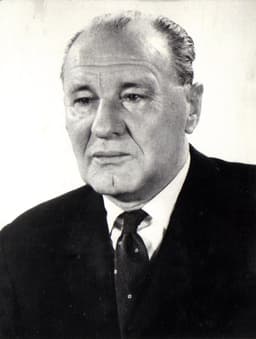
Janos Kadar
Politician · Modern
56.5Total

Napoleon Bonaparte
General · Modern
70.9Total
Basic Information
Born
1912
1769
Died
1989
1821
Era
Modern
Modern
Nationality
Hungary
France
Occupation
Politician
General
Civilization
Western
Western
Score Comparison
Military (10%)
49.8
94.0
Political (20%)
60.0
72.0
Influence (20%)
56.4
40.0
Legacy (20%)
49.2
80.0
Leadership (15%)
79.8
78.0
Strategy (15%)
41.7
90.0
TOTAL
56.5
70.9
Janos Kadar — Complete Timeline
1956 AD
Appointment as First Secretary of the Hungarian Socialist Workers' PartyPolitical Action◆ Major
Kadar was appointed First Secretary after the Soviet invasion crushed the Hungarian Revolution. He initially supported the revolution but then collaborated with the Soviets, a move that defined his controversial legacy.
Communist leadership1956 Revolution
Impact: national
1958 AD
Execution of Imre NagyPolitical Action◆ Major
Kadar's government tried and executed former Prime Minister Imre Nagy for his role in the 1956 Revolution. This act solidified Kadar's power but also made him a deeply unpopular figure among many Hungarians.
Political repression1956 Revolution
Impact: nationaltragic
1968 AD
Introduction of Goulash CommunismReform◆ Major
Kadar introduced the New Economic Mechanism, a series of market-oriented reforms that allowed limited private enterprise and consumer goods. This 'goulash communism' improved living standards and made Hungary the most liberal country in the Eastern Bloc.
Economic reformLiberalization
Impact: nationalconstructive
1988 AD
Resignation from PowerPolitical Action◆ Major
Facing economic stagnation and growing political opposition, Kadar was forced to resign as party leader. He was replaced by a reformist faction, marking the end of his 32-year rule.
Fall of communism
Impact: national
Napoleon Bonaparte — Complete Timeline
1799 AD
Coup of 18 BrumaireOther◆ Major
Napoleon Bonaparte, with support from his brother Lucien and key political figures, overthrew the Directory in a bloodless coup. He established the Consulate with himself as First Consul, effectively becoming the ruler of France. This event ended the French Revolution's most unstable period.
French RevolutionCoupRise to Power
Impact: regional
1804 AD
Promulgation of the Napoleonic CodeOther◆ Major
Napoleon enacted the Civil Code of the French, known as the Napoleonic Code, a comprehensive set of laws that replaced the fragmented feudal legal systems. The code established legal equality, protected property rights, and secularized law. It became the basis for legal systems in many European and world countries.
Legal ReformNapoleonic CodeCivil Law
Impact: globalconstructive
1805 AD
Battle of AusterlitzWar◆ Major
Napoleon's Grande Arm
Napoleonic WarsBattleDecisive Victory
Impact: global
1812 AD
Invasion of RussiaWar◆ Major
Napoleon led the Grande Arm
Napoleonic WarsInvasionDisaster
Impact: globaldestructive
1815 AD
Battle of WaterlooWar◆ Major
Napoleon's French army was defeated by the combined forces of the Duke of Wellington's Anglo-Allied army and Gebhard Leberecht von Bl
Napoleonic WarsBattleFinal Defeat
Impact: globaldestructive
Expert Analysis
janos-kadar-vs-napoleon-bonaparte
# The Conqueror and the Consolidator: Napoleon and Kádár
The cannonade at Waterloo fell silent on a Sunday evening in June 1815, and with it, the dream of a united Europe under French hegemony. One hundred and forty-one years later, in the autumn of 1956, Soviet tanks rumbled through the cobblestone streets of Budapest, crushing a very different dream of Hungarian sovereignty. Between these two moments, two men rose to power on the wreckage of revolution—one a titan who reshaped a continent, the other a pragmatist who reshaped a nation. Napoleon Bonaparte and János Kádár: one scored a total of 82.4 on the historian's ledger, the other 61.4. But these numbers tell only part of the story. The deeper question is why one ended his days a prisoner on a remote Atlantic island, while the other died in Budapest, having outlasted the very system he once served.
Origins
Napoleon was born in 1769 on the Mediterranean island of Corsica, a place conquered by France only months before his birth. His family was minor nobility, poor and resentful of French rule. The young Napoleon spoke Italian, not French, and carried the chip of an outsider on his shoulder. This marginality forged a relentless ambition. He devoured military history, mathematics, and the works of Rousseau, dreaming not of Paris but of glory. By contrast, János Kádár, born in 1912 in Fiume (now Rijeka, Croatia), was the illegitimate son of a peasant mother. He grew up in poverty, apprenticed as a typewriter mechanic. Where Napoleon's world was one of expanding horizons—the Enlightenment, the French Revolution, the collapse of old orders—Kádár's Hungary was a land of defeat and humiliation. The Treaty of Trianon in 1920 had stripped Hungary of two-thirds of its territory. Kádár came of age in a nation nursing a wound. His path was not one of ambition but of survival.
Rise to Power
Napoleon's ascent was a masterpiece of opportunism. The French Revolution had torn the fabric of aristocratic privilege, and a young artillery officer with talent and ambition could rise fast. In 1793, at the age of twenty-four, he distinguished himself at the Siege of Toulon. By 1796, he commanded the Army of Italy and won a series of dazzling victories. In 1799, he staged a coup d'état, becoming First Consul. He crowned himself Emperor in 1804. His rise was a narrative of will, war, and the audacity to seize every opening.
Kádár's rise was slower, more cautious, and far more treacherous. He joined the illegal Hungarian Communist Party in the 1930s, spent years in prison, and survived the Second World War. In 1956, when the Hungarian Revolution erupted against Soviet domination, Kádár initially supported the reformist government of Imre Nagy. But when Soviet tanks rolled in, Kádár switched sides. On November 4, 1956, he was appointed First Secretary of the Hungarian Socialist Workers' Party, effectively installed by Moscow. His rise was not a triumph of will but a pact with power. He had chosen survival over principle, and that choice would define him.
Leadership & Governance
Napoleon governed like a storm. He reorganized French law into the Napoleonic Code, a rational, secular system that abolished feudal privileges and enshrined equality before the law. He centralized the state, built roads and schools, and reformed the tax system. His military genius is undisputed—his score of 94.0 for military prowess reflects campaigns that are still studied in war colleges. He understood logistics, speed, and the psychology of his soldiers. "In war, moral force is to physical as three to one," he once said. But his political score of 75.0 hints at his flaw: he could conquer but not consolidate. He alienated allies, exhausted France, and overreached into Russia.
Kádár governed like a winter fog. After the trauma of 1956, he realized that brute repression alone would not work. So he introduced what came to be called "Goulash Communism." In 1968, he launched the New Economic Mechanism, allowing limited private enterprise, consumer goods, and a measure of cultural freedom. Hungary became "the happiest barracks in the Eastern Bloc." Kádár's political score of 71.5 and leadership score of 65.0 reflect a man who understood the art of the possible. He did not dream of conquering Europe; he dreamed of making life bearable for Hungarians under Soviet rule. His strategy score of 35.3, however, reveals his limitation—he had no grand vision, only a talent for muddling through.
Triumph & Tragedy
Napoleon's greatest moment was Austerlitz in December 1805, where he crushed the combined armies of Russia and Austria. It was the perfect battle, the zenith of his career. His greatest tragedy was the invasion of Russia in 1812. He led the Grande Armée of over 600,000 men into a frozen hell; fewer than 100,000 returned. He was exiled to Elba in 1814, escaped, ruled for a Hundred Days, and was finally defeated at Waterloo in 1815. He died in 1821 on Saint Helena, a prisoner of the British.
Kádár's triumph was more subtle. He stabilized Hungary after 1956 and created a society that, while unfree, was materially more comfortable than most of the Soviet bloc. His tragedy was the execution of Imre Nagy in 1958. Nagy had been a friend and a reformer; Kádár signed his death warrant. This act cemented Kádár's reputation as a traitor in the eyes of many Hungarians. "He who is not with us is against us," the old communist saying went, but Kádár had turned it inside out. He was with Moscow, and against his own people.
Character & Destiny
Napoleon was driven by an unquenchable thirst for glory. "What a novel my life has been!" he once exclaimed. He believed in destiny, in his own star. This confidence made him brilliant but also reckless. He could not stop. Kádár was driven by fear. He had seen the purges of the 1930s, the war, the revolution. He knew what happened to those who defied Moscow. His caution was his strength and his curse. He kept Hungary stable, but at the cost of its soul.
Legacy
Napoleon's legacy is immense. The Napoleonic Code influenced legal systems across Europe and the world. He redrew the map of Europe, sparked nationalism, and inspired modern warfare. His score of 82.0 for influence and 78.0 for legacy reflect a man who changed history. Kádár's legacy is more ambiguous. He is remembered as a pragmatist who gave Hungarians a decent life under communism, but also as the man who betrayed the 1956 revolution. His legacy score of 67.7 reflects a figure who is neither hero nor villain, but a gray shade in a gray era.
Conclusion
Napoleon and Kádár stand at opposite ends of the spectrum of power. One conquered the world and lost everything; the other surrendered his soul and kept his country. One burned bright and fast; the other smoldered for decades. Their lives remind us that history is not a moral tale. It is a story of choices made under pressure, of dreams that collide with reality. Napoleon's tragedy was his greatness; Kádár's tragedy was his mediocrity. Both shaped their worlds, but only one left a mark that still glows—for better and for worse.
Rankings
🥇
Napoleon BonaparteLeader
Mil: 94.0Pol: 72.0Inf: 40.0
70.9
🥈
Janos Kadar
Mil: 49.8Pol: 60.0Inf: 56.4
56.5
+14.4 behind
How This Comparison Works
Algorithm
Each figure is scored on 6 dimensions (0—100 scale) based on structured historical data: Military (10%), Political (20%), Influence (20%), Legacy (20%), Leadership (15%), Strategy (15%). The weighted total produces the final ranking.
Data Sources
Scores are computed from structured sub-indicators in the database. Scale factors adjust for era (Ancient ×0.85, Modern ×1.0) and civilization size (Eastern ×1.05, Other ×0.80) to account for differences in population and military scale.
Maximum 3 Figures
Comparisons are limited to 2—3 figures to ensure readability and statistical meaningfulness.
Error Margins
±5 points per dimension — Sub-scores are derived from historical records with inherent uncertainty. Two figures within 5 points on a dimension should be considered roughly equivalent in that area.
Total Score Accuracy
±3 points overall — The weighted combination of 6 dimensions produces a total score with approximately ±3 points of uncertainty. Differences of less than 3 points are not statistically significant— the figures are effectively tied.
Known Limitations
- Historical records are incomplete and uneven across civilizations
- Figures from oral-tradition societies may be underrepresented
- Occupation labels can misclassify multi-role figures
- Scores measure capability and impact, not moral character
- Quantitative scoring is a comparison tool, not absolute truth
Capability Radar
Military (10%) — Battles & Warfare
Battles
29
95
Win Rate
32
90
Expansion
34
95
Political (20%) — Governance & Reform
Reform
65
95
Diplomacy
70
80
Economy
60
85
Influence (20%) — Cultural & Global Reach
Cultural
40
85
Global
40
90
Legacy (20%) — Historical Impact
Historical
50
95
Longevity
45
90
Leadership (15%) — Power & Stability
Tenure
75
85
Stability
55
70
Strategy (15%) — Tactics & Innovation
Strategy
36
95
Tactics
40
98
Reform
45
92
Similar Comparisons
Comments & Discussion
TITAN'S GHOST6/17/2026
The scoring system is absolute gibberish - we're comparing a man who conquered most of Europe and codified civil law across an entire continent with a Soviet puppet who presided over a nation of 10 million while taking orders from Moscow. Napoleon scored 82.4? That's insultingly low. Kádár at 61.4 is at least 40 points too high. This is like ranking a housecat against a lion because both have claws. The real score should be Napoleon 95, Kádár 25.
红旗下的卡达尔6/17/2026
拿八一四对比六一四?这根本就是用钢琴跟算盘比音准。拿破仑改了半个欧洲的地图,卡达尔连布达佩斯一区的地铁站都没建全呢。我承认卡达尔时期的"最幸福的营房"确实比之前的拉科西时代体面些,但这也叫领袖?他不过是莫斯科伸进布达佩斯的一只手罢了。历史得分能打六十,纯粹是因为他活得够长,让匈牙利人慢慢习惯了那个无聊的灰色年代。
PRAETORIAN PRAGMATIST6/17/2026
You're all missing the most interesting parallel: both men were ultimate pragmatists who understood that legitimacy flows from stability, not ideology. Napoleon crowned himself emperor and married Habsburg royalty - the revolutionary who became the establishment. Kádár executed his former comrades and then implemented the most liberal economic reforms in the Eastern Bloc. Both betrayed their supposed principles for power, and both were surprisingly effective rulers who gave their countries decad
东欧沉默者6/17/2026
同志们,要不要看看卡达尔留给我们的实际遗产?"最幸福的营房"可不是空话——全东欧最高的生活水平、唯一的免签旅行政策、还有能在餐厅里听西方摇滚的自由。拿破仑给了法国什么?法典?确实了不起。但卡达尔给了匈牙利人一个活得比其他华约国家都舒服的中等生活。六十多分?我给他七十,因为他做到了一个背叛者能做到的最好——在苏联的阴影下,让他的子民至少能笑着过日子。
CODEX AND CADAVERS6/17/2026
The mathematical comparison fails because it doesn't weight personal cost. Napoleon ended his days on Saint Helena, having caused the deaths of millions in pointless wars of ambition. Kádár died in his bed at age 76, having presided over the execution of Imre Nagy and 2,000 others after the 1956 revolution, then ruled for 32 years of what Hungarians call "goulash communism." One died a martyr's spectacle, the other a bureaucrat's quietus. Give Napoleon his 82 for brilliance, but deduct 20 points